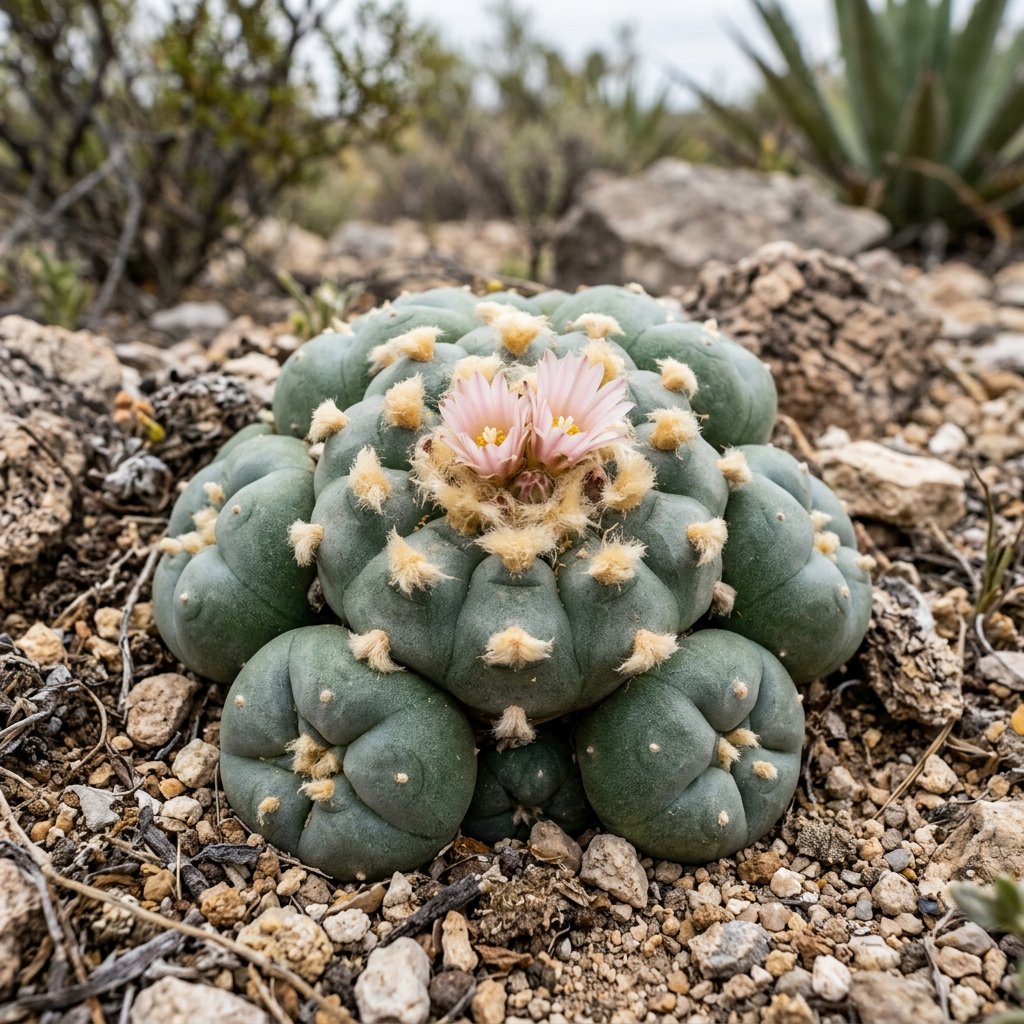
Plant Overview
Often called the "False Peyote" or the "False Peyote of Viesca," Lophophora fricii is a captivating, spineless cactus from the Chihuahuan Desert in Mexico. Named after the famous Czech botanist Alberto Vojtěch Frič, this slow-growing succulent is a crown jewel for collectors who appreciate its soft, velvet-like appearance and symmetrical geometry. While it looks like a soft cushion, it is a resilient desert survivor that has evolved to store water in its massive underground root system.
🔍 How to Identify
- 🌵 The Body: It features a globular, somewhat flattened stem that is typically a pale yellowish-green or grey-green. Unlike most cacti, it is completely spineless.
- 🌸 The Bloom: It produces beautiful funnel-shaped flowers that range from pale pink to a vibrant, deep magenta. These usually emerge from the center of the plant during the warm months.
- ☁️ The Areoles: Instead of needles, the plant has small, circular "tufts" of soft, white woolly hair along its ribs, giving it a polka-dot appearance.
🏡 In Your Garden
- 🪨 Mineral Mimicry: In the wild, this cactus grows in limestone-rich, rocky soil. To keep it happy at home, use a very gritty, inorganic potting mix (mostly pumice, lava rock, and coarse sand) to prevent the delicate body from absorbing too much water.
- 🥕 The Hidden Taproot: This plant hides a massive, carrot-like taproot beneath the soil. Because of this, it requires a deep pot and a "tough love" watering schedule—it hates sitting in damp soil and is highly prone to rot if over-pampered.
⚠️ Safety & Toxicity
- 🚫 Status: Toxic & Regulated: Lophophora fricii contains various alkaloids (primarily pellotine). While it contains significantly less mescaline than its famous cousin L. williamsii, it is still considered toxic if ingested.
- 🐾 Pets & Kids: Keep this plant out of reach of curious pets and children. Ingestion can cause gastrointestinal distress and neurological symptoms. Additionally, check local laws, as some regions have strict regulations on the genus Lophophora.
✨ Fun Fact
For decades, botanists argued whether this was its own species or just a variety of the Peyote cactus. It wasn't until DNA testing and closer observation of its darker pink flowers and unique chemical profile that it was officially recognized as its own distinct member of the cactus family!

Detailed Care Instructions

Place in a bright room that is sun drenched almost all day. Or directly in a south-facing window.

Watering a Lophophora Fricii plant can be done by carefully pouring water at the base of the plant, taking care not to get water on the leaves or stem. It is important not to over-water the plant as it is sensitive to excessive moisture and can easily rot. Therefore, it is recommended to wait until the top inch of soil is dry before watering again. Additionally, it is advisable to use a watering can with a narrow spout to control the amount of water added and avoid flooding the pot or soil. Regular watering, along with proper sunlight and soil conditions, will help the plant thrive and maintain its health and beauty.
Without the need of fertilizer, these plants can thrive and bloom. If a plant requires fertilization, it will display indicators of nutrient insufficiency, such as yellowing leaves. It is safe to apply slightly diluted fertilizers in these circumstances. Over fertilizing, on the other hand, should be avoided because excess nutrients might cause plant mortality. Slow-release fertilizers are therefore advised for these plants.
You may use Cactus Fertilizer for your Peyote
Lophophora fricii is a type of plant that grows best in well-draining soil with a slightly acidic pH. It requires a soil mix that is composed of a combination of sand, perlite or small stones, and a small amount of organic matter such as coconut coir or peat moss. This soil mix will provide good drainage and aeration for the plant's roots, as well as enough nutrients for healthy growth. It is important to avoid using soil that retains too much moisture, as this can lead to root rot and other fungal diseases. Additionally, it is recommended to add a slow-release fertilizer to the soil mix to provide the plant with essential nutrients over time.
Common pests of the peyote include Scale insect, mealybugs, spider mites. Make a habit of checking your peyote frequently for pests so that any infestations can be caught and managed early.








