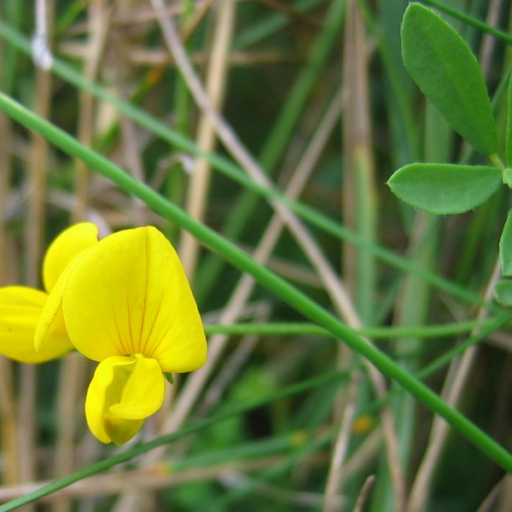
Plant Overview
Often called Deerweed or California Broom, Lotus glaber (now scientifically classified as Acmispon glaber) is a rugged survivalist native to the hillsides of the American Southwest. This wiry subshrub is a "fire follower," often being the first plant to sprout and stabilize the soil after a wildfire. While it may look like a delicate spray of yellow lace, it is one of the toughest pioneers in the chaparral.
🔍 How to Identify
- 🌼 The Flowers: Tiny, pea-like blossoms that grow in small clusters. They start a vibrant yellow and shift to a deep orange or rusty red as they age and are pollinated.
- 🌿 The Leaves: Small, oval leaflets arranged in groups of three. They are often sparse, giving the plant a "broom-like" or skeletal appearance that helps it conserve water.
- 🎋 The Stems: Numerous slender, green, and flexible branches that grow in an arched, mounded habit, reaching up to three feet in height.
🏡 In Your Garden
- 🏜️ Drought Specialist: This plant is the ultimate "set it and forget it" addition for xeric landscapes. It prefers sandy or rocky soil and actually thrives in nutrient-poor ground where other plants might wither.
- 🦋 A Butterfly Buffet: It is a critical host plant for several butterfly species, including the Bramble Hairstreak and the Acmon Blue. Planting this is like rolling out a red carpet for local pollinators.
- 🩹 Nature’s Nitrogen Fixer: Like many members of the pea family, it works with soil bacteria to pull nitrogen from the air and "fix" it into the earth, naturally improving soil quality for neighboring plants.
⚠️ Safety & Toxicity
- ✅ Status: Generally non-toxic and safe for home gardens.
- 🦌 Wildlife Friendly: True to its common name, Deerweed is a favorite snack for deer, rabbits, and other wild herbivores. If you have local deer, you may need a small fence until the plant is established.
- 🧤 Skin Care: While not poisonous, the wiry stems can become brittle and scratchy when dry, so wearing gloves during pruning is recommended.
✨ Fun Fact
- ✨ The Color Code: The color change of the flowers from yellow to red isn't just for show; it’s a signal to bees! Bees see yellow more clearly, so once a flower is pollinated and the nectar is gone, the plant turns red—a color bees don't see well—effectively directing them to the unpollinated yellow flowers instead.

Detailed Care Instructions
To successfully grow Lotus Glaber, commonly known as Glaber Water Lily or Pond Lotus, you can follow the steps below:
- Choose a suitable location: Lotus Glaber requires full sunlight for at least 5-6 hours a day. Select a spot in your garden or pond where it can receive direct sunlight. It prefers shallow water with a depth of 12-24 inches (30-60 cm).
- Prepare the soil: The soil should be rich in organic matter and well-draining. Use a mix of loam and clay for best results. Avoid using soil that is too sandy or too heavy.
- Planting the rhizome: Purchase a healthy Lotus Glaber rhizome from a reputable nursery or garden center. Make sure the rhizome is firm and plump. Plant it in a container or directly in the pond, with the growing bud facing upwards. Place the rhizome around 6-12 inches (15-30 cm) deep in the soil.
- Fertilizing: Use a slow-release aquatic plant fertilizer specially formulated for water lilies. Add the fertilizer according to the instructions provided. Fertilize the plant every 4-6 weeks during the growing season.
- Watering: Keep the soil around the plant constantly moist, but avoid standing water. Maintain the water level at the appropriate depth (12-24 inches) and ensure it doesn't exceed the recommended depth to prevent rotting of the rhizome.
- Controlling pests and diseases: Lotus Glaber is generally resistant to pests and diseases. However, aphids, snails, and slugs may occasionally feed on the leaves. Use appropriate pest control measures if necessary.
- Pruning and maintenance: Remove any dead or yellowing leaves regularly to maintain the plant's health and appearance. If the plant becomes overcrowded, divide the rhizome after a few years to encourage new growth.
- Winter care: In regions with freezing winters, you may need to protect your Lotus Glaber. Before the first frost, move the plant to a deeper part of the pond or transfer it to a frost-free indoor location like a greenhouse or sunroom.
Remember, patience is key when growing water lilies as they can take some time to establish and bloom. With proper care and attention, your Lotus Glaber plant will thrive and reward you with beautiful flowers.
To water this particular plant, you should ensure that the soil is consistently moist but not overly wet. It is important to make sure that the water drains well and does not collect in the soil or pot. Water the plant thoroughly and deeply, allowing the water to seep into the soil and reach the plant's roots. It is recommended to water this plant when the soil feels dry to the touch, but not completely dried out. Additionally, avoid wetting the leaves of the plant as this may lead to fungal disease or rot. In general, this plant prefers to be kept on the moist side and does not tolerate drought well.
To fertilize this aquatic plant, use a balanced fertilizer that contains equal amounts of nitrogen, phosphorus, and potassium. The ideal time to fertilize is during the growing season, which is spring and summer. Apply the fertilizer sparingly to avoid over-feeding the plant, which can lead to algae growth and other problems. Spread the fertilizer evenly throughout the water around the plant, or use a fertilizer stake inserted into the soil. Be sure to follow the instructions on the fertilizer packaging for the best results and avoid fertilizing during the dormant season when the plant is not actively growing.
The preferred soil for the Lotus Glaber plant is a mix of organic and mineral soils. It should have good drainage and be slightly acidic, with a pH between 6.5 and 7.5. The soil should also be rich in nutrients, including nitrogen, phosphorus, and potassium, to support the plant's growth and development. Additionally, the soil should be well-aerated, so it is essential to ensure that it is not too compacted. A suitable soil mix for the Lotus Glaber plant might include a mix of peat moss, perlite, and sand, along with a slow-release fertilizer. It is also recommended to add a layer of mulch on top of the soil to help retain moisture and regulate soil temperature.
Lotus Glaber plant propagation can be done through various methods such as seed propagation, division of the rhizomes, or stem cuttings.
Seed propagation involves collecting the seeds from the matured plant and sowing them in a well-draining soil mix. The seeds should be barely covered with soil and kept moist by misting them regularly. The seeds usually germinate within two weeks.
Division of rhizomes is another method of propagation, where the plant is carefully dug up, and the rhizomes are separated into individual sections. Each section should have a few leaves and some roots attached. These sections are then planted in a well-draining soil mix.
Stem cuttings can also be used to propagate the lotus glaber plant. The stem cuttings should be taken from a mature plant and placed in a rooting hormone. These cuttings are then planted in a well-draining soil mix and kept moist until they develop roots.
Regardless of the propagation method, the lotus glaber plant requires a warm environment and consistent moisture to thrive. Once the new plants are established, they can be transplanted to larger pots or directly to the garden.








