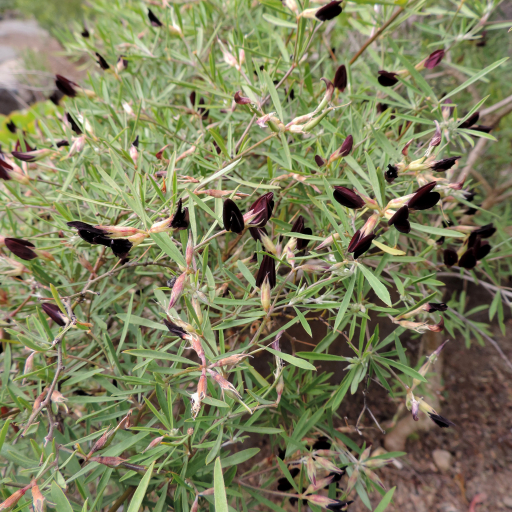
Plant Overview
Known as the "Black Lotus" or "St. James’s Bird’s-foot Trefoil," this rare beauty from the volcanic Cape Verde Islands is a showstopper for anyone who loves dramatic, moody colors in their garden. Its near-black flowers contrast sharply against its delicate, shimmering silver foliage, making it look like something pulled straight from a gothic fairytale. While it looks exotic and high-maintenance, it is surprisingly resilient when given the heat and sun it craves.
🔍 How to Identify
- 🖤 The Flowers: Deep, velvety chocolate-purple to nearly ebony pea-like blooms that appear in small clusters.
- 🥈 The Foliage: Fine, narrow, needle-like leaves covered in tiny hairs that give the plant a distinct silvery-grey or glaucous tint.
- 🌿 Growth Habit: A semi-woody subshrub that maintains a light, airy, and bushy silhouette, usually reaching about 15–20 inches in height.
🏡 In Your Garden
- ☀️ Sun Seeker: This plant is a true sun-worshipper; it needs maximum light to develop the deep, dark pigments in its petals and to keep its silver leaves bright.
- 💧 Drainage is Key: Coming from volcanic islands, it hates "wet feet." It thrives in sandy or rocky soils where water drains away quickly. It is better to underwater than overwater this one.
- ❄️ Winter Protection: It is a tender perennial. If you live in a climate with frost, treat it as an annual or bring it indoors to a sunny windowsill before the first cold snap.
⚠️ Safety & Toxicity
- 🐾 Pet Safety: While not famously toxic like the Oleander, many members of the Lotus genus contain cyanogenic glycosides. It is best to keep it out of reach of curious cats or dogs who like to chew on greens.
- 👶 Human Caution: It is strictly an ornamental plant. Ensure children understand that the "pea-like" flowers are for looking, not for eating.
✨ Fun Fact
The "Black Lotus" is so rare in its native habitat that it was once feared to be nearing extinction on the island of Sal before it became a prized specimen for specialized botanical collectors.

Detailed Care Instructions
Lotus jacobaeus, also known as Egyptian Lotus, is a beautiful flowering plant that can be grown in your garden with the right care and conditions. Here are some tips on how to grow Lotus jacobaeus successfully:
- Planting: Lotus jacobaeus should be planted in a sunny location with well-draining soil. It is best to plant the seeds or seedlings in early spring or late summer to give them enough time to establish before the winter season.
- Watering: Keep the soil consistently moist but not waterlogged. Lotus jacobaeus prefers wet conditions, so you may need to water it regularly, especially during hot and dry periods.
- Fertilizing: Use a balanced fertilizer to feed your Lotus jacobaeus plant during the growing season. Apply the fertilizer according to the manufacturer's instructions to avoid over-fertilization.
- Pruning: Remove any dead or damaged leaves and flowers to encourage new growth and maintain the plant's shape. Pruning can also help improve air circulation and prevent diseases.
- Mulching: Add a layer of mulch around the base of the plant to help retain moisture, suppress weeds, and improve the soil's nutrient content.
- Overwintering: In colder climates, Lotus jacobaeus may need protection during the winter months. Consider bringing potted plants indoors or covering them with a layer of mulch or frost cloth to prevent frost damage.
By following these tips and providing the right care, you can successfully grow Lotus jacobaeus and enjoy its beautiful blooms in your garden.
To properly water the Lotus Jacobaeus plant, it is important to provide a consistent watering schedule to ensure the plant stays adequately hydrated. This plant prefers to be watered regularly, but it is essential to allow the topsoil to dry out slightly between waterings to prevent overwatering. When watering, thoroughly saturate the soil around the plant until water begins to drain out from the bottom of the pot.
To determine when to water the Lotus Jacobaeus plant, gently insert a finger into the soil to feel for moisture levels. If the top inch of soil feels dry to the touch, it is time to water the plant. It is important to avoid letting the plant sit in standing water as this can lead to root rot.
During the growing season, typically in the spring and summer months, the Lotus Jacobaeus plant may require more frequent watering as it actively grows. In contrast, during the winter months or periods of dormancy, the plant will require less water.
Additionally, consider using a well-draining potting mix specifically formulated for succulents or cacti to help prevent waterlogging. Providing adequate drainage by ensuring the pot has drainage holes at the bottom can also help prevent water buildup.
Overall, a regular watering routine combined with proper observation of the plant's moisture needs will help keep the Lotus Jacobaeus plant healthy and thriving.
To fertilize the Lotus Jacobaeus plant, use a balanced liquid fertilizer diluted to half strength. Apply the fertilizer every two weeks during the growing season, which is typically spring and summer. Avoid over-fertilizing, as this can lead to nutrient buildup in the soil. Water the plant before and after fertilizing to help distribute the nutrients evenly. Prune any dead or yellowing leaves to encourage new growth and improve overall plant health.
Lotus Jacobaeus requires a well-draining, sandy soil for optimal growth. A mixture of sandy loam and perlite is recommended to promote healthy root development and prevent waterlogging. Additionally, incorporating organic matter such as compost or peat moss can help provide essential nutrients for the plant. It is important to avoid heavy clay soils, as they can lead to poor drainage and potentially cause root rot. Overall, a well-balanced and light soil mixture is ideal for cultivating Lotus Jacobaeus plants.
One way to propagate Lotus Jacobaeus plants is through division. To do this, gently dig up the plant and carefully separate the root clumps into smaller sections. Each section should have healthy roots and shoots. Replant these divisions in a well-draining soil mix and water thoroughly.
Another method of propagation is through seed. Harvest mature seeds from the plant and sow them in a seed tray filled with a moist, well-draining soil. Cover the seeds lightly with soil and water gently. Place the tray in a sunny location and keep the soil moist until the seeds germinate.
You can also propagate Lotus Jacobaeus plants through cuttings. Take a cutting from a healthy stem, making sure it has at least two nodes. Remove the lower leaves and dip the cut end in rooting hormone. Plant the cutting in a pot filled with a well-draining soil mix and keep it in a warm, humid environment until roots develop.
Overall, propagating Lotus Jacobaeus plants can be a rewarding and straightforward process if done carefully and attentively.








