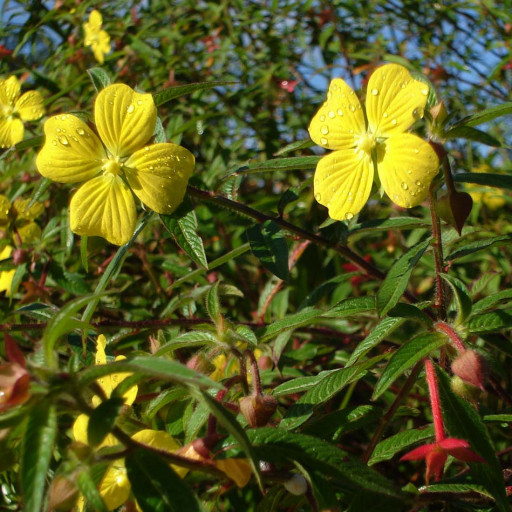
Plant Overview
Often found standing tall in marshy wetlands or along pond edges, the Mexican Primrose-willow is a sun-loving powerhouse of the tropics. Known for its cheerful yellow blooms and distinctively long seed pods, it is a favorite for naturalistic water gardens and restoration projects. In some regions, it is affectionately nicknamed the "Seedbox" due to the way its fruit matures into a vessel for future generations.
🔍 How to Identify
- 🌼 Sunny Petals: It features bright yellow flowers, typically with four heart-shaped petals that bloom individually from the leaf axils.
- 🌿 Reddish Stems: The plant grows upright and can become quite bushy, often sporting reddish-brown stems that grow tougher and more "woody" as the season progresses.
- 📏 Eight-Ribbed Pods: Its most defining feature is the long, cylindrical seed pod. The name octovalvis refers to the eight distinct ribs or "valves" running down the length of the fruit.
🏡 In Your Garden
- 💧 The Wet-Foot Rule: This plant is a true hydro-phile. It thrives in soggy, poorly drained soil and can even grow with its roots submerged in shallow water, making it an excellent choice for the "shelf" of a backyard pond.
- ☀️ Sun Requirements: To see those vibrant yellow flowers, give it as much direct sunlight as possible. While it can survive in partial shade, it will become "leggy" and produce fewer blooms.
- 🦋 Pollinator Magnet: It serves as a vital nectar source for bees and butterflies, and in certain regions, it is a host plant for the caterpillars of the beautiful Sphinx moth.
⚠️ Safety & Toxicity
- 🟢 General Safety: Ludwigia octovalvis is not known to be toxic to humans or common household pets.
- 🐾 Pet Caution: While it lacks aggressive toxins, it is always wise to discourage pets from munching on garden plants to prevent minor stomach upset or choking hazards from the fibrous stems.
✨ Fun Fact
🧪 A Natural Pharmacy: Throughout history, various cultures in South Asia and Africa have used this plant in traditional medicine to treat everything from skin infections to digestive issues. It contains compounds that have been studied for their anti-inflammatory and antibacterial properties!

Detailed Care Instructions
To grow Ludwigia Octovalvis, also known as Primrose Willow, you can follow these steps:
- Choose a suitable location: Ludwigia Octovalvis thrives in full sun to part shade. Find a location in your garden that receives at least 4-6 hours of direct sunlight daily.
- Prepare the soil: This plant prefers moist, well-draining soil. Loosen the soil and remove any weeds or debris. You can also add compost or organic matter to improve soil fertility and drainage.
- Planting: Propagate Ludwigia Octovalvis by stem cuttings. Cut a 4-6 inch stem from the parent plant just below a node (where the leaf meets the stem). Remove the lower leaves and place the cutting in a container of water. Roots will develop in a few days to a week.
- Transplanting: Once the roots have developed, transplant the Ludwigia Octovalvis cutting into a pot or directly into the ground. Dig a small hole in the soil and insert the cutting, making sure that at least one or two nodes are buried.
- Watering: Keep the soil evenly moist but not waterlogged, especially during the plant's establishment period. Water deeply once or twice a week or whenever the top inch of soil feels dry.
- Fertilizing: Ludwigia Octovalvis benefits from regular fertilization. Use a balanced, slow-release or liquid fertilizer according to the instructions on the package. Apply the fertilizer once every 4-6 weeks during the growing season.
- Pruning: Regularly trim the plant to promote bushier growth and prevent it from becoming leggy. You can cut back the stems by half or more to encourage branching. Prune any dead or yellowing leaves as necessary.
- Maintenance: Ludwigia Octovalvis is generally low-maintenance. However, you should keep an eye out for pests like aphids or snails, and treat them promptly if necessary. Monitor the plant for any signs of wilting, yellowing leaves, or other issues and take appropriate action.
- Winter care: In colder climates, Ludwigia Octovalvis may not be hardy and can be grown as an annual or brought indoors during winter. If you choose to bring it indoors, provide it with bright, indirect light and water as needed.
By following these steps, you should be able to successfully grow Ludwigia Octovalvis and enjoy its vibrant foliage in your garden.

Place in a bright room that is sun drenched almost all day. Or directly in a south-facing window.

To water this plant, first make sure the soil is dry to the touch. Then, slowly and evenly pour water onto the soil until it is moist throughout. It is important not to overwater the plant as it can lead to root rot. Allow the soil to dry out slightly before watering again. This plant prefers slightly acidic soil with a pH between 5.5-7.0 and requires consistent moisture but not waterlogging.
To fertilize the plant, use a balanced liquid fertilizer with equal parts of nitrogen, phosphorus, and potassium. Dilute the fertilizer to half strength and apply once a week during the growing season. Monitor the plant for signs of nutrient deficiency or excess, such as yellowing leaves or stunted growth, and adjust the fertilization accordingly. Avoid over-fertilizing, as it can harm the plant and pollute the water.
Ludwigia Octovalvis plants thrive in well-draining soil that is rich in nutrients. A mixture of organic potting soil and sand or perlite is ideal for these plants, as it provides both the necessary nutrients and aeration for healthy root development.
It is important to ensure that the soil is kept consistently moist, but not waterlogged, to prevent root rot. Adding a layer of mulch on top of the soil can help retain moisture and regulate temperature, creating a more stable environment for the plant to grow.
Regular fertilization is also important for Ludwigia Octovalvis plants, as they are heavy feeders. Using a slow-release fertilizer or a balanced liquid fertilizer at half strength every 2-4 weeks during the growing season can help promote healthy growth and vibrant foliage.
Overall, providing the right type of soil and proper care will ensure that Ludwigia Octovalvis plants thrive and flourish in your garden or indoor space.
To propagate this plant, first take a cutting from a healthy stem. Use scissors or a sharp blade to make a clean cut just below a node where there is a leaf. Remove any leaves that will be submerged in water.
Place the cutting into a glass or vase filled with clean water, ensuring that at least one node is submerged. Change the water every few days to prevent algae growth, and make sure the cutting receives plenty of bright, indirect light.
Roots should begin to grow from the nodes within a few weeks. Once the roots are several centimeters long, carefully transplant the cutting into a pot filled with well-draining soil that's kept moist but not waterlogged. Water the new plant regularly and give it plenty of bright, indirect light to encourage growth.








