Plant Overview
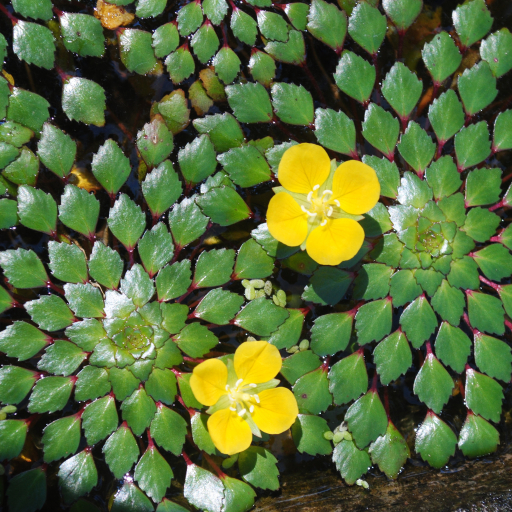
Often called the "Mosaic Plant," Ludwigia sedoides is nature’s version of a floating kaleidoscope. This stunning aquatic perennial transforms the surface of a pond into a geometric masterpiece with its perfectly arranged, diamond-shaped leaves. Originating from the tropical waters of Central and South America, it is a favorite for water gardeners who want to add a touch of "living art" to their landscape.
🔍 How to Identify
- 🍃 Leaf Geometry: Small, diamond-shaped (rhomboid) leaves that fit together perfectly to form a floating rosette that sits flat on the water's surface.
- 🎨 Color Palette: The leaves are usually a vibrant green, but under intense sunlight, the edges flush with a brilliant reddish-bronze hue.
- 🌼 Summer Blooms: It produces delicate, cup-shaped yellow flowers with four petals that emerge from the center of the rosettes during the warmest months.
🏡 In Your Garden
- ☀️ Sun-Seeker: This plant is a dedicated sun-worshiper. The more light it receives, the tighter and more colorful the mosaic pattern becomes; in shade, the stems may stretch and the colors will fade to a dull green.
- 💧 Still Waters: It thrives best in calm, quiet water. Heavy splashing from fountains or strong currents from pond filters can toss the rosettes and prevent them from spreading into their iconic circular mats.
- 🌡️ Tropical Roots: Because it lacks a "winter mode," this plant is highly sensitive to frost. In temperate climates, it is often treated as an annual or moved into a heated aquarium to overwinter.
⚠️ Safety & Toxicity
- ✅ Safe Status: Ludwigia sedoides is generally considered non-toxic to humans, dogs, cats, and fish, making it a worry-free addition to backyard ponds.
- 🌿 Containment: While it isn't as "weedy" as some of its relatives, it can grow aggressively in warm climates. Always keep it contained within your garden and never discard it in local natural waterways or lakes.
✨ Fun Fact
The Mosaic Plant is "nyctinastic," meaning it follows a circadian rhythm. At night, the rosettes may fold their leaves upward or slightly close, only to "wake up" and flatten out again as soon as the first rays of morning sun hit the water.

Detailed Care Instructions

Place in a bright room that is sun drenched almost all day. Or directly in a south-facing window.

Some plants require more regular watering than others, which should be done every few days. It's critical to maintain the soil moist all of the time. The water requirements of the same plant placed in pots with varying sizes will differ. Because the water in the smaller pot evaporates faster than the water in the larger pot, it will require more watering. Regardless of pot size, the surface should constantly be maintained moist.








