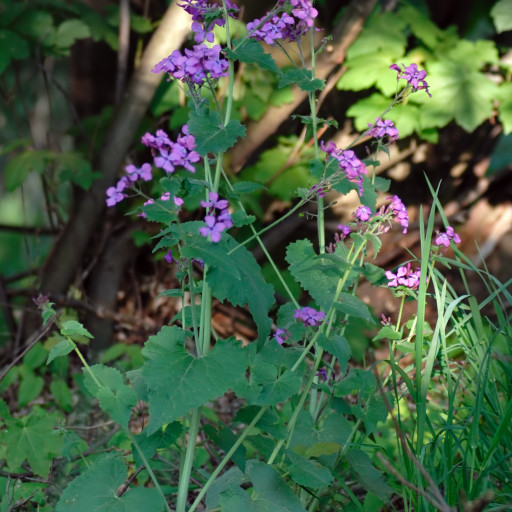
Plant Overview
Often called the Honesty plant or the Silver Dollar plant, Lunaria annua is a garden classic beloved for its dual personality. While it starts its life with humble green leaves and cheerful purple blooms, its true "magic" happens as the flowers fade, leaving behind shimmering, translucent seed pods that look like glowing moons or ancient coins. In the language of flowers, it represents sincerity and honesty, because its seed pods are so transparent they have nothing to hide.
🔍 How to Identify
- 🪙 The "Silver Dollars": The most iconic feature is the flat, disc-shaped seed pods. Once the outer casing falls away, a silvery, iridescent membrane remains that catches the light beautifully.
- 🌸 Four-Petaled Blooms: Before the "coins" appear, the plant produces clusters of vibrant purple (or occasionally white) flowers, each with four distinct petals in a cross shape.
- 🍃 Heart-Shaped Foliage: The leaves are large, coarse, and distinctly heart-shaped with "toothed" or serrated edges, growing in an alternating pattern up the stem.
🏡 In Your Garden
- 🌱 The Two-Year Journey: As a biennial, Lunaria spends its first year growing a lush mound of green leaves. It saves its spectacular flowering and "money-making" performance for the second spring.
- 🌬️ Self-Seeding Spirit: This plant is a traveler! It produces seeds prolifically and will happily "hop" around your garden beds. If you want it to stay put, harvest the dried stems for indoor decor before the pods break open.
- 🌳 The Taproot Rule: Like many biennials, it develops a deep taproot early on. It hates being moved once established, so pick a permanent spot in partial shade where it can settle in for the long haul.
⚠️ Safety & Toxicity
- ✅ Generally Safe: Lunaria annua is considered non-toxic to humans, cats, and dogs. It is a very "family-friendly" addition to the backyard.
- 🧤 Skin Sensitivity: While not poisonous, the coarse hairs on the leaves and stems can occasionally cause mild skin irritation for those with very sensitive skin during pruning.
✨ Fun Fact
The name Lunaria comes directly from the Latin word Luna, meaning "moon," referring to the circular, glowing appearance of the dried seed pods. In some cultures, these "coins" were kept in pockets or homes to symbolically attract wealth and prosperity!

Detailed Care Instructions
To grow Lunaria Annua, also known as Honesty or Silver Dollar Plant, follow these steps:
- Planting: Lunaria Annua seeds can be sown directly into the ground or started indoors 6-8 weeks before the last frost date. If starting indoors, use seed trays or pots filled with well-draining soil. Press the seeds lightly into the soil's surface but do not cover them as they need light to germinate. Keep the soil moist.
- Location: Choose a location that receives partial shade to full sun. Lunaria Annua can tolerate different soil conditions but thrives in moist, fertile, and well-draining soil.
- Watering: Water regularly, especially during dry periods, to promote healthy growth. Avoid overwatering as it can cause root rot.
- Thin out seedlings: Once the seedlings have grown to a few inches tall, thin them out, leaving only the strongest ones. This allows better airflow and prevents competition for nutrients.
- Mulching: Apply a layer of organic mulch around the base of the plants to retain moisture, suppress weeds, and keep the soil cool.
- Fertilization: Lunaria Annua doesn't require heavy fertilization. However, you can apply a balanced, slow-release fertilizer in spring or use compost to ensure a steady supply of nutrients.
- Pruning: Lunaria Annua can grow quite tall, so you may want to trim it back to a manageable height. Pruning also helps encourage bushier growth and prevents floppiness.
- Harvesting the seed pods: The main attraction of Lunaria Annua is its papery seed pods that resemble silver coins. Allow the pods to ripen and dry on the plant until they turn translucent or start to split open. Harvest them before they completely shatter. Hang the dried seed pods upside down in a cool, dry place to finish drying.
- Seed propagation: Collect the seeds from the dried seed pods and store them in a cool, dry place for future use. You can sow the seeds in the following year or share them with friends and family.
Following these steps should help you successfully grow Lunaria Annua plants in your garden.

Place in a window with dappled sun or a spot in the middle of a room. Or directly in a window facing west or east.

First, determine the planting zone and the amount of sunlight the plant will receive. Lunaria Annua prefers well-draining soil and can tolerate some drought conditions, but regular watering is important for good growth.
Water the plant deeply once a week, making sure the soil is moist but not waterlogged. The frequency of watering can be adjusted depending on the weather conditions and the size of the plant.
It is beneficial to provide the plant with water in the morning or early evening to minimize evaporation and ensure the plant has enough time to dry before nighttime.
Avoid watering the foliage and instead focus on the base of the plant, allowing the roots to absorb the nutrients from the water.
During the growing season, fertilizer can be added to the soil to promote healthy growth and blooming.
Regularly check the soil for dryness by sticking a finger two inches into the soil. If it feels dry, it’s time to water. Over-watering can cause root rot and other problems, so it is important to find the right balance for the Lunaria Annua plant.
To fertilize this plant, first ensure that the soil is well-draining and moist. Then, apply a balanced, slow-release fertilizer in the early spring before new growth emerges. Fertilize again once the plant begins to flower. Be careful not to over-fertilize, as this can lead to excessive foliage growth at the expense of flower production. Follow the manufacturer's instructions for the appropriate amount and timing of fertilizer application.
Lunaria Annua is a type of plant that requires well-draining and nutrient-rich soil. A recommended soil type for this plant would be a loamy soil that has a pH level between 6.0 and 7.5.
To prepare the soil for planting, it is suggested to remove any weeds or rocks, and then mix in some organic matter such as compost or aged manure. This will help improve the soil texture and add nutrients for the plant to grow.
When planting Lunaria Annua, it is important to ensure that the soil is moist but not waterlogged. It is recommended to water the plant deeply once a week, rather than lightly watering it frequently.
Overall, a well-draining and nutrient-rich soil will provide the ideal growing conditions for Lunaria Annua, allowing it to thrive and produce beautiful flowers.
To propagate this plant, collect the seed pods when they turn brown in late summer or early fall. Remove the seeds from the pods and plant them in well-draining soil in a sunny location. Cover the seeds lightly with soil and keep them moist until they germinate, which can take up to two weeks. Transplant the seedlings to their permanent location when they have grown two or three sets of leaves. Alternatively, you can take stem cuttings from mature plants in late spring or early summer. Choose a healthy stem with several leaves and cut it just below a leaf node. Remove the lower leaves and dip the cut end in rooting hormone. Plant the cutting in well-draining soil and keep it moist until it roots and begins to grow.








