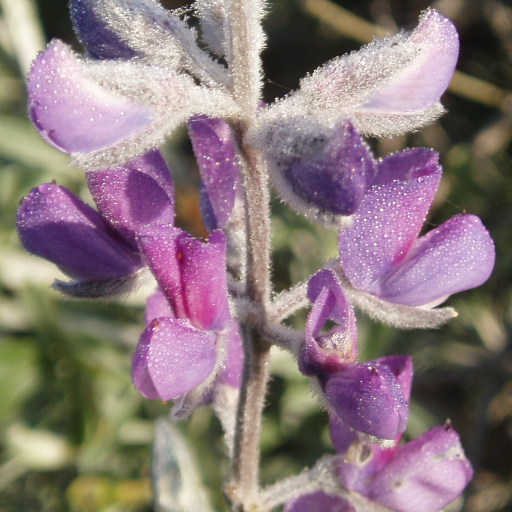
Plant Overview
Known as the Chamisso Bush Lupine or the Silver Bush Lupine, this coastal California native is a shimmering sentinel of the sand dunes. Unlike its low-growing meadow cousins, this lupine develops a sturdy, woody structure that can stand up to salty ocean breezes and shifting sands. It is a favorite for "moonlight gardens" because its dense, silky foliage practically glows under a full moon.
🔍 How to Identify
- 🍃 Silvery Foliage: The palmate (hand-shaped) leaves are covered in tiny, silky white hairs. These hairs reflect sunlight and trap moisture, giving the entire bush a metallic, frosted appearance.
- 🪶 Pea-Like Blooms: It produces striking vertical spikes of violet to deep blue flowers. Each individual blossom has a classic "banner" petal with a yellow or white spot that turns purple after pollination.
- 🪵 Shrubby Habit: While many lupines are soft-stemmed, this species is a true evergreen shrub. It can grow up to 3–5 feet tall and wide, forming a rounded, billowy shape.
🏡 In Your Garden
- 🏖️ Drainage is King: This plant has evolved for the sandy bluffs of the Pacific coast. It "breathes" through its roots and will quickly succumb to root rot if planted in heavy clay or overwatered soil.
- 🧪 Soil Improver: Like all members of the legume family, it works with soil bacteria to "fix" nitrogen. It actually improves the quality of the earth it grows in, making it a perfect "pioneer plant" for nutrient-poor landscapes.
⚠️ Safety & Toxicity
- 🚫 Toxic if Ingested: Most lupine species, including Lupinus chamissonis, contain alkaloids (specifically lupinine and sparteine) that are poisonous to humans and animals.
- 🐾 Pet & Livestock Warning: The seeds and pods are particularly concentrated with toxins. Ingestion can cause respiratory distress, lethargy, or digestive upset in dogs, cats, and horses.
✨ Fun Fact
✨ The silvery hairs on the leaves aren't just for decoration—they act as a sophisticated "bio-armor." By reflecting UV rays and reducing airflow across the leaf surface, the plant can thrive in harsh, salt-sprayed environments where other plants would lose all their water to the wind.

Detailed Care Instructions
To grow Lupinus chamissonis, also known as Chamisso's Lupine, follow these steps:
- Choose the right location: Lupines prefer full sun to partial shade for optimal growth. They also thrive in well-drained soil with good fertility.
- Prepare the soil: Lupines prefer slightly acidic soil with a pH of 5.5 to 6.5. If the soil in your garden is too alkaline, amend it with compost, peat moss, or other organic matter to lower the pH.
- Sow seeds or plant seedlings: You can start Lupinus chamissonis from seeds or purchase seedlings from a nursery. If starting from seeds, soak them overnight before planting to help with germination. Sow seeds directly in the ground in early spring or late fall, or start them indoors 8-10 weeks before the last frost date. If using seedlings, transplant them into the garden after the last frost.
- Space the plants: Lupines can grow up to 3 feet tall and spread about 2 feet wide. Space the plants 1-2 feet apart to give them enough room to grow and avoid overcrowding.
- Water regularly: Keep the soil consistently moist but not waterlogged. Water deeply to encourage the roots to grow deep into the soil. Once established, lupines are somewhat drought-tolerant but still appreciate occasional watering during dry spells.
- Mulch the soil: Apply a layer of organic mulch around the plants to retain moisture and suppress weed growth. This also helps to keep the soil cool during hot summer months.
- Fertilize if needed: If your soil is lacking in fertility, you can apply a balanced, slow-release fertilizer in early spring or early summer. Avoid high nitrogen fertilizers as they can encourage excessive leaf growth at the expense of flower production.
- Support taller varieties: If you're growing taller varieties of Lupinus chamissonis, like the blue lupine, consider staking them with bamboo stakes or using a plant support to prevent them from flopping over.
- Deadhead spent flowers: To encourage continuous blooming, deadhead the faded flowers by removing them with pruners or by pinching off the spent blooms. This will prevent the plant from putting energy into seed production and instead focus on producing more flowers.
- Control pests and diseases: Lupines are generally quite resistant to pests and diseases. However, keep an eye out for aphids, slugs, and snails. If any infestation occurs, treat accordingly with organic pesticides or manually remove them. Additionally, good air circulation and proper spacing can help prevent the development of fungal diseases.
- Enjoy the blooms: Lupinus chamissonis produces vibrant spikes of flowers in various colors, including purple, pink, blue, and white. Enjoy their beauty and display them in your garden or cut them for floral arrangements.

Place in a bright room that is sun drenched almost all day. Or directly in a south-facing window.

To water the plant in question, assess the moisture level in the soil by inserting your finger about 1-2 inches into the soil. If the soil feels dry, it is time to water. Water the plant deeply, ensuring that the water reaches the roots. Avoid getting water on the leaves or flowers. Allow the soil to dry out slightly before watering again. It is important to water consistently, but not overwater as this can lead to root rot.
To effectively fertilize this plant, apply a balanced fertilizer that contains a high amount of phosphorous and potassium. This should be done once a month during the growing season. Be sure to follow the instructions on the fertilizer packaging and apply it evenly around the base of the plant. It's important to water thoroughly after fertilization to ensure proper absorption of the nutrients. Avoid over-fertilizing as this can lead to excessive foliage growth and decrease flower production.
Lupinus Chamissonis is a type of plant that prefers well-draining soil with a neutral pH level. The soil should be loose, aerated, and fertile, meaning it should contain high levels of nutrients such as nitrogen, phosphorus, and potassium. Additionally, the soil should be free from contaminants such as heavy metals and pesticides. One option is to use a mix of sandy loam and compost, which provides good drainage, aeration, and nutrition for the plant. Additionally, the plant prefers soil that is slightly acidic to neutral, typically between a pH range of 6.0 to 7.0. It is important to avoid using soil that is heavy clay or compacted, as this can cause drainage issues and lead to root rot. Overall, using well-draining, nutrient-rich soil will promote healthy growth and vibrant blooms for Lupinus Chamissonis.
Lupinus chamissonis is a flowering plant that can be propagated from its seeds. The seeds should be collected from a mature plant when they are fully ripened and have turned brown. They should be stored in a cool and dry place until the planting season arrives.
Before planting, the seeds should be scarified or soaked in water for a few hours to soften the hard seed coat. This will allow the seed to germinate faster and strengthen the seedling. After the seeds have been scarified, they can be sown directly into the soil where they are intended to grow.
When planting the seeds, care should be taken to ensure that they are spaced apart by at least 8-10 inches. The soil should be well-draining and fertile, with a pH level between 6.5 and 7.5. The seeds should be covered with a thin layer of soil and watered gently. The soil should be kept moist but not waterlogged.
Seedlings will emerge in about 2-3 weeks after planting. They should be thinned out to allow for proper spacing and growth. Once the seedlings are well-established, they can be transplanted to their final growing location.
Lupinus chamissonis can also be propagated from cuttings. Softwood cuttings can be taken in late spring or early summer. The cuttings should be taken from the most recent growth and should be about 4-6 inches long. The leaves should be removed from the bottom half of the cutting, and the remaining leaves should be trimmed to reduce water loss.
The cuttings should be planted in a well-draining rooting medium, such as perlite or vermiculite. They should be kept in a warm and humid environment until roots have formed. Once the cuttings have rooted, they can be transplanted to their final growing location.
Lupinus chamissonis can also be propagated from division. This can be done in the fall when the plant is dormant. The plant should be dug up and divided into smaller clumps. Each clump should have a healthy root system and several shoots. The divided clumps can then be replanted in their final growing location.








