Plant Overview
Known as the Yellow Lupine, this Mediterranean native is like a splash of concentrated sunshine for your garden. While its vibrant, butter-colored flower spikes are a visual delight, this plant is secretly a hardworking "soil engineer." In historical folklore, Lupines were mistakenly named after the Latin word for wolf (Lupus) because people believed they "wolfed down" soil nutrients; in reality, they are one of nature's best fertilizers.
🔍 How to Identify
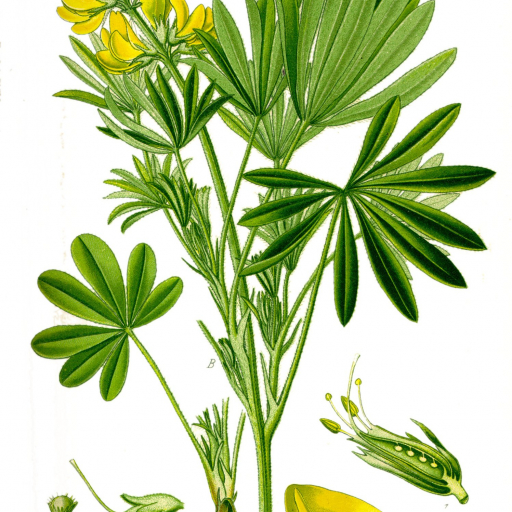
- 🌼 Golden Spikes: It features dense, vertical flower clusters (racemes) that bloom in a brilliant, solid yellow, often emitting a faint, sweet scent reminiscent of honey.
- ✋ Palm-like Leaves: The foliage is "palmate," meaning the leaflets radiate from a central point like the fingers on a hand, often covered in soft, silvery hairs.
- 🫛 Velvety Pods: After flowering, it produces flattened, hairy seed pods that look like small, fuzzy pea pods, turning dark brown as they ripen.
🏡 In Your Garden
- 🌱 The Taproot Rule: This plant develops a long, sturdy taproot very early in its life. Because of this, it absolutely hates being moved once planted. Always sow seeds directly into their "forever home" to avoid transplant shock.
- 🛠️ Soil Mechanic: Yellow Lupine is a nitrogen-fixer. It hosts special bacteria in its roots that take nitrogen from the air and put it back into the earth, making it a perfect "green manure" for reviving tired, sandy patches of your garden.
- 🏖️ Acid Lover: Unlike many other garden plants, this species thrives in poor, sandy, and slightly acidic soils. It will struggle and turn yellow (iron chlorosis) if placed in heavy, lime-rich, or alkaline clay.
⚠️ Safety & Toxicity
- 🚫 Toxic if Ingested: While beautiful, the Yellow Lupine contains quinolizidine alkaloids, specifically lupinine. It should never be eaten by humans or pets.
- 🐾 Pet & Livestock Warning: These alkaloids can cause "Lupinosis," a serious condition affecting the liver. Keep curious dogs, cats, and grazing animals away from the seeds and foliage, as the concentration of toxins is highest in the seeds.
✨ Fun Fact
The Yellow Lupine is a "solar tracker." Its leaves are heliotropic, meaning they actually move throughout the day to follow the sun’s path across the sky, maximizing the energy they can soak up!

Detailed Care Instructions
To grow Lupinus Luteus, also known as yellow lupin or yellow lupine, you can follow these steps:
- Choose the Right Location: Select a location for your Lupinus Luteus that receives full sunlight or partial shade. The soil should be well-draining and fertile.
- Prepare the Soil: Before planting, prepare the soil by removing weeds and loosening it with a garden fork or tiller. Add compost or organic matter to improve soil fertility and drainage.
- Sow or Plant Seeds: Lupinus Luteus can be grown from seed. Sow the seeds directly in the garden bed in early spring. Alternatively, you can start seeds indoors about 6 to 8 weeks before the last frost date in your area and transplant the seedlings later.
- Watering: Keep the soil consistently moist but not waterlogged. Water deeply whenever the top inch of soil feels dry. Avoid overwatering as it can lead to root rot.
- Mulching: Apply a layer of organic mulch around the plants to help retain moisture, suppress weed growth, and maintain a cool root environment.
- Fertilization: Lupinus Luteus plants generally don't require much fertilizer. However, if your soil is poor, you can apply a balanced, slow-release fertilizer once or twice during the growing season. Follow the package instructions for the correct application rate.
- Provide Support: As the plants grow, they may require support. Install stakes or cages around the plants to prevent them from falling over in strong winds.
- Deadheading: To encourage continuous blooming, remove faded flowers by deadheading. This will also prevent the plant from self-seeding excessively.
- Pest and Disease Control: Lupinus Luteus is generally not heavily targeted by pests or diseases. However, keep an eye out for common garden pests like aphids, snails, and slugs. You can use organic insecticides or handpick pests as necessary.
- Harvesting Seeds: If you allow the flowers to naturally fade and dry on the plants, they will produce seed pods. Harvest the seed pods once they turn brown and dry. Remove the seeds from the pods and store them in a cool, dry place until you're ready to plant them.
By following these steps, you should be able to successfully grow Lupinus Luteus plants in your garden.

Place in a bright room that is sun drenched almost all day. Or directly in a south-facing window.

Lupinus Luteus should be watered regularly, but not too frequently. The soil should be kept moist, but not waterlogged. When watering, it is important to avoid getting water on the foliage, as this can lead to disease and fungus. It is best to water in the morning or evening, as watering in the heat of the day can lead to water evaporation before it gets to the roots. The amount of water needed will depend on the size of the plant, the weather, and the type of soil. It is a good idea to monitor the soil moisture by checking the top inch of soil for dryness.
To ensure optimal growth and health of this plant, it is recommended to fertilize it once per month during its growing season. Use a balanced fertilizer with equal parts nitrogen, phosphorus, and potassium. Apply the fertilizer around the base of the plant, being careful not to get it on the leaves or stems. Water the plant thoroughly after fertilizing to help the nutrients absorb into the soil. Avoid over-fertilizing, as this can lead to excessive growth and weak stems.
Lupinus Luteus plant prefers well-drained soil with a pH level between 6.0 and 7.5. It requires soil that is rich in organic matter and has good water-holding capacity. The plant can tolerate moderately acidic to neutral soil, but it may struggle to survive in alkaline soil. A sandy loam or loamy soil type is ideal for this plant, and it should be planted in a location with good sunlight exposure. Additionally, the soil should be free of any plant pathogens or diseases that may harm the plant's growth and development. To promote healthy growth, it is recommended to fertilize the soil before planting with an all-purpose fertilizer, and to mulch around the plant to help conserve moisture in the soil.
Propagation of this particular plant can be done through a few different methods. One way is through seeds, which can be collected from mature plants and then planted in suitable soil conditions. The seeds should be sown at a depth of around 1-2 cm and kept moist until the plants start to grown.
Another method of propagation is by taking cuttings from the plant. This involves taking a stem cutting from the parent plant and then planting it in soil, where it will develop roots and become a new plant. Care must be taken when cutting the stem to avoid damaging the parent plant and to ensure that the cutting is healthy enough to grow.
Finally, this plant can also be propagated by division. This process involves splitting the parent plant into smaller sections, each of which can be replanted and grown as individual plants. This method can be particularly effective for plants that have outgrown their pots or for those that are struggling to grow due to overcrowding.
Regardless of the chosen method of propagation, it is important to ensure that the new plants are grown in suitable conditions and provided with the necessary care and attention to ensure successful growth. This may include providing the right amount of sunlight and water, as well as ensuring that the soil is well-draining and nutrient-rich.








