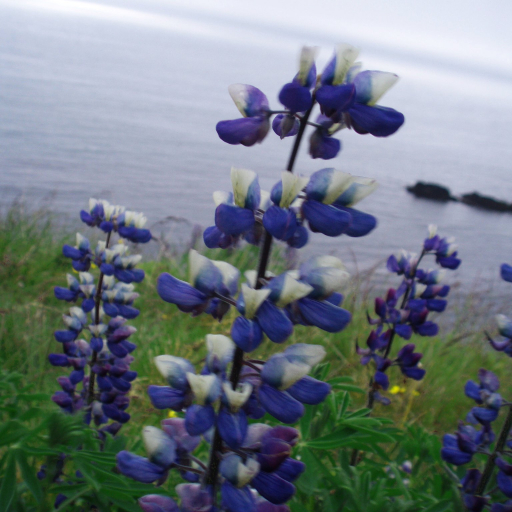
Plant Overview
Often called the Nootka Lupine, this stunning wildflower is a true survivor of the north. Originally hailing from the rugged coastlines of Alaska and British Columbia, it has become famous (and sometimes controversial) for its ability to transform barren, volcanic landscapes into seas of vibrant violet. Whether clinging to a windswept cliff or anchoring a garden border, it is a master of endurance and color.
🔍 How to Identify
- 🌿 Star-Shaped Foliage: The leaves are "palmate," meaning they spread out like the fingers of a hand. Each leaf usually consists of 6 to 8 hairy, grayish-green leaflets.
- 🪻 Towering Flower Spikes: It produces dense, upright clusters of pea-like flowers. While predominantly deep blue or purple, you will often see splashes of white or pink near the center of the blossoms.
- 📏 Robust Stature: Unlike some delicate garden lupines, the Nootka variety is stocky and strong, with thick, hairy stems that help it withstand chilly coastal winds.
🏡 In Your Garden
- 🌱 The Soil Builder: Like other legumes, this plant is a "nitrogen fixer." It has a special relationship with soil bacteria that allows it to pull nitrogen from the air and pump it into the earth, making it a great choice for "healing" poor or sandy soil.
- ⚓ Deep Roots: It develops a very long, stubborn taproot. This makes it incredibly drought-tolerant once established, but it also means it absolutely hates being moved. Pick its "forever home" in your garden carefully!
- 🌬️ Climate Preference: It craves cool summers and bright light. In regions with sweltering, humid nights, the Nootka Lupine may struggle and become prone to powdery mildew.
⚠️ Safety & Toxicity
- 🚫 Status: Toxic to humans and animals.
- 🐾 Details: The plant, especially the seeds and pods, contains bitter alkaloids (like lupinine). If ingested, it can cause "Lupinosis," leading to digestive upset, lethargy, or even respiratory issues in pets, livestock, and small children. Always wash your hands after handling the seed pods.
✨ Fun Fact
The Nootka Lupine is at the center of a huge environmental debate in Iceland. It was introduced there in 1945 to stop soil erosion on the barren island. It was so successful that it now covers miles of the country, leading some to love it for its beauty and others to fear it as an invasive species overtaking native mosses!

Detailed Care Instructions
To grow Lupinus nootkatensis (also known as Nootka lupine or Nootka lupin), you can follow these steps:
- Climate and location: Check if your climate and location are suitable for growing Lupinus nootkatensis. It is native to North America and thrives in cool temperate regions. It prefers full sun but can tolerate partial shade.
- Soil preparation: Lupinus nootkatensis prefers well-draining soil, so prepare the soil by removing any weeds and loosening it to improve drainage. If the soil is heavy or clayey, you can mix in some organic matter like compost to improve its texture.
- Planting time: Lupinus nootkatensis can be grown from seeds. It is best to sow the seeds in early spring or autumn. Soak the seeds in warm water for about 24 hours before sowing to improve germination rates.
- Seed sowing: Prepare a seed tray or small pots filled with seed-starting mix. Sow the seeds on the surface of the soil and lightly press them into the soil. Do not bury them too deep as they require light to germinate.
- Watering: Water the seeds gently after sowing and ensure that the soil remains moist but not waterlogged. Keep the soil consistently moist until the seeds germinate.
- Germination: Lupinus nootkatensis seeds usually germinate within 2-3 weeks. Once the seedlings have developed their first true leaves, it is best to transplant them into individual pots or into the garden.
- Transplanting: Choose a location in the garden that receives full sun or partial shade. Dig a hole that is slightly larger than the root ball of the seedling. Gently remove the seedling from its pot and place it into the hole. Fill in the soil around the seedling, firming it gently.
- Maintenance: Regularly water the plants, particularly during dry spells, to keep the soil consistently moist. Mulching around the plants can help retain soil moisture and suppress weeds. Deadhead the faded flowers to encourage continuous blooming and prevent self-seeding.
- Pruning: After the flowering season, you can cut back the faded flower spikes to promote new growth.
- Winter care: Lupinus nootkatensis is perennial but may die back during winter in colder climates. Mulch the base of the plants to protect them from severe frost.
With proper care, Lupinus nootkatensis should grow and bloom beautifully in your garden.

Place in a bright room that is sun drenched almost all day. Or directly in a south-facing window.

Lupinus Nootkatensis plant should be watered by ensuring that the soil is consistently moist but not waterlogged. It is important to water the plant at the base, avoiding getting the foliage wet to prevent the development of diseases. Watering should be done in the morning or evening to reduce water loss through evaporation. Additionally, the plant's watering needs may vary depending on the season and environmental conditions, so it is important to monitor the soil moisture regularly and adjust the watering schedule accordingly.
To fertilize this plant, use a balanced fertilizer with equal amounts of nitrogen, phosphorus, and potassium. Apply the fertilizer around the base of the plant, avoiding the leaves and stems. Use a fertilizer that is high in organic material and low in salt. Apply the fertilizer at least twice during the growing season, once in the spring and once in the fall. Water the plant deeply after fertilizing to help the nutrients penetrate the soil.
For the Lupinus Nootkatensis plant, it is recommended to use well-draining soil that is rich in organic matter. The pH level of the soil should be between 6 and 7, which is slightly acidic to neutral. The plant also prefers sandy or loamy soil that is not too heavy or clay-like. Adding compost or organic fertilizer to the soil can improve its fertility and texture. It is important to avoid using soil that is too alkaline or salty, as this can harm the plant's growth and health. Additionally, the plant prefers a location that receives full sun or partial shade.
To propagate the plant known as Lupinus Nootkatensis, first collect mature seeds from the parent plants. After collecting the seeds, store them in a cool, dry place until they are ready for planting.
Next, prepare the soil by loosening it up and removing any debris or weeds. Lupinus Nootkatensis prefer well-drained soil with a neutral to slightly acidic pH.
The seeds can be planted directly into the soil in the fall or early spring, or they can be started indoors in pots before transplanting. When starting seeds indoors, use a seedling mix and keep the soil moist but not waterlogged. The seedlings can be transplanted outside once they have developed a few sets of leaves and the threat of frost has passed.
To propagate Lupinus Nootkatensis via cuttings, take a stem cutting from a healthy parent plant in the spring or summer. Remove the leaves from the bottom two-thirds of the cutting and dip the cut end in rooting hormone. Plant the cutting in a pot filled with sandy soil and keep it moist but not waterlogged. The cutting should develop roots and can be transplanted outside once it has grown a few inches and the roots are well-established.
Overall, propagating Lupinus Nootkatensis from seeds or cuttings can be a rewarding way to expand your garden and enjoy the beauty of this plant.








