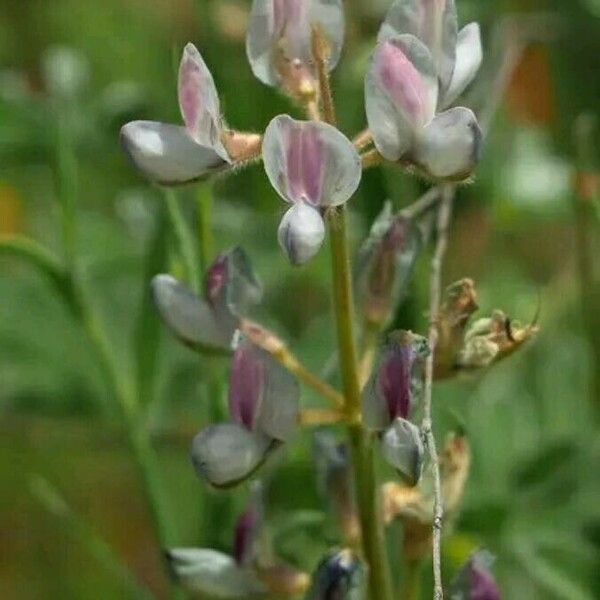
Plant Overview
The Palestine Lupin, often referred to as the "Silver Lupin" in its native regions, is a stunning springtime wildflower native to the Eastern Mediterranean coast. It is famous for transforming sandy dunes and coastal plains into a sea of soft, powdery blue. This hardy legume is a pioneer of the sands, blooming briefly but brilliantly to signal the arrival of the Mediterranean spring.
🔍 How to Identify
- 🌿 Silvery Foliage: The leaves are "palmate" (shaped like an open hand) with 7 to 11 leaflets. They are covered in dense, silky white hairs that catch the light, giving the entire plant a shimmering, silvery-green appearance.
- 🪻 Pea-like Blossoms: The flowers grow on upright spikes. Each individual bloom is shaped like a classic sweet pea, usually appearing in shades of pale sky blue, lilac, or lavender, often with a white or creamy yellow spot in the center.
- 🫘 Hairy Pods: After flowering, the plant produces thick, fuzzy seed pods. When these pods dry out in the summer heat, they twist and "pop" with an audible crack to fling their seeds across the sand.
🏡 In Your Garden
- 🌱 The Taproot Rule: This plant develops a very deep, sturdy taproot quickly to find water in sandy soil. Because of this, it hates being transplanted. If you are growing it, sow the seeds directly into the ground rather than starting them in pots.
- 🏜️ Poor Soil Specialist: It actually prefers "starving" soil. As a nitrogen-fixer, it has a symbiotic relationship with bacteria in its roots that allows it to pull fertilizer straight from the air. Adding heavy compost or fertilizer will often result in lots of leaves but very few of those iconic blue flowers.
⚠️ Safety & Toxicity
- 🚫 Toxic if Ingested: Most wild lupin species, including Lupinus palaestinus, contain high levels of bitter alkaloids such as lupinine and sparteine.
- 🐾 Pet & Child Safety: The seeds and pods are the most toxic parts. Ingestion can cause "lupinosis," leading to digestive upset, lethargy, or in severe cases, respiratory issues. It is best treated as an ornamental plant and kept away from curious pets or toddlers.
✨ Fun Fact
The leaves of the Palestine Lupin are solar-powered dancers! They are "heliotropic," meaning they physically rotate throughout the day to follow the sun’s path across the sky, ensuring they capture every possible bit of energy before the sun sets.

Detailed Care Instructions








