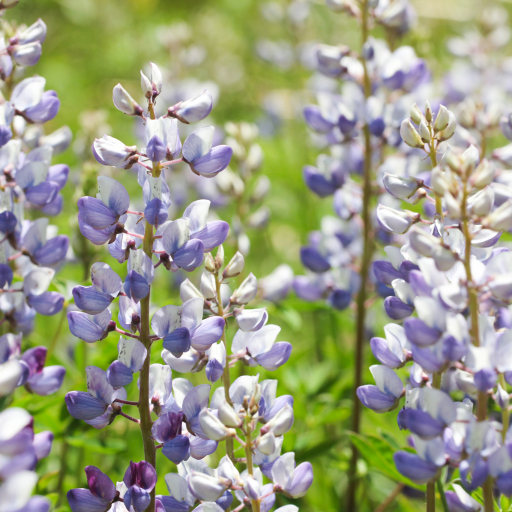
Plant Overview
Often called the Sundial Lupine or Wild Lupine, this North American native is a prairie icon that paints meadows in ethereal shades of violet-blue. It is more than just a pretty face; it is a "pioneer plant" that heals the soil as it grows. Its most famous role, however, is as the sole guardian of one of the world’s rarest insects, making it a must-have for conservation-minded gardeners.
🔍 How to Identify
- 🍃 Starry Foliage: Features palmately compound leaves with 7 to 11 slender leaflets radiating from a single center point, resembling a green star or an outstretched hand.
- 🪻 Spired Blooms: Tall, upright flower spikes (racemes) emerge in late spring, crowded with classic "pea-shaped" blossoms that transition from deep blue to soft lavender.
- ☁️ Silvery Sheen: The stems and the undersides of the leaves are often covered in fine, silky hairs that catch the morning dew and give the plant a frosted appearance.
🏡 In Your Garden
- ⏳ The "No-Move" Rule: This plant develops a long, stubborn taproot very quickly. This makes it incredibly drought-tolerant once established, but it absolutely hates being moved. Choose its "forever home" carefully, as transplanting usually results in failure.
- 🏜️ Thrives on Neglect: Do not use heavy fertilizers! As a legume, it works with underground bacteria to "fix" its own nitrogen. It actually prefers sandy, nutrient-poor, and slightly acidic soil where more aggressive garden plants might struggle.
- 🦋 A Butterfly Life-Line: If you are in the Great Lakes or Northeast regions, this plant is essential. It is the only food source for the larvae of the endangered Karner Blue butterfly. By planting it, you are directly helping a species avoid extinction.
⚠️ Safety & Toxicity
- 🚫 Potentially Toxic: All parts of the plant, especially the seeds contained in the fuzzy pods, contain quinolizidine alkaloids.
- 🐾 Pet & Livestock Risk: While humans rarely eat lupine, it is a concern for curious dogs and livestock. Ingestion can lead to "Lupinosis," a condition characterized by lethargy, breathing difficulties, and in extreme cases, tremors.
✨ Fun Fact
☀️ The Living Compass: It earned the nickname "Sundial Lupine" because of its heliotropic leaves. Throughout the day, the leaflets physically rotate to follow the sun's path across the sky, maximizing the energy they can harvest for photosynthesis.

Detailed Care Instructions
To grow Lupinus perennis, also known as wild lupine or sundial lupine, you can follow these steps:
- Choose a suitable location: Lupinus perennis prefers full sun to partial shade. Select a spot in your garden that receives at least 6 hours of direct sunlight per day.
- Prepare the soil: Lupines require well-draining soil. Loosen the soil and remove any weeds or debris. If the soil is heavy or clayey, amend it with compost or organic matter to improve drainage.
- Sow the seeds: Lupinus perennis can be grown from seeds. You can start the seeds indoors around 8-10 weeks before the last spring frost or directly sow them in the garden after the danger of frost has passed. Plant the seeds about ¼ inch deep and space them 6-12 inches apart.
- Watering: Keep the soil consistently moist but not waterlogged. Avoid overwatering as it can cause root rot. Water the plants at the base rather than overhead to prevent foliar diseases.
- Mulching: Apply a layer of organic mulch around the plants to help retain moisture, suppress weeds, and regulate soil temperature. Avoid placing the mulch directly against the stems to prevent rotting.
- Pruning: Deadhead the faded flowers regularly to encourage continuous blooming and prevent self-seeding. However, if you want seeds for future propagation, leave some flowers to mature and drop their seeds.
- Fertilization: Lupines are generally not heavy feeders. However, if your soil is poor, you can apply a balanced slow-release fertilizer once or twice during the growing season, following the package instructions. Alternatively, you can top dress with compost or well-rotted manure in early spring.
- Support: Lupines can grow quite tall and may require support to prevent toppling over due to wind or heavy rain. Stake or provide a support structure for the plants if needed.
- Pest and disease control: Lupines are relatively resistant to pests and diseases. However, keep an eye out for aphids, slugs, and snails. Treat any infestations promptly using appropriate organic pest control methods.
- Propagation: Lupines can produce a taproot as they mature, which makes them challenging to transplant successfully. It is best to propagate by collecting seeds after the pods have dried and turned brown. Store the seeds in a cool, dry place until you are ready to sow them.
By following these steps and providing the necessary care, you can successfully grow Lupinus perennis in your garden.

Place in a bright room that is sun drenched almost all day. Or directly in a south-facing window.

To water this plant, you should first check the soil surrounding it to see if it is dry. If it is, you should give it a good watering until the soil is moist but not soaked. It is important not to let the soil become completely dry as this plant prefers to be consistently moist. However, be careful not to overwater it as this can lead to root rot. It is recommended to water this plant in the morning so that any excess water can evaporate during the day. Ensure that the water is directed towards the base of the plant to avoid getting the foliage wet and causing fungal diseases. During periods of drought, it is important to maintain regular watering to keep the plant healthy.
To fertilize this plant, use a balanced fertilizer with equal amounts of nitrogen, phosphorus, and potassium. Apply the fertilizer in the spring, just as the plant begins to show new growth. Follow package instructions for application rates, as over-fertilizing can harm the plant. Avoid fertilizing during the fall or winter months, as the plant goes dormant during this time. Always water the plant thoroughly after fertilizing to ensure the nutrients are absorbed by the root system.
Lupinus Perennis plant requires well-draining soil that is slightly acidic with a pH between 6.0 and 7.5. The soil should be rich in organic matter and should not be compacted. The plant prefers soil that is moist but not waterlogged, and it does not tolerate drought conditions. It is recommended to add compost or other organic matter to the soil prior to planting to improve soil structure and fertility. In addition, the plant benefits from a layer of mulch around its base to conserve moisture and suppress weeds.
To propagate this plant, first gather mature seeds from the plant's seed pods. Remove any debris or excess chaff from the seeds, then soak them in water for 24-48 hours to improve germination rates. Sow the seeds in a well-draining soil mix, pressing them into the soil and covering them lightly with a thin layer of soil. Water them gently and keep the soil moist but not waterlogged.
Once the seeds have germinated and the seedlings have developed their first true leaves, they can be transplanted into larger containers or directly into the ground. Make sure to give them plenty of space and well-draining soil with full sun exposure. Water them regularly and fertilize them occasionally to encourage healthy growth.
Another method of propagation is by taking stem cuttings from established plants. Choose a healthy, non-flowering stem and cut it at a 45-degree angle with a sterile pair of pruning shears. Remove the lower leaves from the stem and dip the cut end in rooting hormone powder. Plant the cutting in a pot filled with a well-draining soil mix and water it gently. Place it in a bright, humid location and keep the soil moist but not waterlogged. Eventually, the cutting will develop roots and can be transplanted into its permanent location.
Common pests of the wild lupine include Aphids. Make a habit of checking your wild lupine frequently for pests so that any infestations can be caught and managed early.








