Plant Overview
Often called the Meadow Lupine, this hardy perennial is a signature of the American West’s high deserts and mountain foothills. Its scientific name, prunophilus, literally means "plum-loving," a nod to its tendency to grow nestled among wild plum thickets and sagebrush. It is a rugged beauty that paints dry landscapes with vibrant purples and blues every spring.
🔍 How to Identify
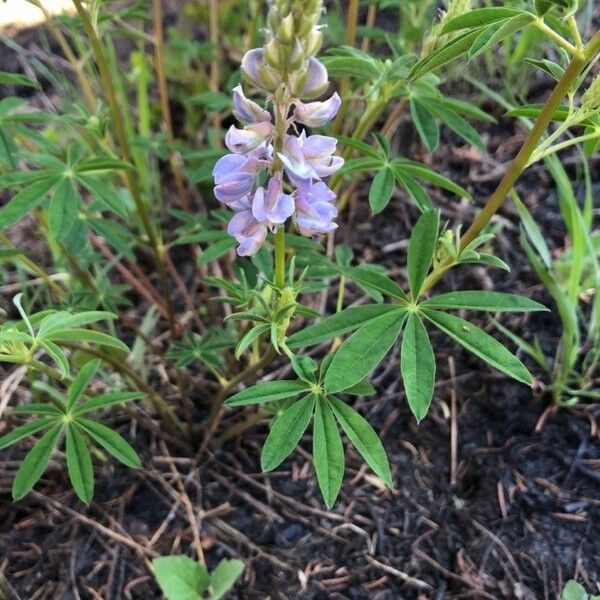
- 🌿 The "Palm" Leaves: The foliage is palmately compound, meaning 7 to 11 leaflets radiate from a central point like the fingers of an outstretched hand.
- 🫐 Pea-Shaped Blooms: It produces upright spikes (racemes) of classic "pea-like" flowers. These are usually a deep violet or royal blue, often featuring a distinct white or yellowish patch on the upper "banner" petal.
- ☁️ Silky Coating: Look closely at the stems and the underside of the leaves; they are covered in fine, silvery-white hairs that give the plant a soft, frosted appearance and help it retain moisture.
🏡 In Your Garden
- 🏜️ Drought Specialist: Unlike many ornamental lupines, this species is built for the "tough life." It thrives in rocky, well-drained soils and requires very little supplemental water once its root system is established.
- 🚫 The Taproot Rule: This plant develops a deep, stubborn taproot to find water. Because of this, it hates being moved. Always plant seeds or young nursery starts in their "forever home" to avoid transplant shock.
- 🐝 Pollinator Magnet: It is a vital source of nectar for native bees and butterflies, making it an excellent choice for a wild-scape or xeriscape garden.
⚠️ Safety & Toxicity
- 🐾 Toxic to Pets & Livestock: Meadow Lupine contains bitter alkaloids (like lupinine). It is notoriously dangerous for sheep and cattle, and it should be kept away from curious dogs or cats who might chew on the foliage.
- 👶 Seed Warning: The seed pods look remarkably like small garden peas or beans, but they are the most toxic part of the plant. Ensure children are taught never to "harvest" or eat these wild beans.
✨ Fun Fact
🐺 The "Wolf" Myth: The genus name Lupinus comes from the Latin word for "wolf." For centuries, farmers believed lupines "wolfed down" the nutrients in the soil because they were often seen growing in barren, poor ground. In reality, lupines do the opposite—they "fix" nitrogen from the air, actually making the soil richer for other plants!

Detailed Care Instructions








