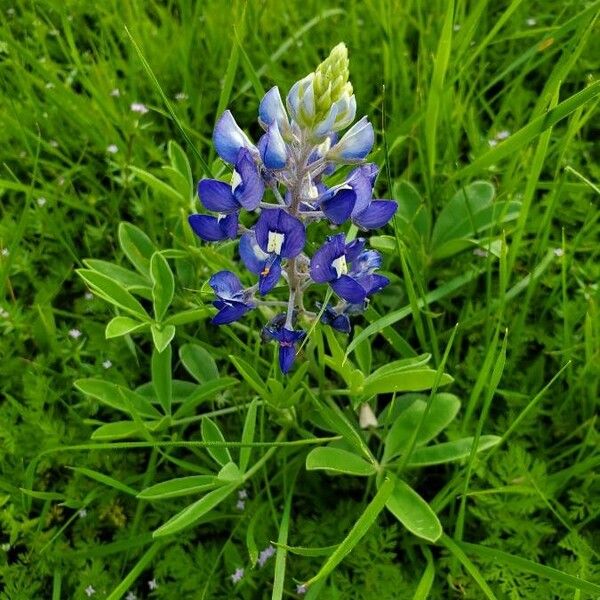
Plant Overview
Known as the "Sandyland Bluebonnet," this charming wildflower holds a prestigious place in history as the original state flower of Texas. While it is often overshadowed by its flashier cousin, the Texas Bluebonnet (Lupinus texensis), this species is beloved for its delicate, deep-blue blossoms that paint the sandy prairies in shades of indigo every spring. It is a hardy pioneer plant that thrives where others struggle, signaling the official end of winter.
🔍 How to Identify
- 🪻 Pea-Like Blossoms: The flowers grow in terminal spikes, featuring a deep blue "banner" petal with a distinct white or yellow center that turns reddish-purple once the flower has been pollinated.
- 🌿 Palmate Foliage: The leaves are shaped like an open hand, typically consisting of five rounded, light-green leaflets that radiate from a central point.
- 🌱 Succulent Stems: True to its Latin name subcarnosus (meaning "somewhat fleshy"), the stems and leaves are slightly thicker and more succulent to the touch compared to other lupines.
🏡 In Your Garden
- 🏜️ Sandy Soil Specialist: This lupine is a specialist for well-drained, sandy soils. Because it develops a very long, sensitive taproot early in its life, it is notoriously difficult to transplant; it is best started from seed directly in the spot where you want it to grow.
- 🔄 Naturalizing annual: As an annual, it completes its life cycle in one season. If you leave the seed pods to dry on the plant, they will eventually "pop" and fling their seeds several feet away, ensuring a fresh carpet of blue the following spring without any extra work.
⚠️ Safety & Toxicity
- 🚫 Toxic if Consumed: Like most members of the Lupinus genus, this plant contains lupine alkaloids (specifically in the seeds and pods).
- 🐾 Pet & Livestock Risk: It is considered toxic to dogs, cats, and horses if eaten in large quantities. Ingestion can lead to "lupinosis," characterized by lethargy, respiratory depression, or digestive upset. Always supervise pets in areas where bluebonnets are seeding.
✨ Fun Fact
In 1901, a heated "Flower War" broke out in the Texas Legislature. Some wanted the cotton boll to be the state flower, while others wanted the cactus. Lupinus subcarnosus won the title initially, but many felt it was too "dainty." After 70 years of debate, the law was finally changed to include every variety of Bluebonnet as the collective state flower!

Detailed Care Instructions
To grow Lupinus Subcarnosus (Texas Bluebonnet) plants, follow these steps:
- Choose the right location: Texas Bluebonnet requires full sunlight, so select a spot in your garden that receives at least 6-8 hours of direct sunlight per day.
- Prepare the soil: Texas Bluebonnet prefers well-draining soil, so amend heavy clay soil with organic matter like compost or peat moss to improve drainage. Remove any rocks or debris from the planting area.
- Sow the seeds: Scatter the seeds directly onto the prepared soil in late fall or early winter, as they require a period of cold stratification to break dormancy. Do not bury the seeds deeply, rather just press them lightly into the soil or cover them with a thin layer of loose soil.
- Watering: Once the seeds are sown, water the area lightly. Generally, Lupinus Subcarnosus prefers a little drier soil, so avoid overwatering. Water only when the soil feels dry to the touch, providing deep watering sessions rather than frequent shallow watering.
- Maintenance: Keep an eye on the seedlings. Thin them out if the plants become too crowded, leaving about 6-12 inches of space between each plant. Remove any weeds that may compete for nutrients and sunlight.
- Fertilizing: Lupinus Subcarnosus generally doesn't require additional fertilizer, as too much fertility can sometimes cause the plants to grow tall and leggy. However, you can apply a slow-release, balanced fertilizer in early spring if your soil lacks nutrients.
- Protecting the plants: Provide protection from birds or other animals that may eat the young seedlings by using netting or other physical barriers.
- Blooming and seed collection: Texas Bluebonnets usually bloom in early spring to late spring, depending on the climate. Enjoy the beautiful display of blue flowers. Allow the plants to go to seed naturally, as the seeds are needed for future germination and growth.
- Re-seeding: Typically, Texas Bluebonnets self-seed, dropping their seeds around the mother plant. The seeds will germinate in the next growing season, ensuring the continuation of the plant.
Remember, Lupinus Subcarnosus is a native plant and is well-adapted to the Texas climate. By providing the right growing conditions and minimal interference, it should establish and thrive in your garden.

Place in a bright room that is sun drenched almost all day. Or directly in a south-facing window.

Lupinus Subcarnosus plant requires regular watering to thrive, especially during periods of drought or hot weather. When watering, it is important to avoid overwatering, as this can lead to root rot and other issues. The plant does best when the soil is kept consistently moist but not waterlogged.
To water this plant, begin by checking the soil moisture level. Stick your finger into the soil to a depth of about two inches. If the soil feels dry at this depth, it is time to water.
The best way to water this plant is to use a watering can or hose with a gentle, low-pressure spray nozzle. Water the soil around the base of the plant, avoiding the leaves and stem as much as possible. Allow the water to soak into the soil slowly and deeply, rather than spraying it all over the surface.
During periods of hot weather or drought, you may need to water the plant more frequently. However, it is also important to avoid watering too much, as this can lead to root rot and other issues. Aim to water the plant deeply once or twice a week, depending on the weather and soil conditions.
If you notice that the plant is wilting or its leaves are turning yellow, this may be a sign that it is not receiving enough water. Increase your watering frequency and monitor the plant's growth and health closely. Over time, you will learn to recognize the signs of when your Lupinus Subcarnosus plant needs water and when it does not.
For optimal growth and health, fertilize the plant in the early spring with a balanced fertilizer, such as a 10-10-10 or 12-12-12 blend. Apply the fertilizer according to the package instructions, typically broadcasting it evenly over the soil around the plant and then watering thoroughly. During the growing season, you can also side-dress the plant with additional fertilizer about 6-8 weeks after planting or when you see new growth emerging. Be sure to avoid getting fertilizer on the leaves or stems of the plant, as this can cause burn or damage.
Lupinus Subcarnosus grows best in a well-draining soil that is not too heavy or compacted. It prefers a soil that is slightly acidic with a pH of around 6.5 to 7.5. The soil should also be nutrient-rich, but not overly fertile, as excess fertilizer can lead to leggy growth and reduced flowering. To ensure the soil is suitable for this plant, it's recommended to perform a soil test beforehand. The plant prefers to grow in full sun but can tolerate some shade. It's important to ensure the plant is not overwatered, as it prefers dry to moderate soil moisture levels. Adding organic matter to the soil can also improve its overall health and allow the plant to thrive.
To propagate this plant, collect mature seeds from the plant during the fall season. Place the seeds in a paper bag and store in a cool, dry place until the following spring. In the spring, sow the seeds in a well-draining soil mixture and cover lightly with soil. Water regularly and provide bright, indirect light. The seedlings should emerge within a few weeks and can be transplanted into individual containers once they have developed several true leaves. Alternatively, the plant can be propagated through stem cuttings taken in the spring or early summer. Select a healthy stem and cut a section with a length of approximately 4-6 inches. Remove any lower leaves and plant the cutting into a potting mixture or directly into the ground. Keep the soil moist and provide bright, indirect light. The cutting should begin to root within several weeks and can be transplanted into individual containers or outside once it has established roots.








