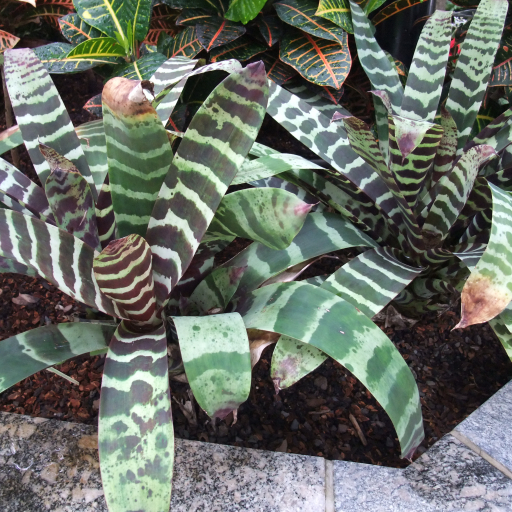
Plant Overview
Affectionately known as the "Flaming Sword," Lutheria splendens is a tropical masterpiece that brings the vibrant energy of the Venezuelan rainforest into your home. This stunning bromeliad is famous for its dramatic, spear-like flower spike that emerges from a base of zebra-striped leaves. It is a slow-growing "architectural" plant that rewards patient gardeners with a bloom that can last for several months.
🔍 How to Identify
- ⚔️ The Flower Spike: Its most iconic feature is a flat, sword-shaped bract of brilliant crimson or fiery orange, from which small yellow flowers occasionally emerge.
- 🦓 Banded Foliage: The long, sword-shaped leaves are deep green and marked with striking horizontal bands of dark purple or brownish-black.
- 🌀 Rosette Form: The leaves grow in a tight, funnel-like spiral called a "tank" or "cup," which the plant uses to collect water and nutrients in the wild.
🏡 In Your Garden
- 💧 The Central Cup: Because this plant is an epiphyte (a "tree-dweller"), it drinks through its leaves. You should keep the central "well" of the plant filled with fresh rainwater or distilled water, flushing it out every few weeks to prevent stagnation.
- ☀️ Light & Color: To maintain the high-contrast bands on the leaves and encourage a bloom, it needs bright, indirect light. Direct afternoon sun acts like a magnifying glass and will quickly scorch the foliage.
- 🪴 Airy Roots: Its root system is primarily for anchoring itself rather than absorbing nutrients. If you pot it, use a very loose, orchid-like bark mix; heavy garden soil will suffocate the roots and lead to rot.
⚠️ Safety & Toxicity
- ✅ Pet Friendly: Lutheria splendens is generally considered non-toxic to cats, dogs, and horses, making it a safe choice for pet-filled households.
- 👶 Child Safety: While not poisonous, the leaf edges can be slightly stiff. It is best placed on a high shelf or pedestal where curious hands won't accidentally pull it down or get poked by the foliage.
✨ Fun Fact
The Flaming Sword is a "one-hit wonder"—it is monocarpic, meaning it blooms only once in its lifetime. However, before the parent plant fades away, it produces tiny clones called "pups" at its base, allowing you to start the entire lifecycle over again!

Detailed Care Instructions
To grow Ludwigia splendens (also known as Ludwigia repens or red Ludwigia), you can follow these steps:
- Choose a suitable environment: Ludwigia splendens thrives in aquariums, ponds, or outdoor water gardens. It requires warm temperature and bright light conditions for optimal growth.
- Provide proper lighting: Ensure that the plant receives sufficient lighting for at least 8-10 hours daily. If using artificial lighting, consider using full-spectrum lights or LEDs specifically designed for aquatic plants.
- Select a nutrient-rich substrate: Ludwigia splendens prefers a nutrient-rich substrate like aquatic soil or clayey dirt topped with gravel. The substrate should be deep enough for the roots to grow well.
- Plant the stem cuttings: Ludwigia splendens can be propagated by stem cuttings. Cut a healthy stem about 2-4 inches long from an existing plant. Remove any leaves from the lower end of the cutting and bury it about an inch deep into the substrate.
- Maintain water conditions: Ludwigia splendens prefers slightly acidic to neutral water with a pH of 6.0-7.5. Maintain the water temperature between 72-82°F (22-28°C). Make sure the water is clean and well-filtered to prevent any algae or water quality issues.
- Enhance CO2 levels: Ludwigia splendens benefits from the addition of carbon dioxide (CO2) in the water. You can add a CO2 injection system or use liquid carbon supplements to boost growth.
- Fertilize regularly: Ludwigia splendens requires regular fertilization with a liquid aquarium fertilizer to supplement the nutrients in the water. Add the recommended dose as per the fertilizer's instructions to ensure healthy growth.
- Prune and trim regularly: To encourage bushier growth, prune the top of the stems or excessive growth regularly. This will promote lateral branching and prevent the plant from becoming too tall and leggy.
- Monitor for pests and diseases: Ludwigia splendens is generally resistant to pests and diseases. However, keep an eye out for signs of fungal or bacterial infections, yellowing leaves, or insect infestation. Treat any issues promptly to prevent their spread.
- Provide regular maintenance: Conduct regular water changes, remove any decaying or dead plant matter, and maintain good overall water quality to ensure the health and vigor of Ludwigia splendens.
By following these guidelines, you should be able to successfully grow Ludwigia splendens.

Place in a window with dappled sun or a spot in the middle of a room. Or directly in a window facing west or east.

To water this plant, ensure that you are not overwatering it as it does not prefer soggy soil. You can water it once a week or when the top layer of soil is dry to the touch. Make sure that you are not watering the leaves as it can lead to fungal infections, so it is better to water the soil directly. You can use room temperature water that has been left out for a day or two to ensure that any chemicals or chlorine have evaporated. Additionally, ensure that the pot has adequate drainage to avoid waterlogging.
For optimal growth and health, it is recommended to fertilize Lutheria Splendens regularly during the growing season. Choose a balanced fertilizer with equal parts nitrogen, phosphorus, and potassium and apply it every 1-2 months. Be sure to follow the manufacturer's instructions regarding the amount and frequency of application. In addition to fertilizer, it is important to provide the plant with adequate water and sunlight to promote healthy growth.
For optimal growth and health of this plant, it is recommended to use a well-draining soil mix that is rich in organic matter. A mix of peat moss, perlite, and vermiculite is a good option. The soil should be slightly acidic with a pH level of around 5.5 to 6.5. It is important to avoid using heavy clay soils or soils that retain too much moisture, as this plant prefers a moderate to dry soil environment. Additionally, adding a slow-release fertilizer to the soil mix can provide essential nutrients for the plant's growth and development.
To propagate this plant, first select a healthy stem tip cutting that is approximately 4-6 inches long. Make a clean cut just below a node using a sharp, clean pair of scissors or pruning shears. Remove any lower leaves to create a bare stem.
Next, prepare a small pot or container with a moist, well-draining potting mix. You can use a mix of soil, sand, and perlite to create an ideal growing medium. Dip the cut end of the stem into a rooting hormone powder to encourage root growth, then gently insert it into the potting mix.
Water the cutting and cover it with a plastic bag or plastic wrap to create a humid environment. Place the pot in a warm, brightly lit location, but out of direct sunlight. Mist the cutting with water every few days to keep the soil moist and help prevent wilting.
After a few weeks, check for signs of new growth and root development. Once the cutting has produced new leaves and roots have emerged from the bottom of the pot, it can be transplanted into a larger container or outdoor garden bed.
Common pests of the flaming sword bromeliad include Scale insect, mealybugs, spider mites. Make a habit of checking your flaming sword bromeliad frequently for pests so that any infestations can be caught and managed early.








