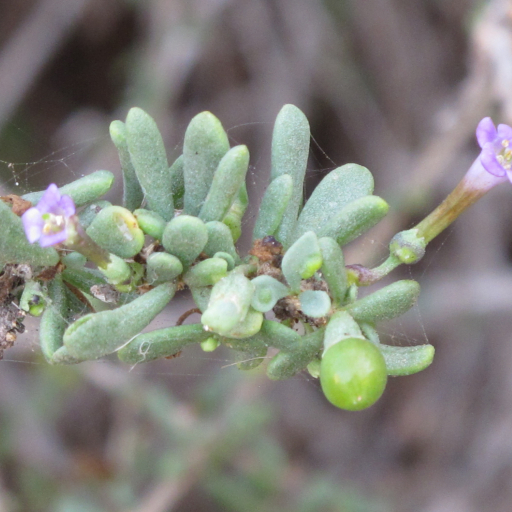
Plant Overview
Known as the Intricate Box-thorn or Desert Thorn, Lycium intricatum is a resilient architect of the Mediterranean coastlines. It forms dense, silver-grey thickets that look like nature’s own barbed wire, providing a fortified sanctuary for small birds. While it may look rugged and unapproachable, it surprises observers with delicate, trumpet-shaped flowers that bring a splash of violet to arid landscapes.
🔍 How to Identify
- 🌵 Tangled Architecture: The branches grow in a complex, zig-zag pattern that creates a dense, "intricate" shrub often wider than it is tall.
- 🍃 Succulent Leaves: The leaves are small, fleshy, and club-shaped, designed to store moisture against the scorching sun and salty winds.
- 💜 Violet Blooms: Small, tubular flowers emerge directly from the stems, ranging in color from pale lavender to deep purple.
- 🔴 Ruby Berries: After flowering, the plant produces tiny, round berries that ripen to a vibrant red or orange, looking like scattered jewels among the thorns.
🏡 In Your Garden
- 🌊 Coastal Specialist: This is one of the few plants that truly thrives in "harsh" conditions. It is exceptionally tolerant of salt spray, making it a go-to choice for seaside gardens where other plants wither.
- 🛡️ Living Security: Due to its impenetrable, thorny growth habit, it functions as a fantastic natural barrier or "security hedge" that also provides essential nesting sites for local bird populations.
- ☀️ Drought Warrior: It prefers "neglect" in terms of watering. Once its root system is established, it can survive long periods of drought, though it requires a spot with maximum sun exposure to prevent it from becoming leggy.
⚠️ Safety & Toxicity
- ⚔️ Physical Warning: The most immediate danger is the plant’s thorns. They are stiff and sharp; always wear thick gardening gloves and eye protection when pruning or handling this shrub.
- 🐾 Pet & Child Safety: While it is a relative of the edible Goji berry, Lycium intricatum belongs to the Solanaceae (Nightshade) family. The berries can contain alkaloids that may cause digestive upset if ingested in large quantities. It is best to treat the fruit as ornamental rather than edible.
✨ Fun Fact
- 🧬 A Superfood Relative: This plant is a wild cousin of the famous "Goji Berry" (Lycium barbarum). While it hasn't achieved the same "superfood" fame, it shares the same incredible DNA that allows the genus to survive in some of the most saline and arid environments on the planet!

Detailed Care Instructions
| Humidity | High |
| Lighting | Full Sun |
| Toxicity | Poisonous |
| Difficulty | Medium |
| Hardiness Zones | 8 - 11 |
To grow Lycium intricatum, also known as the desert thorn, you can follow these steps:
- Choose a suitable location: Lycium intricatum prefers full sun and well-draining soil. Make sure the area receives at least 6-8 hours of direct sunlight per day.
- Prepare the soil: Before planting, amend the soil with organic matter such as compost to improve its fertility and drainage.
- Propagation: Lycium intricatum can be propagated from seeds or cuttings. If using seeds, scarify them by gently rubbing them with a fine sandpaper to help with germination. Soak the seeds overnight in warm water before planting.
- Planting: If using seeds, plant them about 1/4 inch deep in the prepared soil. Keep the soil moist but not waterlogged until the seedlings emerge, which usually takes about 2-3 weeks. If using cuttings, dip the cut ends in rooting hormone and plant them directly in the soil.
- Watering: Once established, Lycium intricatum is drought-tolerant and can withstand dry conditions. Water sparingly, allowing the top inch of soil to dry between waterings. However, during the establishment phase, provide regular watering until the plant develops a strong root system.
- Mulching: Apply a layer of organic mulch around the base of the plant to help conserve moisture and suppress weed growth.
- Pruning: Lycium intricatum has a sprawling growth habit. Prune it to shape and remove any dead or damaged branches in late winter or early spring before new growth begins.
- Fertilizing: Lycium intricatum does not require much fertilization. However, if the plant shows signs of nutrient deficiency, apply a balanced fertilizer in early spring.
- Pests and diseases: Lycium intricatum is generally resistant to pests and diseases. Monitor the plant for any signs of infestation or infection and take appropriate measures to control them if necessary.
With proper care and attention, Lycium intricatum can grow into a beautiful and resilient plant in your garden or landscape.

Place in a window with dappled sun or a spot in the middle of a room. Or directly in a window facing west or east.
When providing water to the plant known by the scientific name Lycium Intricatum, it is important to consider a few factors. Firstly, the plant prefers well-drained soil, so make sure the water is not sitting in the soil. Secondly, the plant likes soil that is slightly moist, not too dry or too wet.
Start by checking the soil moisture level by sticking your finger in the soil up to the second knuckle. If the soil is dry at this depth, it is time to water the plant. Consider using a watering can or a hose with a gentle stream to apply water around the base of the plant. Avoid watering the foliage as this can cause leaf spots or fungal diseases to occur.
Water the plant early in the morning or late in the afternoon to prevent evaporation from the sun and to allow the plant to absorb water when it needs it most. Be careful not to overwater the plant, and reduce watering in the winter when the plant is dormant.
In summary, provide water to the Lycium Intricatum by checking the soil moisture level, applying water around the base of the plant, avoid watering foliage, watering early in the morning or late in the afternoon, and not overwatering the plant.
To fertilize this plant, you should first choose a balanced fertilizer with equal amounts of nitrogen, phosphorus, and potassium. One application in early spring and another in early summer should be sufficient. When applying the fertilizer, make sure to spread it evenly around the base of the plant, being careful not to allow the fertilizer to touch the stem. Water the plant immediately after applying the fertilizer to help it absorb the nutrients. Avoid over-fertilizing as it can damage the plant and harm the environment.
Lycium Intricatum plants prefer well-draining soil that is rich in nutrients, with a pH level of 6.0 to 7.0. It is important to avoid soils that are clay-heavy or poorly-draining, as this can lead to root rot and other problems. A mix of sandy loam and organic compost is ideal for these plants. Additionally, it is recommended to add coarse sand or perlite to the soil to improve drainage and aeration. Regular fertilization is also essential for optimum growth and health of the plant.
To propagate this particular plant, one can start by obtaining seeds from mature fruits. Once collected, the seeds should be cleaned and placed in moist sand or soil in a container with drainage holes. It is important to keep the soil moist but not waterlogged until the seedlings emerge.
Another method of propagation is through cuttings. Select a healthy stem and cut a 4- to 6-inch section from it. Remove the lower leaves and dip the cut end into a rooting hormone powder. Plant the cutting in a pot filled with a well-draining soil mixture and cover it with a plastic bag to create a humid environment. Keep the soil moist and the cutting in a bright but indirect light until roots develop.
Division is also an effective method of propagation for this plant. Carefully remove the plant from its pot and separate the root ball into two or more sections. Replant the sections in their own pots with fresh soil and water thoroughly.
Overall, it is important to provide the propagated plant with proper care, including regular watering, fertilization, and appropriate lighting conditions.








