Plant Overview
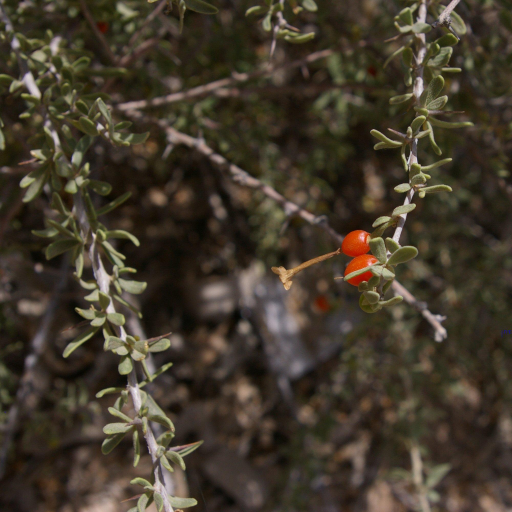
The Lycium shawii, often called the Desert Thorn or Arabian Boxthorn, is a rugged survivor of the sun-scorched landscapes of the Middle East and Africa. Often appearing as a tangled, silver-grey thicket, it hides delicate, bell-shaped flowers and bright ruby berries among its protective spines. In the harsh desert, it serves as a vital oasis for wildlife and has been a staple in traditional desert medicine for centuries.
🔍 How to Identify
- 🌵 Thorny Architecture: It grows as a dense, multi-branched shrub characterized by sharp, stiff spines that act as a natural defense against grazing animals.
- 🍃 Succulent-like Leaves: The foliage consists of tiny, fleshy, spoon-shaped leaves with a dusty grey-green hue, a specialized adaptation to minimize water loss in heat.
- 🌸 Trumpet Flowers: It produces charming, tubular flowers that range from creamy white to pale violet, which eventually give way to small, round, bright red berries.
🏡 In Your Garden
- 🏜️ The Ultimate Xeriscape: This plant is a "halophyte," meaning it is exceptionally tolerant of salty soils and coastal winds where other plants would wither.
- ☀️ Deep Taproot Logic: It is notoriously difficult to transplant once established because it sends a long taproot deep into the earth to find hidden water reserves.
- 🐦 Wildlife Magnet: If you are looking to attract birds, this is a premier choice; the dense, thorny branches provide a "fortress" for nesting, and the berries are a favorite snack for local avian species.
⚠️ Safety & Toxicity
- 🐾 Moderate Risk: While it is a relative of the famous Goji berry, the wild fruits and leaves of Lycium shawii contain alkaloids that can cause digestive distress if consumed by pets or curious children.
- ⚔️ Physical Hazard: The most common injury associated with this plant is from its thorns. They are incredibly sharp and can easily pierce through garden gloves or thin footwear.
✨ Fun Fact
In Bedouin culture, the Lycium shawii is often referred to as a "desert pharmacy." Historically, its silver-grey branches were not only used for medicinal teas but were also burned to create a specific type of charcoal used in traditional cooking.

Detailed Care Instructions
Here are some steps to help you grow Lycium Shawii plant:
- Select the right location: Lycium Shawii plants require full sunlight for optimal growth. Choose a location that receives at least 6-8 hours of direct sunlight every day.
- Prepare the soil: Lycium Shawii plants thrive in well-drained soil with a pH level between 6 and 8. Amend the soil with organic matter like compost or aged manure to improve its fertility and drainage.
- Planting: Dig a hole that is wider and slightly deeper than the pot the plant is currently in. Gently remove the plant from its container and place it in the hole. Backfill the hole with soil and press it firmly around the plant to eliminate any air pockets.
- Watering: Lycium Shawii plants are drought-tolerant but require regular watering until established. Water deeply but infrequently, allowing the soil to dry out between watering sessions. Once the plant is established, reduce the frequency of watering.
- Mulching: Apply a layer of organic mulch around the base of the plant to conserve moisture, suppress weed growth, and regulate soil temperature.
- Pruning: Lycium Shawii plants benefit from regular pruning to maintain their desired shape and size. Prune any dead or diseased branches and cut back any growth that is overcrowding the plant.
- Fertilizing: Lycium Shawii plants are not heavy feeders but can benefit from a balanced fertilizer once or twice a year, preferably in early spring and late summer. Always follow the instructions on the fertilizer packaging for application rates.
- Pest and disease control: Lycium Shawii plants are generally resistant to pests and diseases. However, keep an eye out for common garden pests like aphids, spider mites, and whiteflies. Treat any infestations promptly with organic insecticides or by washing the plant with a strong stream of water.
- Propagation: Lycium Shawii plants can be propagated through seeds or cuttings. To propagate from seeds, collect ripe berries, remove the pulp, and sow the seeds in well-drained soil. For cuttings, take semi-hardwood cuttings in late spring or early summer, dip them in rooting hormone, and plant them in a well-draining growing medium.
- Winter protection: Lycium Shawii plants are cold-hardy but may require protection in areas with harsh winters. Mulch around the base of the plant to insulate the roots and cover the plant with burlap or fleece if temperatures drop below freezing.
Remember to always research the specific care requirements for your particular Lycium Shawii plant variety, as they may have minor variations in growth preferences.
To water this plant, observe the soil's moisture level. Before watering, make sure the top layer of soil is dry to the touch. When watering, avoid getting leaves or stems wet as this can cause damage. Water slowly and evenly, allowing the soil to fully absorb the moisture. Be sure not to overwater, as this can lead to root rot. Make sure the pot has proper drainage to prevent water accumulation at the bottom. Additionally, consider the temperature and humidity of the plant's environment as this may affect watering frequency.
To fertilize the Lycium Shawii plant, you can use a balanced, slow-release fertilizer with an N-P-K ratio of 10-10-10 or similar. Apply the fertilizer in the spring before new growth appears, and again in mid-summer. Be sure to follow the package instructions for the proper amount and frequency of application. Additionally, you can also supplement the plant with a small amount of organic compost or well-rotted manure in the spring for added nutrients.
Lycium Shawii plant grows in well-drained soil that is rich in organic matter. The soil should have a slightly acidic to neutral pH level and must be able to hold moisture well without getting waterlogged. A mix of sandy loam soil, peat moss, and perlite is ideal for this plant. It is also important to ensure that the soil is free from any disease-causing organisms or pests that may harm the plant. Before transplanting the plant or sowing seeds, it is recommended to amend the soil with organic amendments such as compost or aged manure to improve its structure and fertility. Additionally, regular fertilization with balanced N-P-K fertilizers can help to maintain the health and vigor of the plant.
Lycium Shawii is a perennial plant that belongs to the Solanaceae family. It can be propagated through both seeds and cuttings.
To propagate Lycium Shawii from seeds, the seeds should be collected from the ripe fruit. The fruit should be left on the plant until it turns a dark reddish-brown color and starts to wrinkle. Once the fruit is collected, the seeds should be removed from the pulp and washed thoroughly to remove any remaining pulp or debris. The seeds should then be placed in moist soil and covered with a thin layer of soil. The soil should be kept moist until the seeds germinate, which can take up to several weeks.
To propagate Lycium Shawii from cuttings, a cutting should be taken from a mature plant during its dormant stage. The cutting should be approximately 6 inches long and should include a small portion of the roots. The cutting should be planted in a container with well-draining soil and kept moist until new growth appears. During the first year, the plant should be protected from direct sunlight and should be fertilized regularly.
Overall, propagating Lycium Shawii requires some patience and care, but can be a rewarding process for those looking to expand their garden or create new plants for outdoor spaces.








