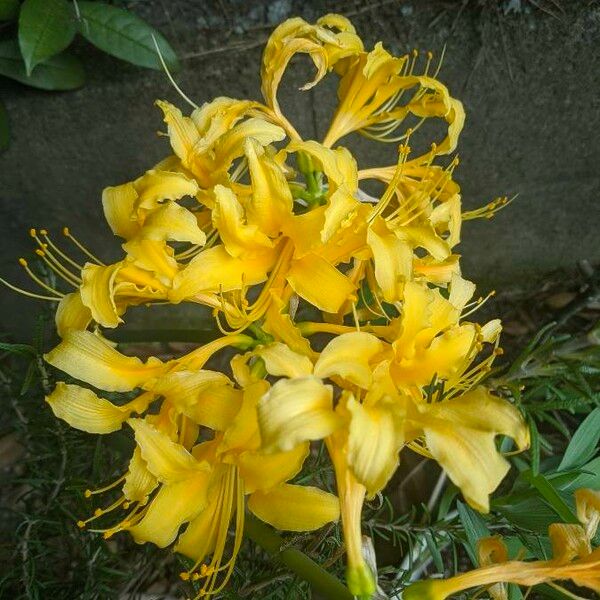
Plant Overview
Known as the Golden Spider Lily or the Hurricane Lily, Lycoris aurea is a botanical showstopper that seems to appear out of thin air. It is famous for its "naked" blooming habit—sending up tall, elegant flower stalks in late summer or autumn long after its foliage has completely withered away. In many cultures, its sudden appearance after heavy rains is seen as a golden herald of the changing seasons.
🔍 How to Identify
- ☀️ Golden Blossoms: The flowers are a brilliant, luminous yellow with six petals that curve backwards (recurved) and have elegantly ruffled or fringed edges.
- 👁️ Long "Eyelashes": Each flower features exceptionally long, upward-curving stamens that extend far beyond the petals, giving the bloom its distinct "spidery" appearance.
- 🌱 The "Naked" Stalk: The flowers sit atop a smooth, leafless green stem that can reach up to 2 feet tall. You will never see the flowers and the strap-like green leaves at the same time.
🏡 In Your Garden
- ⏳ The Patience Factor: These plants are notorious for "sulking" after being moved. If you transplant the bulbs, do not be surprised if they refuse to bloom for a year or two while they settle their roots.
- 💧 Summer Dormancy: Unlike many garden favorites, this lily goes dormant in the heat of summer. It is vital to keep the soil relatively dry during this nap; overwatering while the bulb is dormant is the fastest way to cause bulb rot.
- 🌍 Strategic Planting: Because the foliage grows in winter and dies back in spring, plant them amongst low-growing groundcovers that can hide the "empty" spot during the summer months.
⚠️ Safety & Toxicity
- 🚫 Toxic Status: All parts of the Lycoris aurea are toxic if ingested, particularly the bulb.
- 🐾 Pets & Kids: It contains the alkaloid lycorine, which causes severe abdominal pain, vomiting, and diarrhea in cats, dogs, and humans. Always wear gloves when handling bruised bulbs if you have sensitive skin, as the sap can cause minor irritation.
✨ Fun Fact
The nickname "Hurricane Lily" comes from the plant's timing; in the Southern United States and parts of Asia, the golden flowers almost always burst into bloom immediately following the first heavy rains of the late-summer hurricane season.

Detailed Care Instructions
To grow Lycoris Aurea (Golden Spider Lily) successfully, follow these steps:
- Select a suitable planting location: Choose a spot that receives full sun or partial shade, with well-draining soil. Golden Spider Lilies prefer slightly acidic to neutral soil.
- Planting time: The best time to plant Lycoris Aurea bulbs is in early autumn, around 4-6 weeks before the first frost. Spring is also an option, but autumn planting tends to yield better results.
- Prepare the soil: Loosen the soil to a depth of about 6 inches and remove any weeds or debris. If the soil is heavy or clay-like, mix in some organic matter such as compost or well-rotted manure to improve drainage.
- Plant the bulbs: Dig holes that are around 6-8 inches deep and space them about 6-8 inches apart. Place the bulbs with their necks slightly above the soil surface, making sure the roots are spread out and rest firmly in the soil. Fill the hole with soil, gently firming it around the bulb.
- Watering and care: After planting, water the bulbs well to settle the soil around them. Spider Lilies prefer moist but not waterlogged conditions. Water regularly, especially during dry spells, ensuring the soil remains moderately moist. Avoid overwatering, as it can lead to bulb rot.
- Fertilization: Apply a slow-release, balanced fertilizer in early spring, just as the foliage is emerging. Follow the manufacturer's instructions for application rates. Alternatively, you can use a liquid fertilizer diluted to half strength every 4-6 weeks during the growing season.
- Mulching: Apply a layer of organic mulch, such as wood chips or straw, around the plants to help retain moisture and suppress weeds. Make sure the mulch is not directly touching the plant's neck or stems.
- Dormancy: Spider Lilies go dormant after flowering. Allow the foliage to naturally die back without cutting it until it turns brown. At this point, you can remove the yellowing leaves. During dormancy, the bulbs need a period of dry rest.
- Division: Every 3-4 years, you can divide the bulbs to maintain their vigor. Dig up the bulbs during dormancy, separate the offshoots (new bulbs), and replant them in suitable locations following the same planting procedure.
By following these guidelines, you can successfully grow Lycoris Aurea plants and enjoy their beautiful golden blooms.

Place in a bright room that is sun drenched almost all day. Or directly in a south-facing window.

1. Observe the soil: Before watering Lycoris Aurea, check the soil moisture. If the soil feels dry to the touch, it needs watering.
2. Time of watering: Water the plant early in the morning or late in the afternoon when the temperature is cooler to prevent the water from evaporating quickly and the plant from getting heat stress.
3. Watering frequency: Lycoris Aurea requires moderate watering. Water the plant once a week or when the top inch of the soil dries out.
4. Watering method: Water the plant directly around the base of the stem to avoid getting water on the foliage. Use a watering can or a hose with a fine nozzle to ensure that the water reaches the roots.
5. Amount of water: Water the plant until the soil is moist but not soggy. Overwatering can cause root rot, which can be fatal for the plant.
6. Drainage: Make sure the pot or the soil has proper drainage to avoid waterlogging, which can also lead to root rot.
7. Humidity: Lycoris Aurea prefers moderate humidity, so you can mist the foliage occasionally to provide some extra moisture.
8. Seasonal variations: Adjust the watering frequency according to the seasonal changes. In the winter, the plant requires less watering than in the summer.
Overall, it's essential to provide adequate moisture to Lycoris Aurea, but avoid waterlogging or overwatering, as it can damage the plant.
To fertilize the Lycoris Aurea plant, follow these steps:
- Choose a balanced, water-soluble fertilizer with equal amounts of nitrogen, phosphorus, and potassium (NPK). A ratio of 10-10-10 or 20-20-20 is recommended.
- Dilute the fertilizer in water according to the package instructions. It's crucial not to exceed the recommended dosage to avoid burning the plant.
- Apply the fertilizer around the base of the plant, avoiding direct contact with the leaves or stems. Gently water the area afterward to help the nutrients penetrate the soil.
- Fertilize the Lycoris Aurea plant during the active growing season, typically in spring or early summer. Repeat the application every 4 to 6 weeks until the end of the growing season.
- Monitor the plant for any signs of nutrient deficiency or excess. If leaves start turning yellow or brown, it may indicate overfertilization, in which case, reduce the frequency or strength of the fertilizer. If the plant shows signs of inadequate nutrients like stunted growth or pale leaves, increase the fertilizer application slightly.
Remember, it's always best to follow the specific recommendations for your Lycoris Aurea plant and observe its individual requirements for optimal growth and health.
When growing Lycoris Aurea, it is recommended to use well-draining soil with a slightly acidic pH level. The soil should be rich in organic matter and have a good amount of nutrients. It is important to avoid using heavy or compacted soils that may retain excess moisture. A blend of loamy soil, sand, and peat moss is a good option for planting Lycoris Aurea. Additionally, adding perlite or vermiculite can help improve drainage and aeration of the soil.
To propagate Lycoris Aurea plants, you can follow the following steps:
- Start by selecting a healthy and mature Lycoris Aurea plant from which you want to take cuttings for propagation.
- Prepare a clean and sharp pair of pruning shears or scissors to avoid any potential damage or infection to the plant.
- Identify the offsets or bulbils that have formed around the base of the main plant. These offsets are small bulbs that arise from the parent bulb and can be separated for propagation.
- Gently separate the offsets from the mother plant by carefully digging around them and loosening the soil. Alternatively, you can wait for the offsets to mature and detach naturally from the parent bulb.
- Once the offsets are separated, carefully remove any excess soil or debris attached to them and examine them for any signs of damage or disease. Discard any damaged or unhealthy offsets.
- Prepare a suitable planting medium, such as a well-draining potting mix specifically designed for bulbs. Ensure that the medium is moist but not waterlogged.
- Plant the offsets in the prepared medium by burying them partially, leaving the upper portion of the bulb exposed to air. Make sure to space them adequately, allowing room for growth.
- Place the potted offsets in a location with indirect sunlight or a shaded area to prevent excessive heat or direct sunlight from damaging the young plants.
- Water the newly potted offsets lightly, keeping the soil consistently moist but not overly saturated. Be cautious not to overwater, as this may lead to rotting or fungal diseases.
- Monitor the progress of the propagated Lycoris Aurea plants, ensuring they receive the appropriate amount of sunlight, water, and care for optimal growth and development.
- After a period of time, typically around two to three years, the propagated Lycoris Aurea plants should reach maturity and be capable of producing their own offsets, continuing the cycle of propagation.
Remember, propagating Lycoris Aurea plants through offsets or bulbils is just one method; you may also explore other techniques such as division or even seed germination to expand your collection.








