Plant Overview
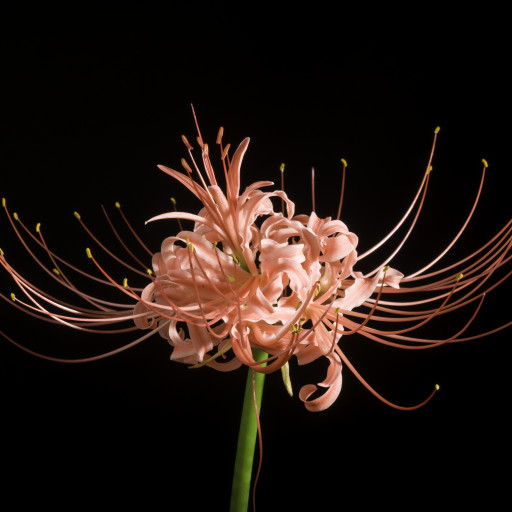
Often called the "Equinox Flower" or "Red Spider Lily," Lycoris radiata is a plant of haunting beauty and deep symbolism. Known in Japan as Higanbana, it is famous for blooming precisely during the autumnal equinox, seemingly appearing out of nowhere on leafless stalks. It is a floral magician, hiding underground all summer only to erupt in a fiery display of crimson when the first autumn rains arrive.
🔍 How to Identify
- 🌺 Spider-Like Blooms: The most striking feature is the cluster of bright red flowers with incredibly long, upward-curling stamens that resemble delicate spider legs or long eyelashes.
- 🦒 The Naked Stem: The flowers appear on top of a leafless, smooth green stalk (scape) that can reach up to 2 feet tall, giving it a minimalist, architectural look.
- 🍃 The Disappearing Act: You will never see the flowers and leaves at the same time; the narrow, strap-like green leaves only emerge after the flowers have withered for the season.
🏡 In Your Garden
- 💧 The Rain Trigger: These bulbs are often called "Hurricane Lilies" because they stay dormant during dry summer heat and are "woken up" by the heavy rains of late summer, blooming shortly after.
- 🏗️ Settling In: They dislike being moved due to their deep-seated bulbs. If you transplant them, don't be surprised if they skip a year of flowering while they re-establish their roots in the new soil.
⚠️ Safety & Toxicity
- 🚫 Toxic if Ingested: All parts of the Red Spider Lily, especially the underground bulb, contain the alkaloid lycorine, which is poisonous.
- 🐾 Pet & Child Safety: Ingestion can cause severe vomiting, diarrhea, and shivering in cats and dogs. It is best planted in areas where curious toddlers or pets won't be tempted to dig them up.
✨ Fun Fact
🏮 Path to the Underworld: In East Asian folklore, it is said that these flowers grow along the paths of those who are departing for the afterlife. Legend has it that if you meet someone you will never see again, these flowers will bloom along your path home.

Detailed Care Instructions
Unlike many hybrid bulbs, red spider lily bulbs do not decline over time, provided they are properly fed. You can maintain red spider lily bulbs for decades, though it is necessary to lift and split off the offsets periodically, as clumps become overgrown. If parent bulbs become soft or develop rot, they can be discarded in favor of continuing the lineage with the offset bulbs.
Will red spider lilies bloom twice in the same year?
No. After its initial bloom, which lasts for about two weeks, this plant will not send up new flower stalks until the following year. Deadheading does not prompt another flush of flowers with this plant.
What do I do with a potted red spider lily plant after it blooms?
In the regions where it is hardy, the foliage on red spider lilies remains evergreen through the winter. Allow the leaves to remain in place, as this will help the bulbs restore themselves. The yellowed leaves can be removed in the spring, then the pot can be set aside in a sheltered, dry location until summer, when new growth will begin.
| Color | Red |
| Soil Ph | 6-7.5 |
| Humidity | Normal |
| Lighting | Full Sun |
| Toxicity | Poisonous |
| Soil Type | Well-Drained, Sandy, Loamy |
| Bloom Time | Late Summer, Early Fall |
| Difficulty | Medium |
| Plant Type | Perennial Flower |
| Hibernation | Cold Period |
| Mature Size | One To Two Feet Height, One To 1.5 Feet Width |
| Native Area | Southeastern China And Southern Japan |
| Temperature | 18°C - 24°C |
| Sun Exposure | Full Sun, Partial Shade |
| Hardiness Zones | 6-10 |
To successfully grow Lycoris Radiata plants, follow these steps:
- Choose an appropriate location: Lycoris Radiata plants prefer a spot that receives full to partial sunlight, ideally with some shade during the hottest part of the day. Ensure the soil is well-draining and rich in organic matter.
- Planting: Plant the bulbs in the early fall, before the first frost, or in early spring. Dig a hole that is around 6 inches deep. Place the bulb in the hole with the pointed tip facing upwards. Space the bulbs about 6-8 inches apart. Cover the bulb with soil and gently firm the soil around it.
- Watering: Provide regular and adequate water for optimal growth. Water the plants deeply but infrequently, allowing the soil to dry out slightly between waterings. Avoid overwatering, as it can lead to root rot.
- Fertilizer: Feed the plants with a balanced, slow-release fertilizer once or twice during the growing season. Apply the fertilizer according to the packaging instructions, ensuring not to over-fertilize.
- Mulching: Apply a layer of organic mulch, such as wood chips or straw, around the plants. Mulching helps to retain moisture, suppress weed growth, and maintain soil temperature.
- Winter care: Lycoris Radiata plants are hardy in USDA zones 6-10. In colder regions, where temperatures drop below freezing, provide a layer of mulch or straw over the bulbs in late fall to protect them from frost. In warmer regions, the plants can remain in the ground throughout the year without protection.
- Propagation: Lycoris Radiata plants can be propagated by dividing the bulbs. Dig up the bulbs after the foliage has died back completely, usually in late summer or early fall. Gently separate the bulbs and replant them in a new location or share them with fellow gardeners.
- Pests and diseases: While Lycoris Radiata plants are generally pest-free, they can occasionally be vulnerable to snails, slugs, and some fungal diseases. Monitor the plants regularly and take appropriate measures if any problems arise.
By following these steps and providing the necessary care, you can successfully grow Lycoris Radiata plants and enjoy their vibrant blooms.

Place in a window with dappled sun or a spot in the middle of a room. Or directly in a window facing west or east.

The plant should be watered regularly during the growing season, typically from spring to early summer. It requires well-draining soil that is kept consistently moist, but not waterlogged. Watering frequency may vary depending on the local climate and weather conditions, but it is generally recommended to water deeply once a week. The soil should be allowed to dry out slightly between waterings, as overwatering can lead to root rot. During dormancy, the plant requires less water and can tolerate periods of dryness. However, it should still be periodically watered to prevent the soil from completely drying out. Watering should be done at the base of the plant to avoid wetting the foliage, which can lead to fungal infections. When watering, it is best to avoid getting water on the bulbs, as they may rot if they become waterlogged.
To fertilize this plant, use a balanced, all-purpose fertilizer in early spring just before new growth starts. Mix the fertilizer with water according to the package instructions and apply it to the soil around the base of the plant. Be sure to water the plant thoroughly after fertilizing. Avoid fertilizing the plant during periods of drought or extreme heat, as this can damage the roots. Only fertilize once per year, as over-fertilization can lead to excessive foliage growth at the expense of blooming.
The ideal soil for Lycoris Radiata plant should be well-drained and slightly sandy, with a pH range of 5.5 to 6.5. The soil should also be rich in organic matter and nutrients to facilitate healthy growth of the plant. It is important to ensure that the planting soil is free from any pests or diseases that can harm the plant. Furthermore, the soil should have a good water-holding capacity to ensure that the plant is well-hydrated, but not waterlogged.
The propagation of this plant can be done through the bulbils that form around the base of the mature plant, or by seed. To use the bulbils, carefully separate them from the base of the plant using a sterile tool and plant them in a well-draining soil mix. Ensure that the bulbils are planted at a depth equal to their height. Keep the soil moist but not waterlogged, and provide bright indirect light. The bulbils should sprout within a few weeks to a month.
To propagate through seed, collect the seed pods when they have turned brown and crispy. Remove the seeds from the pod and soak them in water for a few hours. Plant the seeds in a well-draining soil mix, covering them with a thin layer of soil. Keep the soil moist and provide bright indirect light. The seeds will typically germinate within 1-3 months.
Propagation through both methods can be done in the spring or fall, when temperatures are moderate. The new plants should be kept in a warm, bright location until they are mature enough to be transplanted into their permanent location.








