Plant Overview
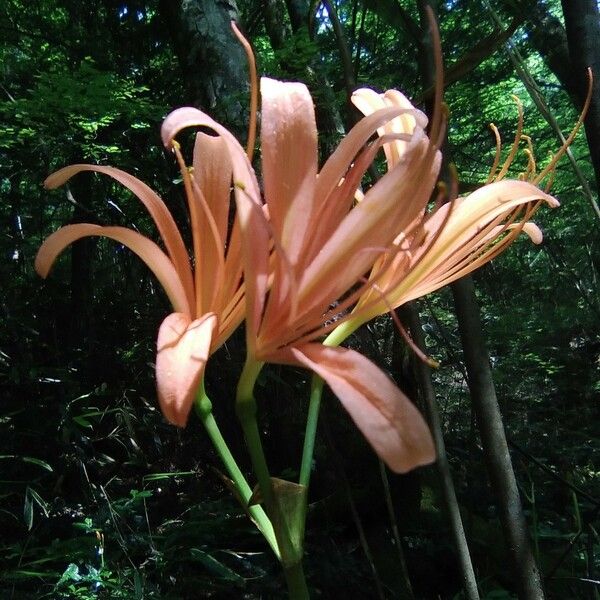
Often called the Orange Spider Lily or the "Fox’s Shaving Brush" in Japan, Lycoris sanguinea is a master of the dramatic entrance. It is famously known as a "Surprise Lily" because its vibrant, fiery blooms burst forth from the bare earth long after its foliage has completely withered away. In Japanese folklore, these flowers are often associated with the trickster fox (Kitsune), appearing as if by magic in the late summer heat.
🔍 How to Identify
- 🦊 The "Naked" Stem: The most striking feature is the absence of leaves during bloom. The flowers sit atop sturdy, grayish-green stalks that rise 12–18 inches directly from the soil.
- 🔥 Sunset Petals: Unlike the spindly, long-whiskered Lycoris radiata, this species has broader, funnel-shaped petals in shades of burnt orange, apricot, or cinnabar.
- 🍃 Ghostly Foliage: The strap-like, glaucous green leaves appear in early spring, looking much like large blades of grass, but they turn yellow and disappear entirely by mid-summer.
🏡 In Your Garden
- ⏳ The Vanishing Act: Don't panic when the leaves die back in July! The plant isn't dead; it is simply gathering energy in the bulb for its late-August performance. This makes them perfect for planting under groundcovers that can fill the "empty" space during dormancy.
- 🚫 Don't Move Me: These plants possess a sensitive bulb system and a deep-reaching root structure. They famously "sulk" and may refuse to bloom for a year or two if they are transplanted or divided, so choose their permanent home carefully.
⚠️ Safety & Toxicity
- 🧪 Status: Toxic: Like all members of the Amaryllis family, Lycoris sanguinea contains the alkaloid lycorine.
- 🐾 Details: All parts of the plant—especially the bulb—are poisonous if ingested. It can cause severe stomach upset, vomiting, and salivation in cats, dogs, and humans. It is best handled with gloves if you have sensitive skin, as the sap can occasionally cause mild irritation.
✨ Fun Fact
In Japan, this flower is called Kitsuneno-kamisori. Legend says that because the flowers appear so suddenly on "naked" stems, they are actually the shaving razors dropped by foxes who were disguising themselves as humans!

Detailed Care Instructions
To grow Lycoris sanguinea, also known as the red spider lily or hurricane lily, follow these steps:
- Choose a suitable location: Lycoris sanguinea prefers a location with full to partial sun. It can tolerate a wide range of soil types but prefers well-drained soil.
- Planting time: The best time to plant Lycoris sanguinea bulbs is in late summer or early autumn, usually around September or October, depending on your location.
- Prepare the planting area: Dig a hole that is 8-10 inches (20-25 cm) deep and wide enough to accommodate the bulb.
- Plant the bulb: Place the bulb in the hole with the pointed end facing upwards. The top of the bulb should be slightly above the soil level. Backfill the hole with soil, gently firming it around the bulb.
- Water the bulbs: After planting, water the bulbs thoroughly and keep the soil moist but not waterlogged.
- Maintenance: Lycoris sanguinea is a low maintenance plant. Water the plants regularly during the growing season, especially during dry spells. However, ensure the soil is well-draining to prevent waterlogging.
- Fertilization: Fertilize the plants in early spring before new growth starts using a balanced slow-release fertilizer or a bulb-specific fertilizer according to the package instructions.
- Sustaining dormant period: Lycoris sanguinea has a dormant period during the summer months. Allow the foliage to die naturally without removing it. The bulb uses the foliage to store energy for the next blooming season.
- Mulching: Apply a layer of mulch around the base of the plants to help retain moisture and suppress weed growth. However, ensure the mulch is not directly touching the bulbs to prevent rotting.
- Propagation: After a few years, Lycoris sanguinea bulbs will produce offsets or bulbils that can be divided from the parent bulb and replanted to create additional plants.
By following these steps, you should be able to successfully grow Lycoris sanguinea and enjoy its vibrant red blooms in late summer or early autumn.

Place in a bright room that is sun drenched almost all day. Or directly in a south-facing window.

Lycoris Sanguinea plant likes to be watered regularly but don't overwater. Only water the plant when the top 1-2 inches of soil feels dry to the touch. When watering, use room temperature water and avoid getting water on the leaves as this can lead to fungal infections. Water the soil around the base of the plant, allowing the water to penetrate deeply into the soil. After watering, allow the excess water to drain away to avoid waterlogged soil. During periods of heavy rainfall, reduce the watering as the plant can absorb water more easily from the surrounding soil.
To fertilize the Lycoris Sanguinea plant, use a balanced fertilizer with a ratio of N-P-K (nitrogen, phosphorus, potassium) such as 10-10-10 or 20-20-20. Apply the fertilizer in the early spring or late winter, just before new growth appears. Dilute the fertilizer according to the manufacturer's instructions and then water the plant thoroughly. Avoid applying too much fertilizer, as it can cause damage to the plant. Repeat the fertilizing process once every three to four weeks during the active growing season. Remember to always follow the instructions provided by the fertilizer manufacturer and adjust the dosage according to your specific situation.
Lycoris Sanguinea is a plant that requires well-draining soil. It grows well in soil that is loose, loamy, and fertile. The plant prefers a pH range between 6.0 and 7.5. The soil must be moist, but not saturated, and well-aerated to support healthy growth. Adding organic matter and compost to the soil will help improve the soil structure, encourage microbial activity, and provide essential nutrients. The soil should have good drainage capabilities to prevent waterlogging and root rot. Additionally, the plant's soil should be regularly mulched with pine needles, bark, or leaf litter to help maintain moisture, prevent soil erosion, and suppress weed growth.
To propagate Lycoris Sanguinea plants, you can follow these steps:
- Choose a healthy mature plant: Select a mature Lycoris Sanguinea plant that is free from diseases or pests. This will ensure a higher success rate in propagation.
- Time the propagation: The best time to propagate Lycoris Sanguinea is in early spring or fall when the plant is dormant. This provides a favorable condition for root development.
- Prepare the soil: Lycoris Sanguinea plants prefer well-draining soil. Prepare a suitable growing medium by mixing equal parts of garden soil and organic compost. Ensure that the soil is loose and fertile.
- Dig out bulbs: Carefully dig out the bulbs of the Lycoris Sanguinea plant from the ground using a garden fork or shovel. Be cautious not to damage the bulbs during this process.
- Separate bulb offsets: Inspect the bulbs for offsets or smaller bulbs that have developed alongside the main bulb. Gently separate these offsets from the main bulb by twisting or cutting them off.
- Plant the offsets: Prepare planting holes in the soil by creating small depressions. Place the bulb offsets in the holes, making sure they are at a depth of around 4-6 inches. Space each offset at least 6-8 inches apart to allow for optimum growth.
- Watering: After planting, water the soil thoroughly to ensure the soil is moist. However, avoid over-watering as it can cause rot.
- Provide appropriate sunlight: Lycoris Sanguinea plants require full sunlight to thrive. Place the newly planted offsets in a location where they can receive at least 6 hours of direct sunlight daily.
- Maintenance: Regularly monitor the soil moisture and water the plant whenever the top inch of the soil feels dry. Keep the area around the plant weed-free to avoid competition for nutrients.
- Patience and care: Lycoris Sanguinea bulbs may take some time to establish themselves and grow into mature plants. It is important to be patient and provide continuous care to ensure their successful growth.
Remember, each plant is unique, so adapt these steps as needed to suit the specific needs and conditions of your Lycoris Sanguinea plant.








