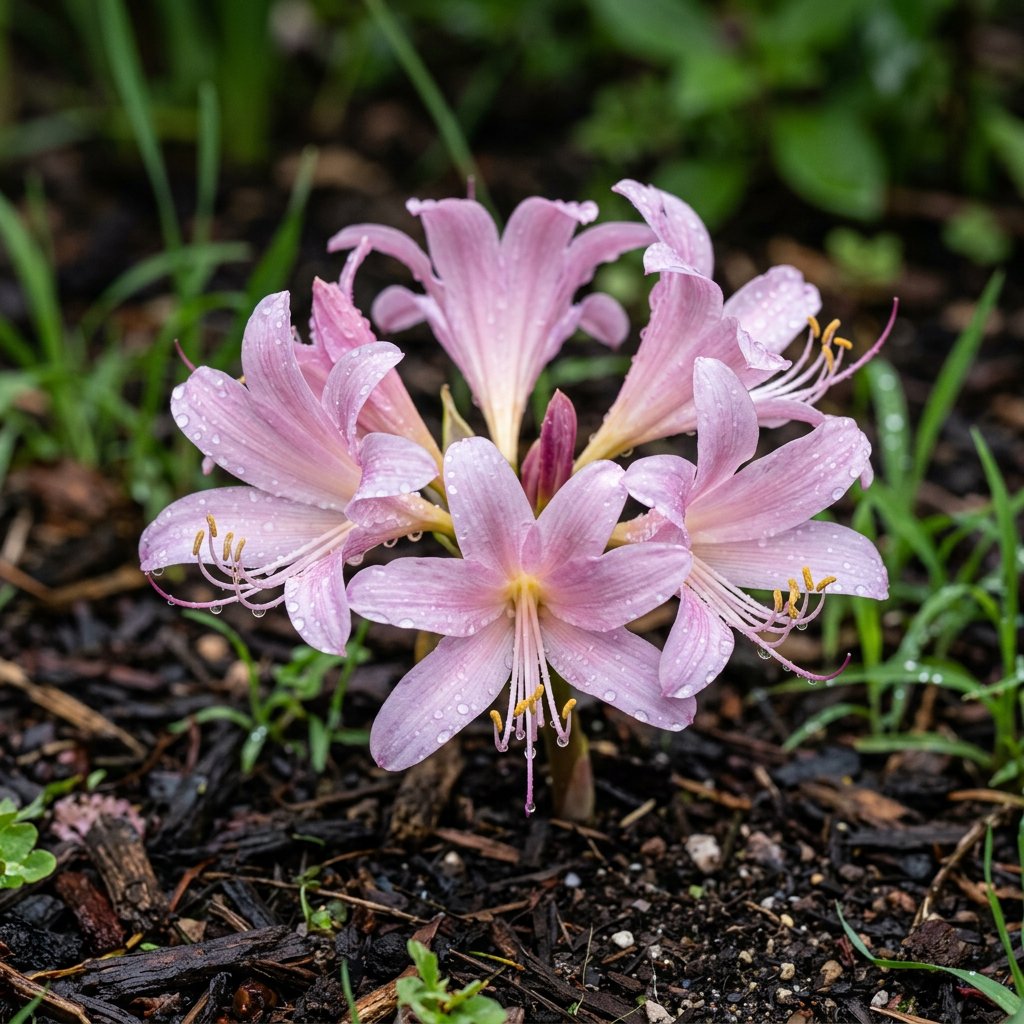
Plant Overview
Often called the Resurrection Lily or Naked Lady, this enchanting bulb is famous for its dramatic "disappearing act." In the spring, it produces lush foliage that withers away by June, leaving behind bare earth. Then, just when you’ve forgotten it, tall stalks suddenly burst from the ground in late summer to reveal a crown of shimmering pink blooms.
🔍 How to Identify
- 🌸 The Bloom: Large, funnel-shaped flowers that are usually a soft pink or lavender, often with a subtle blue "electric" sheen at the petal tips.
- 🌱 The Foliage: Long, strap-like, grayish-green leaves that look similar to Amaryllis leaves but only appear in early spring.
- 📏 The Stem: Thick, leafless green stalks (scapes) that can shoot up to two feet high in just a matter of days during the late summer heat.
🏡 In Your Garden
- ⏳ The Waiting Game: These plants are notorious for their "sleep, creep, and leap" growth cycle; they may not bloom the first year after planting as they settle their roots.
- 🚫 Stability Matters: They possess deep-seated bulbs that dislike being disturbed. Choose a permanent spot with well-draining soil where they can naturalize and spread undisturbed for many years.
⚠️ Safety & Toxicity
- 🚫 Poisonous Bulbs: Every part of the plant contains the alkaloid lycorine, which is toxic if ingested.
- 🐾 Pet & Child Safety: Ingestion can cause severe vomiting, diarrhea, and lethargy in dogs, cats, and humans. It is best planted in areas where curious pets or toddlers won't be tempted to dig up the bulbs.
✨ Fun Fact
Because the flowers emerge from the bare soil without any accompanying leaves, Victorian-era gardeners nicknamed them "Naked Ladies," finding it scandalous—and magical—that a flower would appear in public without its "foliage clothes."

Detailed Care Instructions
These plants can live for seven to 10 years when given the proper environment. Dividing the plants regularly can help ensure the original bulbs live on for many years beyond that.
Can I grow resurrection lilies indoors?
It is possible to grow resurrection lilies in containers; however, it can be quite difficult to force them to bloom indoors. To fully enjoy their beauty, keep them outdoors.
What are alternatives to resurrection lilies?
Numerous types of lilies bring the same burst of color to the landscape as resurrection lilies. Keep in mind that any plant in the amaryllis family is also a contender, as these offer brightly colored flowers on top of long stems, grown from hardy bulbs.
| Color | White, Pink |
| Soil Ph | 6.5 |
| Lighting | Full Sun |
| Toxicity | Toxic |
| Soil Type | Well-Drained, Sandy, Loamy |
| Bloom Time | Late July, Early August |
| Plant Type | Flowering Plant |
| Mature Size | 1.5 To 2 Ft. Tall, 1.5 To 2 Ft. Wide |
| Native Area | Japan, Korea |
| Sun Exposure | Full Sun, Partial Shade |
| Hardiness Zones | 5-9 |
To grow Lycoris Squamigera, also known as the Magic Lily or Naked Lady, you can follow these steps:
- Choosing the right location: Lycoris Squamigera prefers a sunny to partially shaded spot in your garden. Make sure the soil is well-draining as they do not like wet feet.
- Planting the bulbs: Plant the bulbs in the fall, around 4-6 weeks before the first frost. Dig a hole that is about 6-8 inches deep and place the bulbs pointed end up. Space the bulbs about 6-8 inches apart.
- Soil preparation: Prior to planting, amend the soil by adding compost or well-rotted manure to improve soil fertility and drainage.
- Watering: After planting, water thoroughly to help settle the soil. Regular watering is not necessary once the plants are established, as Lycoris Squamigera is quite drought-tolerant. However, they may benefit from watering during prolonged dry spells.
- Mulching: Applying a layer of organic mulch around the plants can help retain moisture and suppress weeds. Avoid placing mulch directly over the bulbs, as this can cause them to rot.
- Fertilizer: Lycoris Squamigera does not require heavy fertilization. You can apply a balanced all-purpose fertilizer once a year in early spring or use compost as a natural fertilizer.
- Maintenance: Lycoris Squamigera is generally low-maintenance. Remove any dead foliage after it has withered away. However, avoid cutting back the foliage until it has fully yellowed, as this allows the bulb to store energy for next year's growth.
- Division: Over time, Lycoris Squamigera can form clumps. To propagate or divide the bulbs, dig them up and separate the offsets or bulblets from the main bulb. Replant these in a similar manner to the original bulbs.
With proper care and favorable growing conditions, your Lycoris Squamigera should thrive and produce delightful blooms in late summer or early fall.

Place in a window with dappled sun or a spot in the middle of a room. Or directly in a window facing west or east.

The best way to water this plant is to water it deeply but infrequently. When the top inch of soil feels dry to the touch, it's time to water. Make sure the soil is well-draining and doesn't become waterlogged. Water the plant at the base, avoiding getting water on the leaves or flowers. Avoid overwatering or allowing the soil to dry out completely. This plant prefers regular watering but can tolerate occasional drought.
To fertilize this plant, first ensure that the soil is moist but not waterlogged. Use a balanced fertilizer with equal parts nitrogen, phosphorus, and potassium, and apply it in the spring when new growth appears. Avoid getting the fertilizer directly on the foliage or stems, as this can burn the plant. Water the fertilizer in thoroughly after application and wait at least a week before applying any more fertilizers.
Lycoris Squamigera plants prefer well-draining soil that has a pH level of slightly acidic to neutral. The soil should be loamy and rich in organic matter, such as compost or peat moss, to promote healthy growth. It is also important to ensure that the soil is not compacted as this can impede root growth. To improve soil drainage, you can mix gritty sand or perlite into the soil before planting the Lycoris Squamigera. Additionally, the plant prefers slightly moist soil, so be sure to water it regularly but do not let the soil become waterlogged.
To propagate this plant, one needs to divide its bulbs in the fall after the foliage has died back. Care should be taken to retain the basal plate and roots attached to the bulb while dividing it. The separated bulbs can be planted in well-draining soil at a depth of about twice the height of the bulb. The newly planted bulbs should be kept moist and should not be allowed to dry out. They will develop roots and foliage in the following spring.








