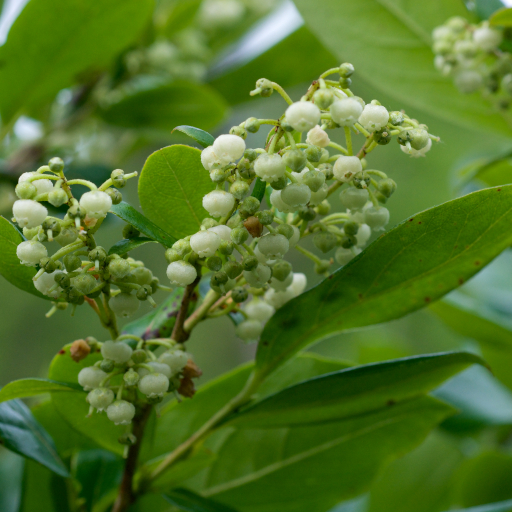
Plant Overview
Often called the "Maleberry" or "He-huckleberry," Lyonia ligustrina is a master of disguise found throughout the wetlands and moist thickets of the Eastern United States. While it belongs to the same family as delicious blueberries and cranberries, this shrub is the "black sheep" of the group—producing dry, woody capsules instead of juicy fruit. It is a resilient, understated beauty that provides essential structure and color to wild landscapes and boggy garden corners.
🔍 How to Identify
- 🌿 Leaf Texture: The leaves are alternate, simple, and oval-shaped, often featuring a fine, subtle fuzz on the underside and turning a brilliant red or orange in the autumn.
- 🔔 Urn-Shaped Blooms: In late spring, it produces clusters of tiny, white, bell-shaped flowers that dangle gracefully from the stems, resembling miniature porcelain lanterns.
- 📦 The "Dry" Fruit: Unlike its blueberry cousins, the fruit consists of small, brown, five-parted woody capsules that persist on the branches long after the leaves have fallen.
- 🍂 Shreddy Bark: Mature stems develop a distinctive grayish-brown bark that tends to peel or shred in long, thin strips, providing visual interest during the winter months.
🏡 In Your Garden
- 💧 The Wetland Specialist: This plant is an excellent choice for "problem areas" with poor drainage. It thrives in acidic, boggy, or seasonally flooded soils where other shrubs might suffer from root rot.
- 🦋 Wildlife Support: While humans can't eat the fruit, the flowers are a vital nectar source for native bees and butterflies, and the dense, twiggy growth habit provides excellent nesting cover for songbirds.
⚠️ Safety & Toxicity
- 🚫 Toxic Status: Harmful if ingested. Like many members of the Heath family (such as Rhododendrons), Maleberry contains grayanotoxins.
- 🐾 Risk Factor: It is toxic to humans, horses, and pets. Ingestion can lead to "mad honey disease" symptoms, including nausea, dizziness, and low blood pressure. Keep it away from curious nibblers and livestock.
✨ Fun Fact
The common name "He-huckleberry" was coined by early settlers who noticed the plant looked exactly like a huckleberry bush but failed to produce any edible berries—leading them to jokingly label it the "male" (and therefore "fruitless") version of the plant.

Detailed Care Instructions
To grow a Lyonia ligustrina plant, also known as Privet Andromeda or Fetterbush, follow these steps:
- Choose the right location: Lyonia ligustrina prefers partial shade to full sun. Select a spot in your garden that receives at least four to six hours of direct sunlight daily.
- Soil preparation: The plant prefers well-draining, acidic soil. Before planting, amend the soil by adding organic matter, such as compost or peat moss, to improve drainage and increase acidity.
- Planting: Dig a hole that is slightly wider and deeper than the root ball of the Lyonia ligustrina plant. Gently remove the plant from its container, and place it in the hole. Ensure that the top of the root ball is level with the soil surface. Backfill the hole with soil, gently firming it around the plant.
- Watering: Water the plant thoroughly after planting to settle the soil and eliminate any air pockets. Water regularly during the first growing season to establish a strong root system. Afterward, water deeply when the top inch of soil feels dry.
- Mulching: Apply a layer of organic mulch, such as wood chips or pine needles, around the base of the plant. Mulching helps to conserve moisture, suppress weeds, and maintain an acidic environment.
- Pruning: Lyonia ligustrina generally requires minimal pruning. However, you can shape the plant by selectively removing any dead, damaged, or overcrowded branches. Prune after flowering has finished.
- Fertilization: If necessary, fertilize the plant in early spring using a slow-release, acidic fertilizer. Follow the package instructions regarding the application rate. Avoid over-fertilizing, as it can harm the plant.
- Pests and diseases: Lyonia ligustrina is generally resistant to most pests and diseases. However, regular inspections can help you identify and manage any issues that may arise.
By following these steps, you can successfully grow a healthy Lyonia ligustrina plant in your garden.

Place in a bright room that is sun drenched almost all day. Or directly in a south-facing window.

To properly water this type of plant, it is recommended to first check the soil's moisture level before watering. This can be done by sticking your finger or a moisture meter into the soil. If the soil is moist, it may not need watering yet.
When it is time to water, gently pour water onto the soil around the base of the plant. Avoid getting water on the leaves or flowers, as this can lead to fungal diseases.
It is important to not overwater this plant, as it prefers well-drained soil. To avoid overwatering, allow the top inch or so of soil to dry out before watering again. Alternatively, you can wait until the plant shows signs of needing water, such as drooping leaves or dry soil.
During hot, dry weather, this plant may need more frequent watering. It is also important to note that this plant can tolerate some drought, so it is better to err on the side of underwatering rather than overwatering.
To fertilize this plant, use a slow-release fertilizer in the spring. Apply the fertilizer according to the label directions, taking care not to apply too much. Water the plant thoroughly after fertilizing. Avoid fertilizing during periods of drought or extreme heat. Additionally, it is recommended to mulch around the base of the plant to help retain moisture and provide nutrients.
Lyonia Ligustrina plant prefers a soil that is well-draining yet moist. It should have a slightly acidic pH level ranging from 4.5 to 6.5. The soil should be rich in organic matter and nutrients, and it should retain moisture without becoming waterlogged. A high-quality, lightweight potting mix that contains peat moss, perlite, and vermiculite is recommended for potted Lyonia Ligustrina plants. In-ground plants benefit from a mixture of sandy loam and compost, which allows for good drainage and aeration while also maintaining moisture. It is important to avoid using heavy or clay soils that retain water and can lead to root rot. Additionally, the soil should be kept consistently moist to ensure optimal growth and health of the Lyonia Ligustrina plant.
Propagation of this plant can be done through various methods such as seed propagation and vegetative propagation.
Seed propagation involves collecting mature seeds from the plant and sowing them in a well-draining potting mix. It is important to cover the seeds with a thin layer of soil and keep the soil moist but not waterlogged. The seeds need to be kept in a warm and humid environment until they start to germinate.
Vegetative propagation can be done by taking stem cuttings from the plant. The cuttings should be about 5-6 inches long and have a few leaves attached. These cuttings are then dipped in a rooting hormone and planted in a well-draining potting mix. It is important to keep the soil moist and the cutting in a warm and humid environment until they start to root.
Another method of vegetative propagation involves layering. In this method, a branch of the plant is bent down and covered with soil. The branch will eventually form roots and can be separated from the parent plant to form a new plant.
Regardless of the propagation method, it is important to provide the plant with proper care such as adequate sunlight, water, and nutrients to ensure successful growth.








