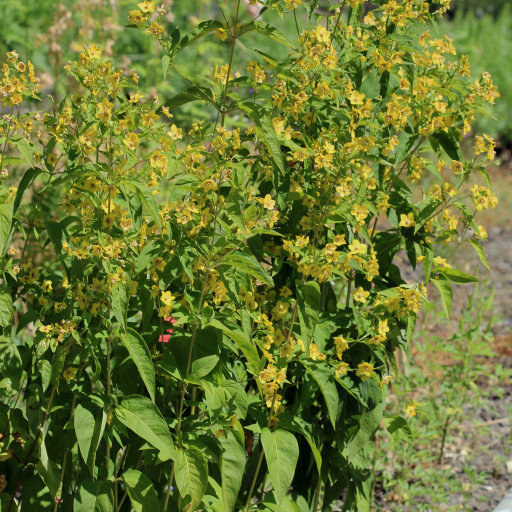
Plant Overview
Known as the Fringed Loosestrife, this North American native is a sun-loving perennial often found dancing along the edges of damp woodlands and marshes. While it shares a name with the notoriously invasive Purple Loosestrife, this yellow-flowered beauty is a polite garden citizen that provides a golden glow to moist landscapes. Its name comes from the delicate, hair-like "fringes" that line its leaf stems, visible only to those who take a closer look.
🔍 How to Identify
- 🌼 The Flowers: Small, nodding yellow stars with five pointed petals, often featuring a tiny reddish-maroon "eye" at the center.
- 🍃 The Foliage: Pointed, lance-shaped leaves that grow in opposite pairs along upright, sturdy stems.
- 🪶 The "Fringe": Look closely at the petiole (the little stalk connecting the leaf to the stem) to find a row of fine, bristly hairs that give the plant its name.
🏡 In Your Garden
- 💧 Moisture Lover: This plant is the perfect candidate for "wet feet" areas. It thrives in rain gardens, pond edges, or any low spot in your yard where water tends to settle.
- 🌱 Spreading Spirit: It grows via underground runners (rhizomes). While it isn’t "aggressive" in the way weeds are, it will happily form a lush, dense colony over time, making it an excellent groundcover for larger spaces.
⚠️ Safety & Toxicity
- ✅ Pet & Human Safe: Fringed Loosestrife is generally considered non-toxic to dogs, cats, and humans.
- 👐 Skin Sensitivity: While not poisonous, some gardeners with very sensitive skin might experience mild irritation from the sap or the bristly hairs on the stems, so gloves are always a good idea when pruning.
✨ Fun Fact
Unlike most flowers that offer nectar to attract insects, Lysimachia ciliata produces a specialized floral oil. It has a unique relationship with Macropis bees, which collect this oil to line their nests and feed their young!

Detailed Care Instructions
To grow Lysimachia Ciliata plants, follow these steps:
- Choose a suitable location: Lysimachia Ciliata prefers partial shade to full sun. Select an area with well-draining soil that is rich in organic matter.
- Prepare the soil: Loosen the soil in the planting area using a garden fork or tiller. Remove any weeds or rocks that may hinder growth. Mix in compost or aged manure to improve soil fertility.
- Planting: Dig a hole that is slightly larger than the root ball of the plant. Place the plant in the hole, ensuring that the top of the root ball is level with the soil surface. Backfill the hole with soil and gently press down to remove any air pockets.
- Watering: Provide ample water immediately after planting to help the plant establish. Lysimachia Ciliata prefers consistently moist soil, so water regularly during dry spells.
- Mulch: Apply a layer of organic mulch, such as wood chips or straw, around the base of the plant. This will help retain moisture in the soil and suppress weed growth.
- Maintenance: Lysimachia Ciliata requires little maintenance. Remove any weeds that compete with the plant for nutrients and water. Additionally, prune back any dead or damaged growth.
- Division: Every few years, Lysimachia Ciliata can be divided to rejuvenate the plant and promote better growth. Dig up the clump, carefully separate the individual plants, and replant them in desired locations.
- Protect from pests: Keep an eye out for common pests like slugs and snails, which may feed on the foliage. Use organic pest control methods or apply appropriate pesticides if necessary.
By following these steps, you can successfully grow Lysimachia Ciliata plants in your garden. Remember to provide adequate water, sunlight, and regular maintenance to ensure healthy growth.

Place in a window with dappled sun or a spot in the middle of a room. Or directly in a window facing west or east.

Lysimachia Ciliata plant requires regular watering to keep its soil moist. A good way to water this plant is by using a watering can or a hose with a spray nozzle to provide a gentle, steady flow of water to the base of the plant. Avoid watering the leaves or flowers as it can cause damage to the plant.
It is important to regularly check the soil moisture level and adjust the watering frequency based on the plant's specific requirements. Overwatering can result in root rot, while underwatering can cause the plant to wilt and die.
During the hotter months, the plant may require more frequent watering, especially if it is planted in a sunny location. To reduce water loss and keep the soil moist, consider adding a layer of organic mulch around the base of the plant. This can also help regulate the soil temperature and improve soil quality over time.
To fertilize this plant, apply a slow-release, all-purpose fertilizer in early spring as new growth begins. Apply the fertilizer according to package instructions, being careful not to over-fertilize. Water the plant well after fertilizing. Repeat fertilization in late spring if needed, and again in early fall. Avoid fertilizing during hot, dry conditions or during periods of drought. Keep the plant well-watered and mulched to retain moisture.
When selecting soil for the Lysimachia Ciliata plant, it is important to choose a soil that is well-draining and contains a mixture of sand, clay, and organic matter. A soil pH that is slightly acidic (between 5.5 to 6.5) is preferred for optimal growth. Avoid using heavy clay soils, as they can cause root rot and hinder the plant's growth. Additionally, the soil should be moist but not waterlogged as the plant doesn't tolerate being waterlogged. Adding amendments like compost and aged manure may also help improve the soil quality and provide necessary nutrients for the plant's growth.
Propagation of this plant can be done through several methods, including division, cuttings, and seed germination. Division involves carefully separating the plant's roots and replanting them in another location. Cuttings can be taken from the plant and rooted in soil or a rooting hormone solution. Seed germination involves collecting seeds from the plant and sowing them in a suitable growing medium. Each of these methods requires careful attention to the needs of the plant and proper care to ensure successful propagation.
Common pests of the fringed loosestrife include Spider mites, fungus gnats, aphids, whiteflies. Make a habit of checking your fringed loosestrife frequently for pests so that any infestations can be caught and managed early.








