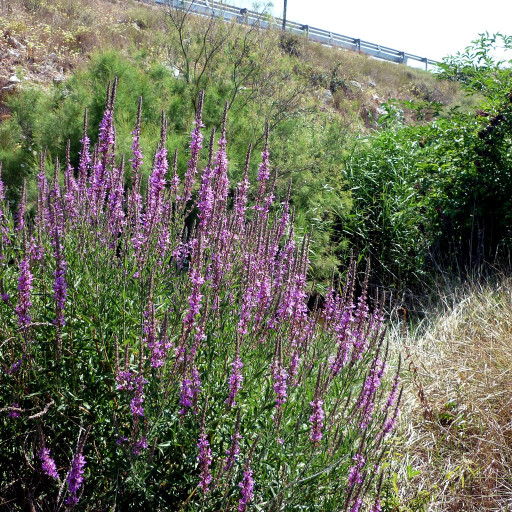
Plant Overview
Commonly known as the "Purple Loosestrife," this striking wetland beauty is a bit of a double-edged sword. While its vibrant magenta spires are undeniably breathtaking, it has earned the nickname "The Beautiful Plague" due to its aggressive nature in North American wetlands. Originating from Eurasia, it was once a staple of European folk medicine and cottage gardens before its invasive potential was fully realized.
🔍 How to Identify
- 🌿 Stem Architecture: Look for rigid, four-to-six-sided (square) stems that can become woody at the base as the plant matures.
- 🍃 Leaf Arrangement: The lance-shaped leaves are usually stalkless and grow in opposite pairs or whorls of three, clutching the stem tightly.
- 🌸 The Spires: Stunning, upright spikes of flowers bloom from mid-summer to fall, featuring six-petaled blossoms in shades ranging from deep pink to vivid purple.
🏡 In Your Garden
- 💧 Moisture Lover: This plant thrives in moist-to-wet soil, making it a natural fit for pond edges or boggy areas. However, it is remarkably resilient and can adapt to standard garden soil if kept watered.
- 🚫 Invasive Caution: Because it spreads through both underground rhizomes and millions of tiny seeds, many regions discourage or even ban its intentional planting. It can quickly choke out native vegetation, so it is often better to admire it in the wild rather than bringing it home.
⚠️ Safety & Toxicity
- ✅ General Safety: Lythrum salicaria is generally considered non-toxic to humans and household pets.
- 🦆 Ecological Risk: The real "danger" is to the environment. It creates "monocultures" where no other plants can grow, displacing native food sources for wildlife like ducks, turtles, and fish. In many areas, it is classified as a noxious weed.
✨ Fun Fact
A single mature Purple Loosestrife plant is a biological seed machine, capable of producing over 2.5 million tiny seeds in a single growing season—most of which are easily carried away by wind or water to start new colonies miles away!

Detailed Care Instructions
| Invasive | Weed |
| Lighting | Full Sun |
| Toxicity | Poisonous |
| Hardiness Zones | Max 9B |
To grow Lythrum Salicaria (also known as Purple Loosestrife) successfully, follow these steps:
- Choose a suitable location: Lythrum Salicaria thrives in full sun or partial shade. Select an area with moist soil, as this plant prefers wetter conditions and even grows in shallow water.
- Prepare the soil: Prior to planting, prepare the soil with compost or well-rotted manure to improve its fertility and drainage. Loosestrife can tolerate a wide range of soil types, including clay, loam, and sandy soils.
- Planting: Dig a hole slightly larger than the root ball of your Lythrum Salicaria plant. Place the plant in the hole and fill it with soil. Gently firm the soil around the plant, ensuring it is secure but not compacted.
- Watering: Water the plant generously immediately after planting to help it establish. Afterwards, provide regular watering, especially during dry periods, to keep the soil consistently moist but not waterlogged.
- Mulching: Apply a layer of organic mulch around the base of the plant to conserve soil moisture, suppress weed growth, and provide some insulation during extreme temperatures.
- Pruning: Trim back any dead or wilted foliage throughout the growing season to maintain a neat appearance and promote new growth. Cut the stems back to the base during early spring to encourage new shoots.
- Fertilizing: Lythrum Salicaria generally does not require much fertilization. However, if the plant seems to be lacking nutrients, you can apply a balanced fertilizer in early spring or late autumn.
- Controlling invasive spread: Be cautious when planting Lythrum Salicaria, as it can potentially spread aggressively and outcompete native plants. Consider planting it in containers or using a root barrier to limit its growth.
By following these steps, you can successfully grow Lythrum Salicaria and enjoy its vibrant purple flowers throughout the summer.

Place in a bright room that is sun drenched almost all day. Or directly in a south-facing window.

Lythrum Salicaria is a herbaceous flowering plant that requires regular watering to thrive. To water the plant, it is important to take into account the type of soil it is planted in. If the soil is sandy, it will require more frequent watering than if it is loamy or clay.
The best way to water Lythrum Salicaria is to provide a slow and deep watering. This means you should water the plant deeply, allowing the water to seep in through the soil to the roots, rather than watering the surface of the soil. It is important to avoid overwatering, as this can lead to root rot and other plant diseases.
One effective way to ensure that the plant is getting enough water is to use a drip irrigation system. This system provides a slow and steady flow of water directly to the plant roots, allowing the soil to absorb the water more effectively. You can also water the plant using a watering can or a hose with a low-pressure nozzle, making sure to water the base of the plant, rather than the leaves or flowers.
It is important to monitor the plant regularly and adjust your watering schedule based on the weather and the moisture level of the soil. During hot, dry weather, the plant may require more frequent watering to prevent the soil from drying out. Similarly, in wet weather, you may need to reduce watering to avoid overwatering the plant. Overall, providing consistent, deep watering will help Lythrum Salicaria grow and thrive.
To fertilize this plant, use a balanced, slow-release fertilizer with equal amounts of nitrogen, phosphorus, and potassium. Apply the fertilizer in early spring before new growth emerges. Use a granular fertilizer and apply it according to the package instructions based on the size of your plant. Water thoroughly after fertilizing. Avoid over-fertilizing as it can lead to excess growth and weak stems.
Lythrum Salicaria, also known by its scientific name, requires a well-draining soil with a slightly acidic pH level, typically around 6.0 to 7.0. It prefers nutrient-rich soils that are kept consistently moist, but not waterlogged. Organic matter, such as compost, should be added to the soil to improve its structure and fertility. The plant also benefits from the addition of sand to improve drainage. It is important to avoid using soil that is heavy in clay or retains too much water, as this can lead to root rot and other issues. When planting Lythrum Salicaria, the soil should be thoroughly amended with organic matter and any necessary amendments to ensure optimal growth and health of the plant.
To propagate this plant, you can take stem cuttings in the spring or early summer. Choose healthy, young stems and cut a 4-6 inch piece with clean, sharp scissors. Remove the lower leaves and dip the cut end in rooting hormone powder. Then, plant the cutting in moist potting soil and cover it with a plastic bag to create a humid environment. Keep the soil consistently moist and place the pot in a bright, indirect light. After a few weeks, the cutting should develop roots and can be transplanted into a larger pot or outdoors in a sunny, moist location.
Common pests of the purple loosestrife include Spider mites. Make a habit of checking your purple loosestrife frequently for pests so that any infestations can be caught and managed early.








