Plant Overview
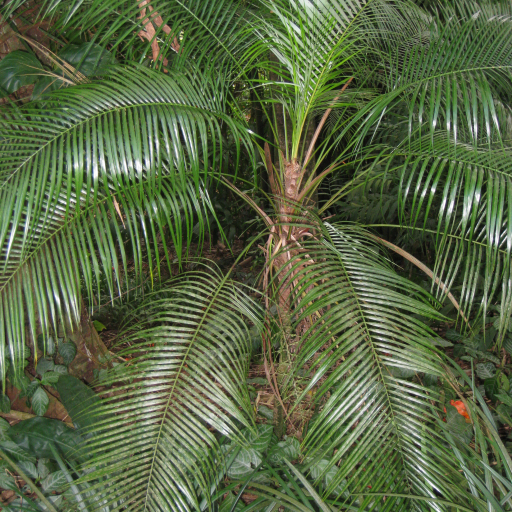
Often hailed as the most elegant indoor palm, the Wedding Palm (or Miniature Coconut) is a Brazilian beauty known for its ethereal, lacy appearance. Unlike its giant tropical cousins, this palm stays compact and refined, making it a favorite for collectors who want a touch of the rainforest without the massive footprint. Historically, it was a prized status symbol in Victorian-era conservatories and parlors.
🔍 How to Identify
- 🍃 Frond Texture: Features exceptionally delicate, feather-like fronds that arch gracefully from the center. The leaflets are narrow and needle-thin, giving the plant a soft, "fuzzy" look from a distance.
- ✨ Bicolor Foliage: Upon close inspection, the tops of the leaves are a deep, glossy emerald, while the undersides often display a subtle, silvery-blue or glaucous sheen.
- 🪵 The Trunk: It develops a very slender, dark trunk that is initially wrapped in black, hair-like fibers. As it ages, it reveals a clean, ringed stem similar to a miniature bamboo pole.
🏡 In Your Garden
- ☁️ Humidity is Vital: Because it originates from the misty Atlantic rainforests, it struggles in dry, air-conditioned rooms. It thrives when grouped with other plants or placed near a humidifier to prevent its delicate leaf tips from turning brown and crispy.
- 🚿 Root Sensitivity: This palm is notoriously "cranky" about its roots. It dislikes being repotted and can go into a long decline if the root ball is disturbed. It is best to choose a high-quality pot and leave it there for as long as possible.
- 🌥️ Understory Living: In the wild, it lives beneath the canopy of taller trees. In your home, this means it prefers bright, filtered light. Direct afternoon sun acts like a magnifying glass on its paper-thin leaves, causing permanent scorch marks.
⚠️ Safety & Toxicity
- ✅ Non-Toxic: The Wedding Palm is a "Pet Parent’s Dream." It is classified as non-toxic to both cats and dogs by the ASPCA.
- 🛡️ Physical Safety: Unlike many other palms (like the Pygmy Date Palm), this species has no sharp spines or jagged edges, making it safe to place in high-traffic areas or nurseries.
✨ Fun Fact
Despite its dainty appearance, this plant is a very close relative of the giant Coconut Palm (Cocos nucifera). It even produces tiny, marble-sized fruits that look exactly like miniature coconuts, though you unfortunately won't find any milk inside them!

Detailed Care Instructions
To grow Lytocaryum weddellianum, also known as the mini monarch palm or the Weddell palm, you can follow these steps:
- Purchase or obtain Lytocaryum weddellianum seeds or young plants. You may find them at local nurseries, plant shops, or online.
- Select a suitable pot or container for planting. Ensure it has good drainage holes to prevent waterlogging.
- Prepare a well-draining potting medium consisting of equal parts peat moss, perlite, and sand. This mixture retains moisture while allowing excess water to drain.
- Soak the seeds in warm water for 24 hours before planting. This will help soften the seed coat and promote germination.
- Fill the pot with the prepared potting mix, leaving some space at the top for watering.
- Place the Lytocaryum weddellianum seeds or young plant in the pot, covering them with a thin layer of potting mix. If using seeds, sow them at a depth of 1/4 inch.
- Water the soil thoroughly, but avoid overwatering. The potting mix should be evenly moist, not soggy. Ensure that excess water can drain freely.
- Place the pot in a warm and bright location, preferably with indirect sunlight. Lytocaryum weddellianum prefers temperatures between 65-80°F (18-27°C).
- Maintain a consistent humidity level by misting the plant regularly or placing a tray of water nearby. It thrives in a relatively high humidity environment.
- Keep an eye on the moisture level of the soil and water whenever the top inch feels slightly dry. Avoid allowing the soil to completely dry out.
- As the palm grows, you can repot it into a slightly larger container using a similar potting mix. Do this about once every two years or as needed.
- Fertilize the plant every few months during the growing season using a balanced palm fertilizer, following the manufacturer's instructions.
- Prune any dead or yellowing fronds to maintain the plant's appearance and health.
With proper care and attention, your Lytocaryum weddellianum plant should grow into a beautiful and healthy palm.
Lytocaryum Weddellianum is a plant that is known to require moderate watering. To water this plant, it is important to ensure that the soil is moist but not overly wet. The plant should be watered when the top layer of soil has become dry to the touch. When watering, it is best to water slowly and thoroughly, making sure that the water reaches all parts of the soil. Overwatering can lead to root rot and other problems, so it is important to avoid letting the plant sit in standing water. In general, Lytocaryum Weddellianum should be watered every few days, but this can vary depending on the climate and growing conditions. It is always important to monitor the plant and adjust the watering schedule as needed.
To fertilize this plant, use a balanced and water-soluble fertilizer with equal amounts of nitrogen, phosphorus, and potassium. Choose a fertilizer with micronutrients like iron, magnesium, and zinc. Dilute the fertilizer in water according to the instructions on the package. Apply the fertilizer to the soil around the base of the plant, taking care not to get any on the leaves. Fertilize the plant every two to three months during the growing season.
When cultivating the plant species known as Lytocaryum Weddellianum, it is important to choose an appropriate soil mixture. This plant thrives in well-draining soil that is enriched with organic matter. The ideal soil pH range for this plant is between 5.5 and 6.5. A mixture of peat moss, perlite, and sand can be used for planting and/or repotting. Adding a slow-release fertilizer to the soil can help provide essential nutrients for optimal growth. It is also important to avoid over-watering this plant as it can be sensitive to waterlogged soil.
To propagate this plant, you will need to start by carefully selecting a healthy adult plant that is producing new growth. Take a sharp and sterile knife or pruner to make a clean cut right below the new growth that you wish to propagate.
Allow the cuttings to rest for a few hours before putting them into a container filled with warm water. This will help to keep the cuttings hydrated until roots start to grow.
Once roots have grown to about 1 inch, it is time to plant the cuttings. You can use a well-draining soil mix to plant the cuttings in small containers and place them in a warm and humid location. Maintain the soil moisture and ensure that the humidity around the plants is kept high to aid rooting.
It is important to keep the plants protected from direct sunlight and extreme temperatures until they are well established. Once the new plants have reached a decent size, they can be transplanted to their permanent home.








