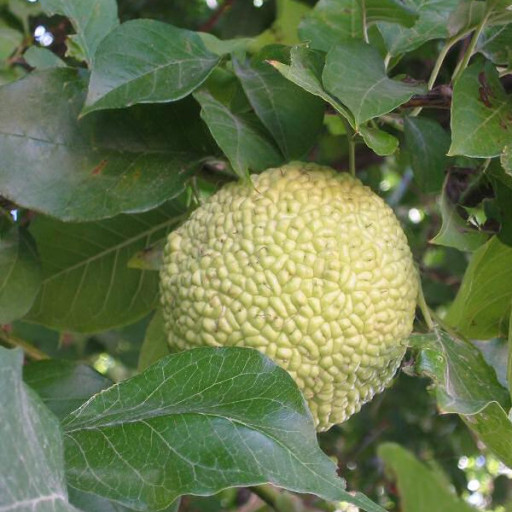
Plant Overview
Meet the Maclura pomifera, most famously known as the Osage Orange, "Hedge Apple," or "Monkey Ball." Despite the name, it is actually a member of the Mulberry family and produces a fruit that looks like a lumpy, neon-green brain. Long before barbed wire existed, early settlers planted these thorny giants as "living fences" to create impenetrable barriers for livestock.
🔍 How to Identify
- 🧶 The Fruit: Large, spherical, and heavy aggregate fruits that are lime-green with a deeply wrinkled, "brain-like" texture.
- 🍃 Foliage: Simple, lance-shaped leaves with a glossy dark green finish that turn a brilliant golden-yellow in the autumn.
- ⚔️ Thorns: Sharp, stout spines (about 1/2 inch long) located at the leaf axils, particularly on younger branches and suckers.
🏡 In Your Garden
- 🪵 The "Iron" Wood: This tree produces some of the hardest, most rot-resistant wood in North America; it’s so dense that it was the primary material for the bows of the Osage Nation and later for indestructible fence posts.
- 🌳 The Ultimate Screen: If you have a large property, it serves as an excellent windbreak or privacy hedge that is virtually immune to pests, diseases, and extreme drought.
⚠️ Safety & Toxicity
- 🚫 Inedible Fruit: While not considered highly poisonous, the fruit is extremely bitter, woody, and unpalatable to humans.
- 🧤 Sticky Sap: The branches and fruit contain a milky, latex-rich sap that can cause skin irritation or rashes in sensitive individuals; always wear gloves when pruning or handling.
✨ Fun Fact
Scientists believe the Osage Orange is an "evolutionary anachronism"—its giant fruits were originally meant to be eaten and dispersed by extinct Ice Age giants like the Woolly Mammoth and Giant Ground Sloth!

Detailed Care Instructions
| Humidity | Normal |
| Lighting | Full Sun |
| Difficulty | Medium |
| Hibernation | Cold Period |
| Hardiness Zones | 4 - 9 |
To grow a Maclura pomifera plant, also known as Osage orange or hedge apple, you can follow these steps:
- Select a suitable location: Maclura pomifera plants prefer full sun and well-draining soil. They can tolerate a wide range of soil types but do best in soil that is slightly acidic to slightly alkaline.
- Propagation: You have multiple options for propagation. You can start from seeds, which can be obtained from the fruit of the plant. Alternatively, you can propagate from cuttings or purchase young nursery-grown plants.
- Seeds: Collect ripe fruit from a female Maclura pomifera plant in autumn. Remove the seeds and wash off any pulp. Soak the seeds in water for 24 hours before sowing. Plant them 0.5-1 inch deep in a seed-starting mix or directly in the ground in spring.
- Cuttings: Take 6-8 inch long cuttings in the early spring from healthy and young shoots. Dip the cut ends in rooting hormone powder and plant them in pots filled with well-draining soil mix. Keep the soil consistently moist.
- Planting: If you start from seeds, transplant the seedlings to a permanent location once they are 6-12 inches tall. Plant them at a distance of about 20-30 feet as they grow into large trees. If you use nursery-grown plants or cuttings, plant them directly in the desired location.
- Watering and care: Initially, water the young plants regularly to keep the soil moist but not waterlogged. As the plants establish, they become more drought-tolerant and only need watering during prolonged dry spells. Adding a layer of mulch around the base of the plant helps retain soil moisture and suppress weed growth.
- Pruning: Prune Maclura pomifera plants during the dormant season (late winter or early spring) to remove dead or diseased wood, maintain a desirable shape, or control size. However, they generally require minimal pruning.
- Pest and disease control: Maclura pomifera plants are generally resistant to pests and diseases. However, occasional issues with aphids, scale insects, or webworms may arise. Monitor the plants regularly and use appropriate organic or chemical control methods if necessary.
Remember that Maclura pomifera plants have large, spreading thorns and can produce large fruit that may cause a mess if not harvested or cleaned up. Consider these factors when choosing a suitable location for planting.

Place in a bright room that is sun drenched almost all day. Or directly in a south-facing window.

To properly water this plant, first check the soil to ensure that it is dry to a depth of at least one inch. Then, slowly pour water into the soil around the base of the plant, taking care not to splash water onto the leaves or stem. Allow the water to soak in, then check the soil again to make sure it is moist but not waterlogged. It is important not to overwater this plant, as it prefers well-draining soil and can be susceptible to root rot. Watering once a week, or when the soil feels dry to the touch, is typically sufficient.
To fertilize the Maclura Pomifera plant, you should apply a balanced fertilizer with equal amounts of nitrogen, phosphorus, and potassium. Fertilizer should be applied in the spring before new growth begins and again in the fall after the growing season has ended. Avoid over-fertilizing, as this can burn the roots and damage the plant. Water the plant thoroughly after fertilization to ensure the nutrients are absorbed properly.
Maclura pomifera, a species of plant belonging to the Moraceae family, prefers a well-draining soil that is fertile and rich in organic matter. The soil should be slightly acidic, with a pH ranging from 6.0 to 7.0. Additionally, it is beneficial to plant the Maclura pomifera in a soil that has good water retention capacity, which will ensure healthy growth and development of the plant. A recommended soil mixture for this plant can be a blend of compost, topsoil, and sand, in equal proportions. It is essential to avoid using heavy, compacted soils, which may restrict root growth and limit nutrient uptake. Overall, the ideal soil for Maclura pomifera should provide a balance of drainage, aeration, and nutrient availability to support its growth.
Maclura Pomifera plant can be propagated by selecting healthy and mature plant cuttings. Use a sharp pruning shear to cut a 6-inch-long stem that is free from damage or disease. Remove all the leaves from the bottom half of the stem. Dip the cut end in rooting hormone powder to stimulate root growth. Plant the cutting in a well-draining soil mix and water it well.
Keep the cutting in bright, indirect light and maintain the soil moisture level. Avoid overwatering as it can promote fungal growth. It may take several weeks for the cutting to develop roots. Once the roots are established, gradually acclimate the new plant to brighter light and slightly drier soil.
Alternatively, Maclura Pomifera can also be propagated through division. Mature plants can be gently removed from the pot and the root ball can be divided into smaller sections. Each section should have several stems and healthy roots. Plant the divided sections into individual pots with well-draining soil and follow the same care instructions as for the stem cuttings.
Common pests of the osage orange include Scale insect, mealybugs, spider mites, thrips. Make a habit of checking your osage orange frequently for pests so that any infestations can be caught and managed early.








