Plant Overview
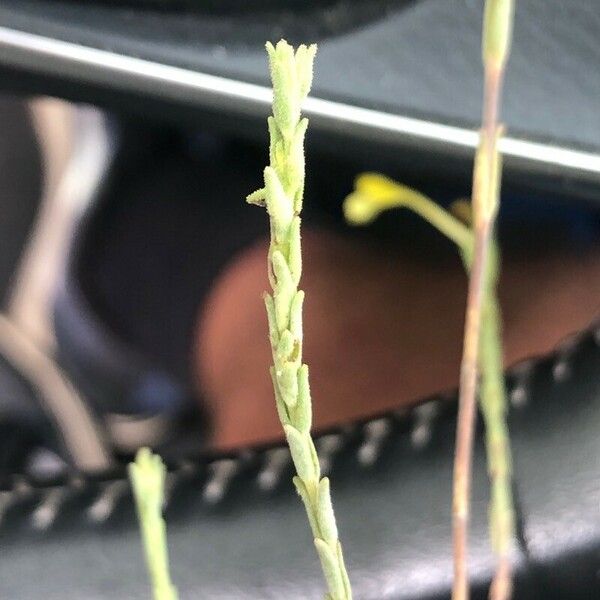
Known as the "Long-flowered Eyebright," this Mediterranean beauty looks like a collection of golden flutes reaching for the sun. It is a master of survival in the dry scrublands of Spain and North Africa, where it adds a splash of vibrant yellow to the rocky landscape. Interestingly, this plant leads a "double life"—it creates its own energy through photosynthesis but also secretly siphons extra water and minerals from the roots of neighboring plants.
🔍 How to Identify
- 🌼 Trumpet Flowers: It is defined by its exceptionally long, narrow tubular flowers (corollas) that are usually bright yellow, ending in two distinct "lips."
- 🍃 Linear Leaves: The leaves are small, narrow, and often have slightly toothed edges, growing directly opposite each other along the stem.
- 🏗️ Wiry Stems: The plant has a stiff, upright, and branched growth habit, often reaching up to 40–50 cm in height, giving it a delicate but sturdy appearance.
🏡 In Your Garden
- 🤝 The Parasitic Partner: Because this is a hemiparasitic plant, it is rarely found in traditional nurseries. It requires a "host" plant (usually a grass or small shrub) to latch onto. Without a neighbor to share nutrients with, it often fails to thrive.
- ☀️ Mediterranean Soul: If you spot this in the wild, it will almost always be in a sunny, well-draining spot. It thrives in limestone-heavy (calcareous) soils and is highly adapted to surviving long, hot summers with very little water.
⚠️ Safety & Toxicity
- 🟢 Low Risk: Macrosyringion longiflorum is not considered a high-risk toxic plant for humans or common household pets.
- 👅 Bitter Defense: Most plants in the Orobanchaceae family contain bitter compounds called iridoid glycosides. While not deadly, these chemicals make the plant taste terrible, which usually prevents curious pets or children from eating enough to cause an upset stomach.
✨ Fun Fact
The genus name Macrosyringion is derived from the Greek words "makros" (long) and "syrinx" (pipe or tube). This refers to the plant's incredibly long flower tube, which is perfectly evolved to be pollinated by insects with very long tongues!

Detailed Care Instructions







