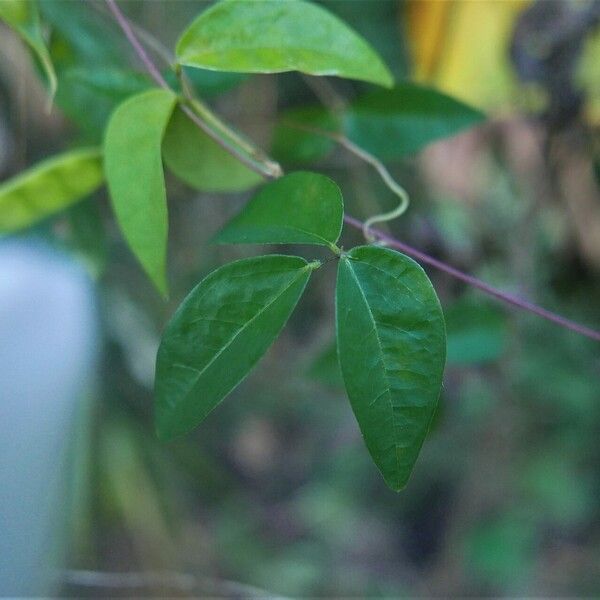
Plant Overview
Often called "Archer Axillaris," this vigorous perennial climber is a hidden champion of the legume family. Originally hailing from the sun-drenched landscapes of Africa and Yemen, it has traveled the world as a hardy groundcover and nutritious forage plant. Its subtle beauty lies in how it weaves through other vegetation, creating a lush, green tapestry that thrives even when the rain stops falling.
🔍 How to Identify
- 🍃 The Foliage: Look for "trifoliate" leaves, meaning each leaf consists of three oval-shaped leaflets. These leaflets are typically a soft green and may have a fine, velvety coating of hairs on the underside.
- 🌼 Axillary Blooms: The flowers are the giveaway—small, greenish-yellow pea-like blossoms that emerge in pairs or small clusters directly from the "axils" (the point where the leaf meets the stem).
- 🌱 Twining Stems: The plant spreads via slender, wiry stems that love to twine counter-clockwise around fences, trellises, or neighboring shrubs to reach the sunlight.
🏡 In Your Garden
- 🧬 Nitrogen Power: As a member of the pea family, it works with soil bacteria to "fix" nitrogen from the air. This makes it a fantastic "living mulch" that naturally improves the fertility of the surrounding soil.
- ☀️ Drought Warrior: This plant is exceptionally resilient to dry spells. It develops a deep root system that allows it to stay green long after other grasses and herbs have turned brown in the summer heat.
- ✂️ Vigor Management: Because it is a "twiner," it can occasionally overwhelm smaller, delicate plants. It’s best used as a dedicated groundcover or on a sturdy fence where its climbing habit can be appreciated without causing trouble.
⚠️ Safety & Toxicity
- ✅ Safe Status: It is non-toxic to livestock and is widely used as high-protein forage for cattle, sheep, and horses.
- 🐾 Pet Note: While not considered toxic to cats or dogs, the consumption of any plant material in large quantities can cause minor digestive upset. It is generally safe to have in a pet-friendly backyard.
✨ Fun Fact
Despite its delicate appearance, Macrotyloma axillare is a "pioneer plant"—it is often one of the first species used by environmentalists to reclaim degraded land and prevent soil erosion on steep, unstable hillsides.

Detailed Care Instructions







