Plant Overview
Known as the "White Champaca" or the "Perfume Tree," the Magnolia × alba is legendary across Southeast Asia for its intoxicating, creamy fragrance. Often found gracing temple grounds or tucked into private courtyards, its scent is so potent that a single flower can fill an entire room with notes of melon and expensive jasmine. It is a hybrid of ancient lineage, cherished not just for its beauty, but for the peaceful atmosphere it creates.
🔍 How to Identify
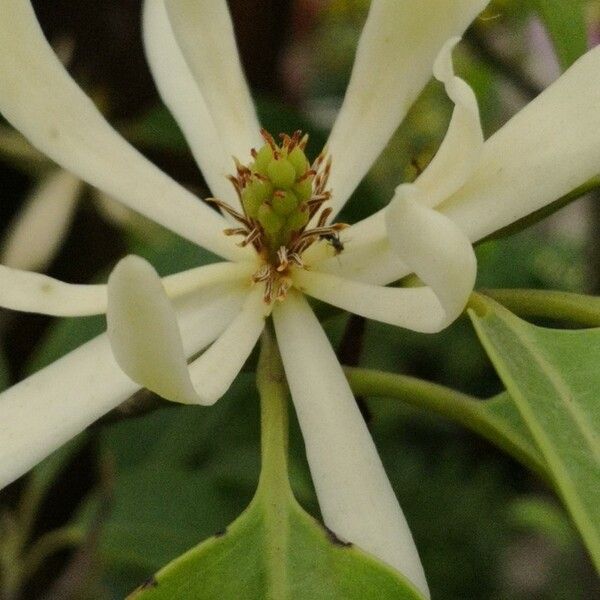
- 🌼 The Flowers: Unlike the bowl-shaped blooms of other magnolias, these are slender and star-like with narrow, ivory-white petals that look almost like ribbons.
- 🍃 The Foliage: The leaves are large, bright lime-green, and glossy. They have an elegant, pointed elliptical shape and can grow up to 10 inches long.
- 🌳 Growth Habit: It typically grows as a tall, narrow evergreen tree with a straight trunk, though in home gardens, it is often pruned into a manageable shrub.
🏡 In Your Garden
- 💧 Root Sensitivity: This plant is notoriously "fussy" about its roots. It has a sensitive taproot and brittle lateral roots, meaning it absolutely hates being moved once planted. Choose its forever home carefully!
- ☀️ Sun and Drainage: While it loves the sun, it is prone to root rot. It requires exceptionally well-draining, slightly acidic soil. If the "feet" stay wet for too long, the leaves will quickly yellow and drop in protest.
- 🌬️ Wind Protection: Because the wood is somewhat brittle and the leaves are large, it performs best when sheltered from harsh, drying winds which can tatter the foliage and break young branches.
⚠️ Safety & Toxicity
- ✅ Safe Status: Magnolia × alba is generally considered non-toxic to humans, cats, and dogs.
- 🌸 Sensitivities: While the plant is safe, the intense fragrance of the flowers can be overwhelming in enclosed, unventilated spaces, occasionally causing mild headaches for sensitive individuals.
✨ Fun Fact
The scent of the White Champaca is a primary ingredient in some of the world’s most expensive perfumes, most notably the famous "Joy" by Jean Patou, which was once marketed as the costliest perfume in the world!

Detailed Care Instructions
- Choose a well-draining soil: Magnolia plants prefer slightly acidic, well-draining soil that is rich in organic matter. Avoid heavy clay or waterlogged soils.
- Plant in a sunny location: Magnolia plants prefer full sun to partial shade. Choose a location that receives at least 6 hours of direct sunlight each day.
- Water regularly: Magnolia plants require consistent moisture, especially during the hot summer months. Water deeply and thoroughly, allowing the soil to dry out slightly between waterings.
- Fertilize lightly: Magnolia plants do not require heavy fertilization. Use a slow-release, balanced fertilizer in the spring and avoid overfeeding.
- Mulch around the base: Mulching around the base of the plant can help retain moisture, suppress weeds, and protect the roots from temperature extremes.
- Prune as needed: Magnolia plants generally do not require heavy pruning, but removing dead or damaged branches can help promote healthy growth.
- Protect from harsh weather: Magnolia plants are susceptible to damage from strong winds and extreme cold. Consider providing wind protection and covering the plant during freezing temperatures.
- Monitor for pests and diseases: Keep an eye out for common pests such as scale insects and diseases such as powdery mildew. Treat promptly if necessary.
By following these tips, you can help your Magnolia × Alba plant thrive and grow successfully.

Place in a window with dappled sun or a spot in the middle of a room. Or directly in a window facing west or east.

To water the Magnolia × Alba plant, it is important to provide consistent moisture without overwatering. This can be achieved by giving the plant a thorough watering once a week, ensuring that the soil is evenly moist but not waterlogged. It is best to water the plant at the base to avoid getting the foliage wet, which can lead to disease. Additionally, be sure to check the soil moisture levels regularly by sticking your finger into the soil to determine if it is dry and in need of watering. During hot and dry periods, you may need to water more frequently to prevent the plant from drying out. Remember to adjust watering frequency based on the specific conditions of the plant's environment.
To fertilize the Magnolia × Alba plant, use a balanced, slow-release fertilizer with equal amounts of nitrogen, phosphorus, and potassium. Apply the fertilizer in early spring before new growth appears. Follow the instructions on the fertilizer packaging for the correct application rate based on the size of the plant. Water the plant well after applying the fertilizer to help it absorb nutrients effectively. Avoid over-fertilizing, as this can harm the plant. Regularly monitor the plant for any signs of nutrient deficiencies and adjust the fertilization schedule as needed.
Magnolia × Alba plant thrives in well-draining, fertile soil with a slightly acidic to neutral pH level. A loamy soil with good organic matter content is ideal for promoting healthy growth and blooming of this plant. It is important to avoid heavy, clayey soils or waterlogged conditions, as this can lead to root rot and other issues. Adding compost or aged manure to the soil before planting can help improve soil structure and nutrient content, providing a good foundation for the Magnolia × Alba plant to flourish. Additionally, a layer of mulch around the base of the plant can help retain moisture and regulate soil temperature, creating a more conducive environment for optimal growth.
To propagate Magnolia × Alba plant, you can do so through semi-hardwood cuttings. Here is how you can propagate this plant:
- Choose a healthy and disease-free branch from the plant that is semi-hardwood, which means it is not too soft and not too hard. Cut a 6-8 inch section of the branch using sharp and clean pruners.
- Remove any leaves from the bottom half of the cutting to prevent excess water loss through transpiration.
- Dip the cut end of the cutting in rooting hormone to promote root growth.
- Prepare a pot with well-draining soil mix that is rich in organic matter. Create a hole in the soil using a pencil or stick.
- Insert the cutting into the hole and gently press the soil around it to secure it in place.
- Water the cutting thoroughly and place it in a warm, bright location with indirect sunlight.
- Keep the soil moist but not waterlogged, and mist the cutting with water daily to maintain high humidity levels.
- After a few weeks, you should start to see roots forming on the cutting. You can gently tug on the cutting to check for resistance, which indicates that roots have formed.
- Once roots have developed, transplant the cutting into a larger pot or into the garden. Ensure that the newly transplanted cutting receives adequate water and sunlight to continue growing and thriving.
Common pests of the white champaca include Scale insect, aphids, thrips, larvae. Make a habit of checking your white champaca frequently for pests so that any infestations can be caught and managed early.








