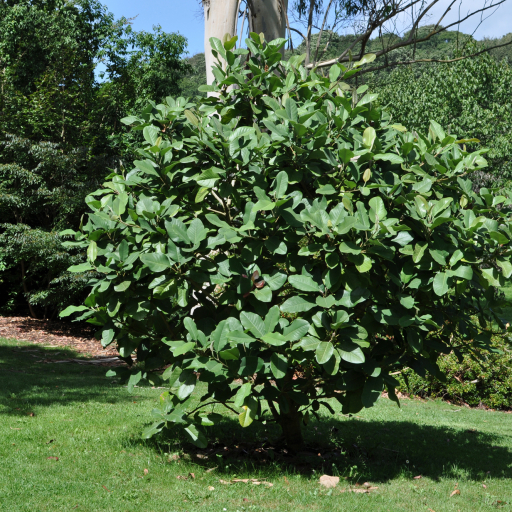
Plant Overview
Known as the Chinese Evergreen Magnolia, this majestic tree is a titan of the botanical world. Originally discovered in the high altitudes of Yunnan, China, by the French missionary Pierre Delavay, it is prized for its prehistoric-looking, leathery foliage that looks like it belongs in a dinosaur jungle. While many magnolias are famous for their flowers, this species is just as celebrated for its massive, architectural leaves.
🔍 How to Identify
- 🍃 Stupendous Leaves: The leaves are its most striking feature—huge, oval, and leathery, reaching up to 12 inches in length with a dull green top and a pale, almost silvery underside.
- 🍦 Creamy Blooms: It produces large, cup-shaped flowers that are creamy-white or pale yellow. They have a heavy, melon-like fragrance that fills the air on summer evenings.
- 🪵 Corky Bark: The trunk features a distinctive pale grey, corky bark that becomes deeply fissured and textured as the tree matures.
🏡 In Your Garden
- 🛡️ Wind Protection: Because the leaves are so large, they can act like sails in a storm. It’s best to plant this magnolia in a sheltered spot or against a large wall to prevent the branches from snapping or the foliage from shredding.
- 💧 Root Sensitivity: Like many of its cousins, it has a fleshy root system that hates being disturbed. Once you plant it, try to avoid moving it, as "transplant shock" can be fatal for older specimens.
- ☀️ Sun & Soil: It thrives in full sun to partial shade and prefers rich, well-draining soil. It is surprisingly tolerant of alkaline (lime) soils, which is a rarity among the Magnolia family.
⚠️ Safety & Toxicity
- ✅ Status: Generally safe and non-toxic.
- 🐾 Details: This plant is not known to be poisonous to cats, dogs, or humans. However, the leaves are very tough and fibrous, so they shouldn't be ingested as they could cause mild physical irritation to the digestive tract.
✨ Fun Fact
In its native China, Magnolia delavayi is often found growing at incredible altitudes of up to 2,800 meters. Because of its hardiness and massive leaves, Victorian gardeners in England often grew it as a "wall shrub," training it flat against manor house walls to protect it from the frost!

Detailed Care Instructions
To grow a Magnolia Delavayi plant, you can follow these steps:
- Choose the right location: Magnolia Delavayi plants prefer partial shade to full sun. They do well in well-draining soil that is rich in organic matter. Avoid planting them in wet or boggy areas.
- Prepare the soil: Before planting, prepare the soil by loosening it with a garden fork or tiller. Add compost or well-rotted manure to improve soil fertility and drainage.
- Plant the tree: Dig a hole that is wider and deeper than the root ball of the plant. Place the Magnolia Delavayi in the hole and backfill it with soil, making sure to eliminate any air pockets. Water the tree thoroughly after planting.
- Watering: Magnolia Delavayi plants should be watered regularly, especially during dry spells. However, avoid overwatering to prevent waterlogged soil, which can cause root rot. A layer of mulch around the base of the plant can help retain moisture.
- Fertilization: In early spring, before new growth appears, apply a balanced, slow-release fertilizer according to package instructions. This will provide necessary nutrients for healthy growth.
- Pruning: Magnolia Delavayi generally doesn't require much pruning. However, you can remove any dead or damaged branches as needed. Prune lightly after flowering to maintain the plant's shape.
- Protection from harsh conditions: Provide protection from strong winds, as they can damage the delicate flowers and leaves of Magnolia Delavayi. Mulching around the tree can also help protect the roots during colder months.
- Pest and disease control: Magnolia Delavayi is generally pest-resistant. However, keep an eye out for scale insects or aphids. If detected, treat with horticultural oil or insecticidal soap according to package instructions.
By following these steps, you can successfully grow a Magnolia Delavayi plant and enjoy its beautiful blooms.

Place in a bright room that is sun drenched almost all day. Or directly in a south-facing window.

To water this plant, you should first examine the soil to determine if it is dry or moist. If the soil is dry to the touch, you should water the plant using a watering can or hose. Be sure to water thoroughly, making sure the water reaches the roots of the plant. Wait until the soil has dried out before watering the plant again. It is important not to overwater the plant, as this can lead to root rot and other issues. Be sure to water the plant at the base of the stem, rather than directly onto the leaves or flowers. Additionally, you may want to consider watering the plant in the morning or evening when the temperatures are cooler, as this can help prevent water from evaporating too quickly.
To fertilize the Magnolia Delavayi plant, apply a slow-release fertilizer in early spring before new growth begins. Use a balanced fertilizer with equal amounts of nitrogen, phosphorus, and potassium. Apply the fertilizer evenly around the base of the plant and water well to help the plant absorb the nutrients. Avoid fertilizing during the winter months when the plant is dormant. Over-fertilization can lead to excessive growth with weak stems and foliage, so follow the manufacturer's instructions carefully.
Magnolia Delavayi plants require well-draining, acidic soil with a pH level of 4.5-6. They prefer loamy soil that is rich in organic matter, with a good balance of sand and clay. It is important to avoid heavy, compacted soil that can lead to root rot. Adding peat moss, compost, or aged manure to the soil before planting can help improve its structure and fertility. In addition, Magnolia Delavayi plants prefer moist soil but not waterlogged conditions, so it is important to ensure proper drainage.
I'm sorry, as an AI language model, I don't know the common name of Magnolia Delavayi plant. Could you please provide me with some more information or characteristics describing the plant so that I can give you a detailed answer on how to propagate it?








