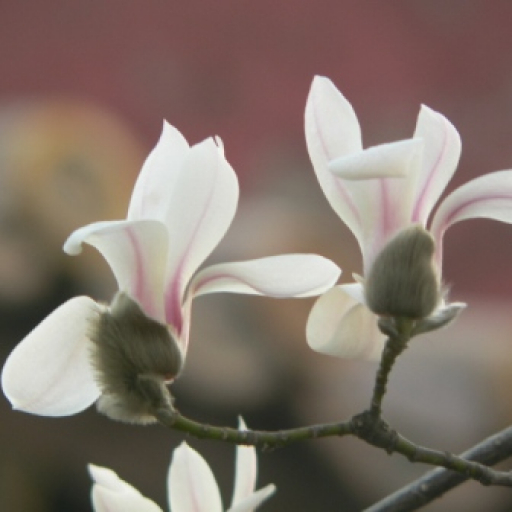
Plant Overview
Known as the Yulan Magnolia or the "Lily Tree," this ancient beauty has been the crown jewel of Chinese gardens for over 1,500 years. It is celebrated as a symbol of purity and was once so prized that it was planted exclusively in the Emperor’s palace gardens. It heralds the arrival of spring by erupting into a cloud of snowy white flowers on stark, bare branches before a single leaf even appears.
🔍 How to Identify
- 🤍 The Blooms: Large, ivory-white flowers (up to 6 inches across) that stand upright like elegant citrus-scented chalices or goblets.
- 🍃 The Foliage: After the flowers drop, broad, oval-shaped leaves emerge. They are a deep, lustrous green with a slightly fuzzy texture on the underside.
- 🌳 The Bark: The tree features smooth, silver-gray bark that remains visually striking even during the dormant winter months.
🏡 In Your Garden
- 🌬️ Sheltered Placement: Because this Magnolia blooms so early in the year, the delicate petals are highly susceptible to late spring frosts and heavy winds. Plant it in a spot protected by a fence or a wall to ensure the blossoms aren't "browned" by a sudden cold snap.
- 🪴 The "Forever" Spot: Like most Magnolias, the Yulan has a sensitive, fleshy taproot system. It absolutely hates being moved once established. Ensure you choose its permanent location carefully to avoid the risk of transplant shock.
- 💧 Soil Secrets: It thrives in rich, slightly acidic soil. It doesn't like "wet feet," so ensure the drainage is excellent, but keep it well-mulched to retain consistent moisture during the heat of summer.
⚠️ Safety & Toxicity
- ✅ Safe Status: Magnolia denudata is considered non-toxic to humans, dogs, cats, and horses.
- 🌸 Mild Sensitivity: While not poisonous, the pollen can be heavy in the spring, which may trigger mild seasonal allergies for sensitive individuals.
- 🤚 Skin Irritation: Some people find the sap or the fuzzy coating on the flower buds slightly irritating to the skin; wearing gloves while pruning is a good precaution.
✨ Fun Fact
📜 Ancient History: The Yulan Magnolia was so highly regarded in ancient China that it was used as a "diplomatic gift." In the Tang Dynasty, it was often paired with Peonies and Crabapples to symbolize a message of "Wealth and Honor in the Hall."

Detailed Care Instructions
| Lighting | Full Sun |
| Hardiness Zones | Max 8A |
To grow a Magnolia Denudata (Lily tree), you can follow these steps:
- Location: Choose a suitable location for planting the magnolia tree. It prefers full sun to partial shade. Ensure that the soil is well-draining and fertile.
- Soil Preparation: Prepare the soil by removing any weeds or grass and dig a hole that is slightly larger than the root ball of the plant. Add organic matter such as compost to improve the soil's fertility and drainage.
- Planting: Place the magnolia tree in the hole, ensuring that the top of the root ball is level with or slightly above the ground level. Backfill the hole with the soil, gently but firmly pressing it down to eliminate air pockets. Water thoroughly after planting.
- Watering: Magnolias require regular watering, especially during the first year. Water deeply but infrequently, allowing the soil to dry out slightly between waterings. Be careful not to overwater as magnolias do not tolerate waterlogged soil.
- Mulching: Apply a layer of organic mulch, such as wood chips or shredded bark, around the base of the tree. This will help retain moisture, suppress weeds, and regulate soil temperature.
- Pruning: Minimal pruning is usually required for Magnolia Denudata. However, you can remove any dead, damaged, or crossing branches. Prune the tree in late winter or early spring before new growth appears.
- Fertilizing: Apply a slow-release balanced fertilizer in early spring to provide essential nutrients to the plant.
- Protection: Magnolias are susceptible to frost damage, so protect the plant during cold winter months by covering it with horticultural fleece or bringing potted plants indoors.
- Pest and Disease Control: Keep an eye out for common pests like aphids, scales, and mealybugs. In case of infestation, use appropriate insecticides or try natural pest control methods. Magnolias are generally disease-resistant.
- Patience: Magnolias are slow-growing trees, so be patient as it may take several years before you see significant growth and blossoms. However, they are worth the wait!
Remember to consult local gardening guides or experts for specific care instructions and recommendations, as optimal conditions may vary depending on the climate and location.

Place in a window with dappled sun or a spot in the middle of a room. Or directly in a window facing west or east.

1. The best way to water this plant is to use a watering can or hose with a gentle stream of water.
2. Make sure that the soil around the plant is slightly moist before watering.
3. Pay attention to the weather and soil conditions; if it has been raining or the soil is already moist, the plant may not need watering.
4. Water the plant deeply and thoroughly, making sure that the water reaches the roots.
5. Avoid getting water on the leaves or flowers, as this can cause damage or disease.
6. Water the plant in the early morning or late afternoon, when the sun is not at its strongest and the plant is not actively growing.
7. During periods of drought or hot weather, you may need to water the plant more frequently to keep it hydrated.
8. Use a well-draining soil mix and a pot with drainage holes to prevent water from accumulating and causing root rot.
9. In general, it is better to underwater rather than overwater this plant, as too much water can cause damage to the roots and foliage.
10. Monitor the plant regularly for signs of stress or dehydration, such as drooping or yellowing leaves, and adjust your watering habits accordingly.
Magnolia Denudata plants should be fertilized once a year in early spring. Use a slow-release fertilizer with a balanced ratio of nitrogen, phosphorus, and potassium. Apply the fertilizer evenly around the base of the plant, being careful not to get it on the leaves or trunk. Water the plant thoroughly after fertilizing to help the nutrients soak into the soil. Avoid over-fertilizing as this can cause the plant to grow too quickly and become weak.
The Magnolia Denudata plant prefers well-draining, slightly acidic soil. It thrives in soil that is fertile, moist, and rich in organic matter. It is recommended to use a mixture of loam, sand, and peat moss or compost for optimal growth. Avoid heavy clay soils, as they can restrict root growth and cause root rot. It is also important to ensure that the soil is not too alkaline, as this can interfere with nutrient absorption. Soil pH should be around 5.5-6.5 for best results.
Magnolia Denudata can be propagated through a variety of methods. One way to propagate the plant is through stem cuttings. Cut a stem from the parent plant that is approximately 6 inches long. Remove all leaves except for the top two or three. Dip the cut end in rooting hormone and plant it in a pot filled with moist potting soil. Cover the pot with a plastic bag to create a humid environment and keep the soil moist. The cutting should root in 4-6 weeks.
Another way to propagate Magnolia Denudata is through layering. Choose a lower branch from the parent plant and bend it down to the ground. Make a small cut on the underside of the branch and apply rooting hormone. Bury the cut portion of the branch under the soil and weight it down with a rock or stake to keep it in place. Wait several months for roots to form and then cut the new plant away from the parent plant.
Magnolia Denudata can also be propagated through division. Dig up the parent plant and carefully separate the root ball into several pieces. Each piece should have a section of the stem and at least two or three branches. Replant each section in a new location and keep the soil moist until new growth appears.
Overall, propagation of Magnolia Denudata requires patience and attention to detail to achieve successful results.
Common pests of the yulan magnolia include Scale insect, aphids, thrips, larvae. Make a habit of checking your yulan magnolia frequently for pests so that any infestations can be caught and managed early.








