Plant Overview
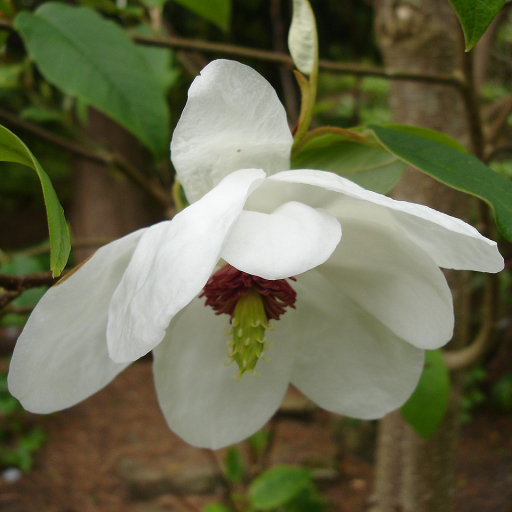
Often referred to as the "Shy Magnolia," Magnolia wilsonii is a true aristocrat of the woodland garden. Named after the legendary plant hunter Ernest "Chinese" Wilson, who discovered it in the early 20th century, this deciduous shrub is famous for its "nodding" habit. Unlike most magnolias that reach for the sky, Wilson’s Magnolia hangs its fragrant blossoms downward, inviting you to peek inside their hidden, colorful centers.
🔍 How to Identify
- 🌸 The Bloom: Large, cup-shaped white flowers that hang downward (pendulous). They feature a striking, high-contrast ring of deep crimson or maroon stamens at the center.
- 🍃 The Foliage: Elliptical leaves that are a soft matte green on top, with a distinctively silky, silvery-velvet underside that shimmers when caught by a breeze.
- 👃 The Scent: A delicate yet intoxicating citrus-floral fragrance that carries well on damp, still air, especially during late spring and early summer.
🏡 In Your Garden
- 🌬️ Shelter is Key: Because the flowers hang on delicate stalks, they are easily damaged by heavy winds. Plant this magnolia in a sheltered "woodland" spot where it can enjoy filtered light and protection from the elements.
- 🌱 Root Sensitivity: Like many magnolias, this species has "fleshy" roots that are very sensitive to disturbance. It hates being moved once established, so choose its forever home carefully and avoid digging around its base.
- 💧 Cool Roots: It thrives in soil that stays consistently moist but never waterlogged. A thick layer of organic mulch (like leaf mold) helps mimic the forest floor and keeps the root zone cool during summer heat.
⚠️ Safety & Toxicity
- ✅ General Safety: Magnolia wilsonii is generally considered non-toxic to humans, dogs, and cats. It is a safe addition to family-friendly landscapes.
- 🍽️ Not for Consumption: While not poisonous, the plant is purely ornamental. Ingesting large amounts of leaves or bark could cause mild stomach upset in curious pets.
✨ Fun Fact
Ernest Wilson, the man for whom the plant is named, once described this species as one of the most beautiful plants in the Northern Hemisphere. Because the flowers face downward, it is best planted on a slope or a high bank so you can look up into the stunning crimson "eyes" of the blossoms without having to kneel on the ground!

Detailed Care Instructions
Magnolia Wilsonii, also known as Wilson's Magnolia, is a slow-growing deciduous tree that produces beautiful white flowers. Here are some tips on how to grow Magnolia Wilsonii successfully:
- Choose the right location: Magnolia Wilsonii prefers a sunny to partially shaded spot in moist, well-draining soil. It does best in a sheltered location away from strong winds.
- Planting: Plant your Magnolia Wilsonii in the spring or fall. Dig a hole that is twice as wide as the root ball but not deeper than the depth of the root ball. Gently loosen the roots and place the tree in the hole. Fill in with soil and water thoroughly.
- Watering: Keep the soil consistently moist, especially during the first growing season. Once established, Magnolia Wilsonii is somewhat drought-tolerant but will benefit from regular watering during dry periods.
- Fertilizing: Fertilize your Magnolia Wilsonii in the spring with a slow-release, balanced fertilizer. Avoid high-nitrogen fertilizers, as they can promote excessive foliage growth at the expense of flowers.
- Pruning: Magnolia Wilsonii generally does not require much pruning, but you can remove any dead or damaged branches in the late winter or early spring.
- Mulching: Apply a layer of organic mulch around the base of the tree to help retain moisture and suppress weeds.
- Protection from frost: In colder climates, protect young Magnolia Wilsonii trees from frost by wrapping them in burlap or providing a windbreak.
By following these tips, you can successfully grow and enjoy the beautiful flowers of Magnolia Wilsonii in your garden.
Magnolia Wilsonii plant should be watered thoroughly but not excessively. The soil should be kept consistently moist, but not soggy. To do this, you can water the plant deeply once a week, ensuring that the water reaches the roots of the plant. It is important to monitor the soil moisture level regularly to ensure that it does not dry out completely. Additionally, it is recommended to water the plant in the morning or evening to avoid evaporation and ensure that the water is absorbed properly by the plant. Avoid watering the plant from above as this can lead to fungal diseases. Instead, water the plant at the base to prevent water splashing onto the leaves.
To fertilize the plant, apply a balanced fertilizer with equal parts nitrogen, phosphorus, and potassium in the spring. Be cautious not to over-fertilize as this can harm the plant. Water the plant well after fertilizing to help the nutrients reach the roots. Avoid fertilizing in late fall or winter as this can stimulate new growth that may be damaged by frost.
Magnolia Wilsonii plants prefer well-draining, slightly acidic soil. A suitable soil mix for Magnolia Wilsonii may include a combination of peat moss, perlite, and pine bark. This type of soil will allow for good drainage and aeration while also providing the necessary nutrients for healthy plant growth. Additionally, incorporating a slow-release fertilizer specifically formulated for acid-loving plants can help support the growth and blooming of Magnolia Wilsonii.
To propagate this plant, you can take softwood cuttings in the spring or semi-hardwood cuttings in the summer. Start by selecting a healthy branch that is free of disease and pests. Use a sharp, sterilized knife or shears to cut a 6-8 inch section of the branch just below a leaf node.
Remove the lower leaves from the cutting, leaving only a few at the top. Dip the cut end of the stem in rooting hormone to encourage root growth. Plant the cutting in a well-draining potting mix and water thoroughly.
Place the cutting in a warm, bright location with indirect sunlight. Keep the soil consistently moist, but not waterlogged. You can also cover the cutting with a clear plastic bag or a plastic dome to create a greenhouse effect and retain moisture.
Check the cutting regularly for signs of new growth, which indicates that roots have formed. This process can take several weeks to several months, so be patient. Once the cutting has established roots, you can transplant it into a larger pot or directly into the garden.








