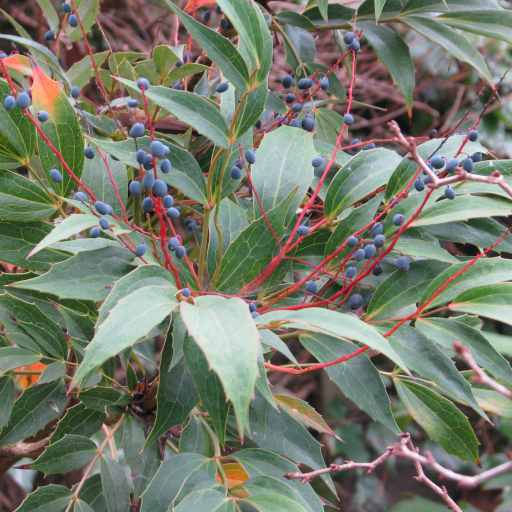
Plant Overview
Often called the "Slender-stalked Mahonia," this Chinese native is widely considered the aristocrat of the Mahonia family. While its cousins are known for bright yellow blooms, Mahonia gracilipes offers a much more sophisticated, "moody" color palette of deep plum and chalky white. It is a prized architectural shrub that brings a touch of prehistoric elegance to shaded garden corners.
🔍 How to Identify
- ⚪ Leaf Undersides: The most striking feature is the brilliant, "chalk-white" coating on the underside of the leaves. When the wind blows, the plant appears to shimmer as the white flashes against the dark green tops.
- 🍷 Bicolor Blooms: Unlike common Mahonias, the flower spikes feature tiny, bell-shaped blossoms with "purplish-red" exteriors and "pale yellow" centers.
- 🌿 Leathery Leaflets: The foliage consists of long, compound leaves with "spiny-toothed" edges, resembling holly but arranged in a more graceful, fountain-like spray.
🏡 In Your Garden
- 🌑 Shade Specialist: This plant is a hero for the "dry shade" areas of your yard. It thrives in the dappled light under large trees where many other ornamental plants would wither, using its waxy leaves to retain moisture.
- 🧘 Minimalist Maintenance: It is a slow grower that maintains a tidy shape naturally. However, it is quite "stubborn" about its location; due to a sensitive root system, it hates being transplanted, so be sure to pick its permanent home before digging the hole.
⚠️ Safety & Toxicity
- 🛡️ Low Risk: Mahonia gracilipes is generally considered non-toxic to humans and pets, making it a safe choice for family gardens.
- 🌵 Mechanical Defense: The primary "danger" is the foliage itself. The leaves are quite "prickly and sharp," which can cause minor scratches to curious pets or toddlers.
- 🍇 Tart Berries: While the blue-black berries are technically edible and high in Vitamin C, they are incredibly "acidic and bitter." Eating too many raw berries may cause a minor stomach ache.
✨ Fun Fact
The ghostly white powder on the underside of the leaves is actually a natural "epicuticular wax." In its native habitat in the misty mountains of Sichuan, China, this wax acts as a raincoat, helping the plant shed excess moisture to prevent fungal growth in the humid air.

Detailed Care Instructions
To water this plant, check the soil moisture level by inserting your finger or a moisture meter into the soil. If the top inch of soil feels dry to the touch, water the plant thoroughly until water flows out of the drainage holes at the bottom of the container or the soil is moistened to a depth of at least 6 inches in the ground. Avoid overwatering, which can lead to root damage and fungal growth. Consider using a watering can or gentle hose nozzle to apply water directly to the soil and avoid wetting the leaves, which can increase the risk of foliar diseases. Irrigate the plant regularly during the growing season, reducing frequency in winter when the plant is dormant.
Mahonia Gracilipes requires well-draining soil that is rich in organic matter. It prefers a slightly acidic soil with a pH between 5.0 and 6.5. The soil should be moist but not waterlogged, as excess water can cause root rot. The plant can tolerate some drought, but it will benefit from regular watering during dry periods. Adding compost, leaf mold, or other organic matter to the soil will improve its fertility and water-retention capacity. It is best to avoid heavy clay soils, as they can become compacted and limit root development. In general, Mahonia Gracilipes prefers a soil that is loose, moist, and nutrient-rich.








