Plant Overview
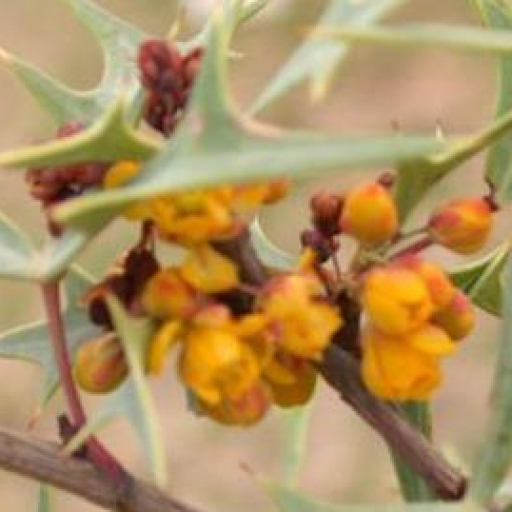
Commonly known as Agarita or the Trifoliate Barberry, this hardy evergreen shrub is a desert survivor with a dual personality. While its stiff, holly-like leaves act as a formidable natural barbed-wire fence, it softens up in early spring with a cloud of honey-scented yellow blossoms. Native to the rocky slopes of Texas and the Southwest, it is a beloved "desert holly" that provides both protection and a feast for local wildlife.
🔍 How to Identify
- 🌿 The Leaves: Distinctive "trifoliate" clusters (three leaflets) that are stiff, leathery, and grey-green. Each leaflet ends in several sharp, needle-like points that don't take kindly to being touched.
- 🌼 The Flowers: Small, cup-shaped bright yellow flowers appear in late winter or early spring. They are incredibly fragrant, often smelling like clover or honey, and attract the season's first pollinators.
- 🍒 The Fruit: By late spring, the flowers turn into clusters of small, translucent red berries. These marble-like fruits are tart and prized by both birds and foragers.
🏡 In Your Garden
- 🛡️ Natural Security: Because of its intensely prickly foliage, Agarita is the perfect "barrier plant." Plant it under windows or along property lines to create a beautiful but impenetrable natural fence.
- ☀️ Drought Warrior: This plant thrives on neglect. It prefers well-drained, rocky, or limestone-heavy soil and once established, it requires almost no supplemental water, making it a star for xeriscaping.
- 🐦 Wildlife Hub: It is a high-value ecological plant. The dense, thorny interior provides a safe nesting site for small birds like Northern Mockingbirds, protecting them from predators like cats or hawks.
⚠️ Safety & Toxicity
- 🟢 Edibility: The ripe red berries are edible and famously used to make a prized, tart jelly. However, the rest of the plant (roots/stems) contains berberine; while used in traditional medicine, it shouldn't be consumed in large quantities.
- 🌵 Physical Hazard: The primary danger is mechanical. The leaf spines are very sharp and can easily puncture skin or gardening gloves. Keep this plant away from high-traffic paths where children or pets might accidentally brush against it.
✨ Fun Fact
Harvesting Agarita berries is a legendary challenge due to the thorns. Traditional foragers don't pick them by hand; instead, they place a large open umbrella or a tarp upside down under the bush and whack the branches with a stick to shake the ripe berries loose!

Detailed Care Instructions
To grow a Mahonia Trifoliolata plant, also known as Algerita or Agarita, follow these steps:
- Choose the right location: Mahonia Trifoliolata prefers full sun to partial shade. Select a location with well-draining soil and sufficient air circulation.
- Prepare the soil: Ensure the soil is well-prepared by removing weeds, rocks, and other debris. If the soil is heavy or clay-like, you may need to amend it with organic matter such as compost or aged manure to improve drainage and fertility.
- Planting: Dig a hole slightly larger and wider than the plant's root ball. Place the plant in the hole, making sure the top of the root ball is level with the surrounding soil. Backfill the hole with soil, gently firming it around the roots.
- Watering: Water the newly planted Mahonia Trifoliolata thoroughly to settle the soil and encourage root establishment. Afterward, water the plant regularly, keeping the soil consistently moist but not waterlogged. Reduce watering during the winter months.
- Mulching: Apply a layer of mulch around the base of the plant to retain moisture, suppress weed growth, and moderate soil temperature. Leave space around the stem to prevent rotting.
- Pruning: Regular pruning can help maintain the plant's shape and encourage bushier growth. Prune in late winter or early spring before new growth begins. Remove dead, damaged, or crossing branches, and trim back any excessive growth.
- Fertilizing: Mahonia Trifoliolata generally doesn't require much fertilization. If you feel the plant needs it, apply a balanced, slow-release fertilizer following the instructions on the package. Avoid over-fertilizing as it can lead to excessive foliage growth and weak stems.
- Pests and diseases: Mahonia Trifoliolata is generally resistant to pests and diseases but can occasionally be affected by aphids, scale insects, or fungal leaf spots. Monitor the plant regularly and take appropriate action, such as using organic insecticides or fungicides if necessary.
- Propagation: The plant can be propagated through seeds or by taking cuttings. Collect seeds from ripe berries in late summer or early fall and sow them in containers or directly in the ground. For cuttings, take semi-hardwood cuttings in late spring or early summer and root them in a well-draining potting mix.
With proper care, Mahonia Trifoliolata can be a beautiful addition to your garden, providing attractive foliage, bright yellow flowers, and edible berries.
- Get a watering can or hose.
- Fill the watering can or attach the hose to a faucet.
- Place the spout of the watering can or hose near the base of the plant, making sure not to disturb the soil too much.
- Gently pour water onto the soil around the plant, avoiding getting water on the plant's leaves.
- Allow the water to soak into the soil until it is moist but not waterlogged.
- Check the soil moisture level regularly by sticking your finger about 1-2 inches into the soil. If it feels dry, water the plant again.
- Water the plant deeply once a week during the growing season, and reduce watering in the winter months.
- Avoid overwatering as this can lead to root rot and other issues.
To fertilize this plant, use a balanced fertilizer with equal amounts of nitrogen, phosphorous and potassium. Apply the fertilizer in early spring before new growth appears and then again in early summer. Be sure to water the plant deeply after fertilizing to allow the nutrients to penetrate the soil. Avoid over-fertilization as it can harm the roots and lead to stunted growth.
Mahonia Trifoliolata plant requires well-drained and fertile soil. It is recommended to use a mix of loamy soil and sand to improve drainage and aeration. The pH level of the soil should be between 5.5 to 7.5, which is slightly acidic to neutral. The soil should also be rich in organic matter, which can be added by mixing compost or well-rotted manure into the soil before planting. Additionally, it is recommended to avoid using heavy clay soils that retain water and may lead to root rot in Mahonia Trifoliolata plant.
One method to propagate this particular plant is through stem cuttings. First, locate a healthy stem and cut it at a 45-degree angle using a sharp, sterile knife. Remove any leaves from the bottom 2 inches of the stem. Dip the cut end in a rooting hormone powder and plant it in a container with well-draining soil. Water the cutting thoroughly and cover it with a plastic bag to create a humidity dome. Place the container in a warm, bright location, but avoid direct sunlight. Keep the soil moist and mist the cutting daily. Within a few weeks, new roots should start forming and the new plant can be transferred to a bigger pot or planted outside.








