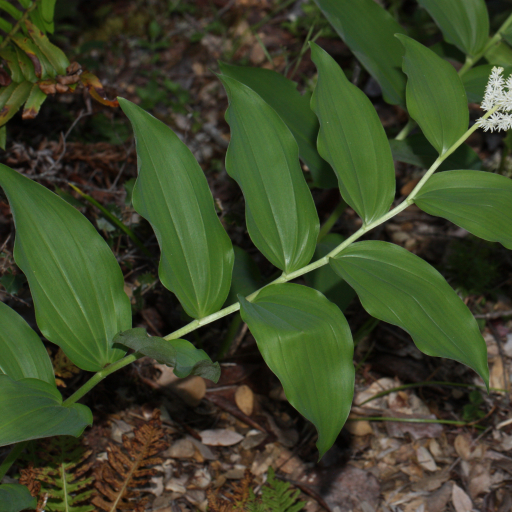
Plant Overview
Often called the "Treacleberry" or "False Solomon's Seal," Maianthemum racemosum is a graceful North American woodland native that brings a touch of elegance to shady corners. While it looks remarkably like the True Solomon's Seal for most of the year, it saves its most dramatic flair for the tips of its stems, where "feathery" white blossoms erupt in late spring. It’s a resilient, slow-growing beauty that rewards the patient gardener with a changing display of flowers and ruby-like berries.
🔍 How to Identify
- 🌿 Arching Stems: The plant grows in elegant, slightly zig-zagging wands that can reach up to 3 feet in height, leaning gracefully toward the dappled light.
- 🍃 Ribbed Foliage: Large, oval leaves feature prominent parallel veins and are arranged alternately along the stem, creating a lush, architectural "ladder" appearance.
- ❄️ Terminal Blooms: Unlike its lookalikes (which hide flowers under the leaves), its tiny, cream-white, star-shaped flowers grow in a dense, feathery cluster specifically at the very tip of the stem.
🏡 In Your Garden
- 🍄 Woodland Preferences: This plant is a "shade specialist." It thrives in rich, organic soil that mimics the decaying leaf litter of a forest floor. While it loves moisture, it is surprisingly drought-tolerant once its root system is established.
- 🐌 Slow and Steady: It spreads via underground rhizomes, but it is not invasive. It typically follows the classic perennial growth cycle: the first year it "sleeps" to build roots, the second it "creeps," and the third it "leaps" into a full, beautiful clump.
⚠️ Safety & Toxicity
- 🐾 Mild Caution: While not considered highly toxic like many true lilies, the berries can have a strong laxative effect if consumed in large quantities. It is best to keep curious pets and toddlers from snacking on the ripening fruit.
- ✋ Skin Sensitivity: Most people handle the plant without any issues, but the sap can occasionally cause mild skin irritation for those with extreme sensitivities if the stems are crushed or broken.
✨ Fun Fact
The ripe red berries are technically edible and were historically used by various Indigenous North American tribes. They are nicknamed "Treacleberries" because they possess a unique, bittersweet flavor that many describe as tasting like molasses or burnt sugar!

Detailed Care Instructions
| Humidity | Normal |
| Lighting | Part Sun |
| Difficulty | Easy |
| Temperature | 14°C - 30°C |
| Hardiness Zones | 3 - 8 |
To grow Maianthemum racemosum, also known as False Solomon's Seal, follow these steps:
- Choose a suitable location: Maianthemum racemosum prefers partial to full shade, with filtered sunlight or dappled shade being ideal. It can tolerate some morning sun but should be protected from intense afternoon sun. The soil should be rich, moist, and well-draining.
- Prepare the soil: Before planting, prepare the soil by removing any weeds or grass from the planting area. Loosen the soil and add compost or organic matter to improve its fertility and drainage.
- Planting: Plant the Maianthemum racemosum rhizomes or root divisions in early spring or fall. Dig a hole twice as wide and deep as the root ball. Place the rhizome or root division in the hole, making sure that the buds or growing points are facing upwards. Backfill the hole with soil, gently firming it around the plant.
- Watering: Water deeply after planting, ensuring that the soil remains consistently moist but not waterlogged. Water regularly during dry periods or when the top inch of soil feels dry. Avoid overwatering, as excessive moisture can lead to root rot.
- Mulching: Apply a layer of organic mulch around the plant to help retain moisture, suppress weeds, and maintain a cool root environment. Keep the mulch a few inches away from the stem to prevent rotting.
- Fertilizing: In late winter or early spring, before new growth emerges, apply a slow-release organic fertilizer or a balanced granular fertilizer according to the package instructions. Avoid over-fertilizing, as it can lead to weak growth or damage the plant.
- Maintenance: Maianthemum racemosum is a low-maintenance plant but may benefit from occasional division every 3-5 years to rejuvenate the plant and control its spread. Divisions can be done in early spring or fall. Remove any dead or yellowing foliage as necessary.
- Pests and diseases: Maianthemum racemosum is generally pest and disease resistant. However, it can occasionally suffer from issues like leaf spot or powdery mildew. If necessary, treat with appropriate organic fungicides or follow cultural practices to prevent such conditions.
- Propagation: Apart from division, Maianthemum racemosum can also be propagated through seed. Collect seeds from ripe berries in fall and plant them in a seed tray or nursery pot. Keep them moist and cold-stratify them for several weeks in the refrigerator before sowing.
By following these steps, you can successfully grow Maianthemum racemosum in your garden or landscape. Remember to regularly monitor its water requirements, provide adequate shade, and maintain the soil's moisture levels for optimal growth.

Place in a window with dappled sun or a spot in the middle of a room. Or directly in a window facing west or east.

First, ensure that the soil around the plant is not completely dry. If it is, water it slowly to avoid washing away the soil. Make sure to water the soil around the base of the plant rather than watering the leaves or stems directly. It is best to water the plant in the morning or evening when the sun is not as strong to avoid evaporating the water too quickly. Use a watering can or hose with a gentle spray to avoid damaging the plant. Check the soil moisture regularly and adjust watering frequency based on the plant's needs.
For optimal growth and health, it is recommended to fertilize this plant during the spring and summer seasons. Use a balanced fertilizer with equal parts nitrogen, phosphorus, and potassium. Apply the fertilizer at the base of the plant, avoiding the leaves and stems. Water the plant well after fertilizing. Do not fertilize during the fall and winter months as the plant is dormant during this time.
When growing Maianthemum Racemosum plant, it's important to use a type of soil that is well-draining and has good moisture retention. The ideal pH range is between 5.0 and 6.5, which is slightly acidic. A nutrient-rich soil is also important for healthy plant growth, so adding compost or organic fertilizer to the soil is recommended. It's best to avoid heavy clay soils or soils with poor drainage. Amend the soil with sand or perlite if necessary to improve drainage. Additionally, the plant prefers a partially shaded area with indirect sunlight and moderate humidity.
Maianthemum racemosum can be propagated through root division. First, select a mature plant with a healthy and established root system. Using a sharp knife or garden shears, carefully divide the root system into smaller sections, ensuring that each section contains both shoots and roots.
Prepare a well-draining potting mix and place the divided sections in the mix. Water the potting mix thoroughly to ensure that the roots are well-moistened, but avoid over-watering, which can lead to root rot.
Place the pot in a shaded or partially shaded area and maintain a consistently moist environment by misting the soil and foliage regularly. Over the course of several weeks, the plant should establish new roots and begin to grow.
As the new plant grows, gradually introduce it to brighter sunlight and reduce the frequency of misting. With proper care, the new plant should be fully established and ready for transplanting within a few months.
Common pests of the false solomon's seal include Spider mites, aphids, snails. Make a habit of checking your false solomon's seal frequently for pests so that any infestations can be caught and managed early.








