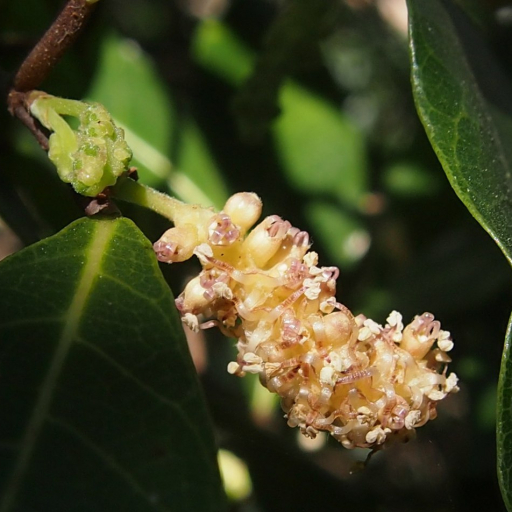
Plant Overview
Often called the Burny Vine or Crow Ash, this vigorous woody climber is a master of the vertical world, native to the rainforests of Australia, Southeast Asia, and the Pacific. It is a "scandens" species, meaning it spends its life scrambling upward toward the light, often forming thick, tangled curtains of green that provide essential shelter for woodland creatures. While it may look like a simple vine, its unique texture and hardy nature make it a fascinating specimen for native plant enthusiasts.
🔍 How to Identify
- 🍃 Sandpaper Leaves: The most distinct feature is the foliage; the dark green, oval leaves have a remarkably rough, scabrid texture that feels just like fine-grade sandpaper to the touch.
- 🍒 Ruby Berries: During the fruiting season, the plant produces small, glossy, oval-shaped drupes that transition from green to a brilliant, eye-catching red.
- 🪵 Twisting Stems: The vine is exceptionally tough and "wiry," with older stems becoming thick and woody, often twisting around themselves or nearby trees in a characteristic spiral.
🏡 In Your Garden
- 🧗 Support is Key: Because of its climbing habit, this plant is excellent for covering unsightly fences or creating a "living wall." However, avoid planting it near delicate shrubs, as it can easily overwhelm and smother smaller neighbors.
- 💧 Rainforest Roots: It thrives best in moist, well-draining soil. While it can tolerate some dry spells once its root system is established, it prefers "cool feet"—meaning the base of the plant should be shaded or heavily mulched to mimic the rainforest floor.
⚠️ Safety & Toxicity
- 🤚 Skin Irritant: The nickname "Burny Vine" comes from the fact that the rough leaves and the sap can cause a mild burning sensation or itching on sensitive skin. It is wise to wear gloves when pruning.
- 🐾 Not for Snacking: While native birds find the red berries delicious, they are not considered safe for human consumption. Keep an eye on toddlers and pets to ensure they don't mistake the bright fruit for a treat.
✨ Fun Fact
The stems of the Burny Vine are so incredibly strong and flexible that they were traditionally used by Indigenous Australians as a natural rope for lashing together shelters and crafting durable tools.

Detailed Care Instructions








