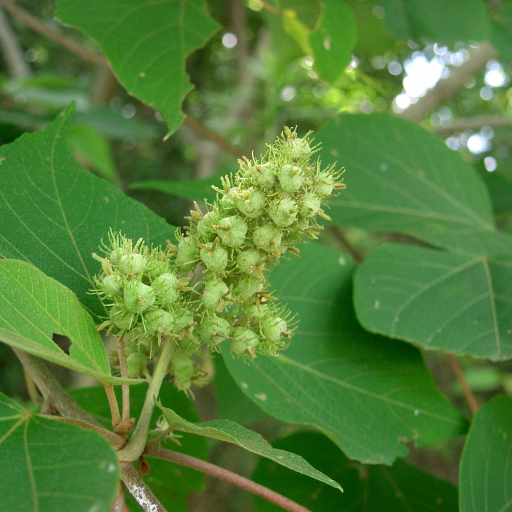
Plant Overview
Commonly known as the Japanese Mallotus or Akamegashiwa, this tree is a resilient pioneer of East Asian landscapes. Its Japanese name literally translates to "Red-Bud Oak-Leaf," a nod to the stunning, velvety crimson hue of its emerging spring foliage. Historically, its large, sturdy leaves were used as natural plates or wrappers for food, making it a beloved "forest kitchen" staple in traditional rural life.
🔍 How to Identify
- 🔴 The Crimson Flush: The most striking feature is the new growth; young leaves and shoots are covered in dense, red stellate hairs, making the tree look like it’s blushing from a distance.
- 🍃 Heart-Shaped Foliage: As the leaves mature, they turn a deep green and expand into large, broadly ovate or heart-shaped forms, often with two small glands at the base of the leaf blade.
- 🌾 Spiky Bloom: In summer, the tree produces upright, branched clusters (panicles) of small, yellowish-green flowers that lack petals but have a delicate, fuzzy appearance.
🏡 In Your Garden
- ☀️ The Sun Seeker: This is a "pioneer species," meaning it is often the first to colonize cleared land or forest edges. It thrives in full sun and isn't picky about soil, though it prefers well-draining spots.
- 🌳 Fast-Growing Shade: Because it grows rapidly, it’s often used in ecological restoration to quickly provide canopy cover. In a home landscape, it provides excellent dappled shade, though its vigorous nature means it needs space to spread.
⚠️ Safety & Toxicity
- 🟢 Generally Safe: Mallotus japonicus is not considered highly toxic to humans or common household pets.
- 💧 Sap Sensitivity: Like many members of the Euphorbiaceae family, the sap may cause mild skin irritation or redness in sensitive individuals. It is always wise to wear gloves when pruning and to keep curious pets from chewing on the bark.
✨ Fun Fact
The bark of the Japanese Mallotus isn't just for show—it has been used for centuries in traditional medicine. It contains a compound called berberine and other substances that have been scientifically studied for their ability to help soothe stomach ulcers and support digestive health.

Detailed Care Instructions
To grow a Mallotus Japonicus plant, you can follow these steps:
- Obtain seeds or a young plant from a nursery or online supplier.
- Choose a suitable location: Mallotus Japonicus plants prefer full sun to partial shade. Select a location with well-draining soil, preferably slightly acidic.
- Prepare the soil: Loosen the soil in the planting area and mix in compost or organic matter to improve fertility and drainage.
- Sow seeds or plant the young plant: If starting from seeds, sow them directly into the prepared soil at the recommended depth, usually around 1/4 to 1/2 inch. If planting a young plant, dig a hole slightly larger than the root ball and place the plant in the hole, backfilling with soil and firming it gently around the roots.
- Water regularly: Mallotus Japonicus plants prefer consistently moist soil, especially during the establishment period. Water them regularly, keeping the soil evenly moist but not waterlogged.
- Mulch: Apply a layer of organic mulch, such as wood chips or bark, around the base of the plant to help retain soil moisture and suppress weeds.
- Pruning: Regularly prune the plant to maintain its shape and stimulate new growth. Remove any dead or damaged branches and cut back overgrown or straggly growth.
- Fertilize: Apply a balanced, slow-release fertilizer in spring or early summer to provide necessary nutrients. Follow the instructions on the fertilizer package for application rates.
- Monitor for pests and diseases: Keep an eye out for common pests like aphids, spider mites, or mealybugs. Treat them with appropriate organic or chemical controls if necessary.
- Enjoy the beauty: With proper care and maintenance, Mallotus Japonicus plants will start growing and display their vibrant foliage and unique flowers. Appreciate their ornamental value and the habitat they provide for pollinators.
Note: It's important to check with local authorities to ensure that Mallotus Japonicus is not considered invasive in your area, as it can be harmful to native plant species if it spreads uncontrollably.

Place in a bright room that is sun drenched almost all day. Or directly in a south-facing window.

Mallotus Japonicus is a plant that requires regular and adequate watering to ensure its healthy growth. When watering this plant, you should follow certain guidelines to provide the optimal amount of water without over-watering or causing water stress.
One effective method is to water the plant deeply, yet infrequently. This means allowing the soil to dry slightly between each watering session. The frequency of watering may vary depending on factors such as weather conditions, pot size, and overall growth stage of the plant.
To ensure proper watering, you should first check the moisture level of the soil. Insert your finger about an inch deep into the soil around the plant's root system. If the soil feels dry at this depth, it is an indicator that watering is required.
When watering, it is essential to target the base of the plant, as this is where the roots primarily absorb water. Avoid overhead watering, as it can lead to the development of fungal diseases and may not effectively reach the root zone.
While watering, do so slowly and evenly to allow the water to penetrate the soil deeply. This encourages the roots to grow deeper, making the plant more resistant and drought-tolerant in the long run.
It is important to mention that while Mallotus Japonicus requires regular watering, excessive water accumulation can harm the plant. Over-watering can lead to root rot, yellowing leaves, and eventual death. Therefore, it is crucial to strike a balance and maintain a consistent watering schedule.
Monitoring the plant's response to watering is instrumental in determining the optimal frequency and amount of water required. Observe how the leaves appear after watering: if they become more vibrant and turgid, it indicates sufficient watering. Conversely, if the leaves appear wilted or droopy even after watering, it may indicate under-watering or other issues.
In summary, watering Mallotus Japonicus involves checking the soil moisture level, watering deeply but infrequently, targeting the base of the plant, and assessing the plant's response to watering. By following these guidelines, you can ensure proper hydration and healthy growth for your Mallotus Japonicus plant.
To properly fertilize Mallotus Japonicus plant, follow the instructions below:
- Choose a balanced, slow-release fertilizer with an N-P-K ratio of about 10-10-10 or similar. This ensures a good blend of essential nutrients for the plant's overall health.
- Read and carefully follow the manufacturer's instructions on the fertilizer packaging. This will provide specific guidelines for your Mallotus Japonicus plant's size and age.
- Apply the fertilizer during the active growing season, which is usually spring and summer. Avoid fertilizing during the dormant period, which is typically in fall and winter.
- Dilute the fertilizer as per the instructions to avoid over-fertilization. Mix the recommended amount of fertilizer with water according to the specified ratio.
- Water the soil around the plant thoroughly before applying the fertilizer. This ensures the nutrients will be absorbed efficiently by the roots.
- Use a watering can or a garden sprayer to apply the diluted fertilizer solution to the soil. Apply it evenly around the base of the plant, taking care not to wet the leaves excessively.
- Avoid getting the fertilizer on the plant's leaves as it may cause burning or damage. If any spills occur, wipe them off immediately.
- After applying the fertilizer, water the soil again lightly to help the nutrients penetrate the root zone effectively.
- Monitor the plant's growth and health after fertilizing. If any negative effects or signs of fertilizer burn appear, such as wilting or yellowing of leaves, stop fertilizing and adjust your approach if necessary.
Remember, every plant may have unique requirements and sensitivities to fertilizers. It's always best to observe your Mallotus Japonicus plant closely and adjust the fertilizing schedule and dosage based on its specific needs and response.
The most suitable soil for Mallotus Japonicus plants is a well-draining soil that is composed of a balanced mixture of organic matter, sand, and loam. This type of soil provides adequate aeration and moisture retention while preventing waterlogging and root rot.
In terms of pH, Mallotus Japonicus plants thrive in slightly acidic to neutral soil conditions, with a pH ranging from 6.0 to 7.0. This pH range ensures optimal nutrient availability for the plants and supports their growth and development.
Additionally, Mallotus Japonicus plants prefer soil that is rich in nutrients. Incorporating organic matter, such as compost or well-rotted manure, into the soil before planting can significantly enhance its fertility. This improves the soil's ability to retain nutrients and promotes healthy root development, foliage growth, and flowering.
It is important to note that Mallotus Japonicus plants do not tolerate heavy clay soils, as these tend to retain excess water and can cause root rot. Similarly, excessively sandy soils may drain too quickly, leading to insufficient moisture retention for the plants. Therefore, ensuring a balanced soil texture is essential to provide adequate drainage and moisture levels for the plant's well-being.
Regularly monitoring the soil moisture levels and providing appropriate irrigation is crucial to maintain the health of Mallotus Japonicus plants. It is recommended to water the plants when the top inch of soil feels dry, avoiding both overwatering and underwatering.
Overall, selecting a well-draining, slightly acidic to neutral soil enriched with organic matter and nutrients is key to fostering the optimal growth and development of Mallotus Japonicus plants.
Mallotus japonicus is a perennial plant of the Euphorbiaceae family that is native to East Asia. Here is a detailed explanation of how to propagate this plant without mentioning its common names:
Propagation of Mallotus japonicus can be done through both seeds and vegetative methods. If you choose to propagate from seeds, start by collecting mature seed capsules from a healthy and established plant. Harvest the capsules when they turn brown and dry. It is important to ensure that the seeds are fully ripe before collecting them.
Once you have collected the seed capsules, gently break them open to extract the small seeds within. Carefully remove any remaining pulp or debris from the seeds. Next, place the seeds in a container with warm water and allow them to soak overnight. This soaking process will help to soften the seed coat and enhance germination rates.
After soaking, prepare a well-draining potting mix by combining equal parts of sterile potting soil and perlite. Fill small pots or seed trays with this mixture and make small depressions in the soil for the seeds. Place one or two seeds in each depression and lightly cover them with a thin layer of soil.
Ensure that the soil remains consistently moist during the germination period, as this is crucial for successful seedling development. Consider covering the pots or trays with a clear plastic bag or a propagator lid to create a greenhouse-like environment that retains moisture. Place the containers in a warm location with indirect sunlight, avoiding direct exposure to harsh sunlight.
Germination usually takes between 1-2 weeks, but it can sometimes be longer. Once the seedlings have developed their first set of true leaves, they can be gently transplanted into individual pots. Provide them with a well-draining potting mix and continue to provide adequate moisture, keeping the soil evenly moist, but not overly saturated.
Alternatively, vegetative propagation can be carried out by taking softwood cuttings from established Mallotus japonicus plants. Softwood cuttings are taken from the new growth that is still flexible and not yet woody. Choose healthy shoots and cut them just below a leaf node.
Remove the lower leaves from the cutting, leaving only a few at the tip. Dip the cut end in rooting hormone powder to stimulate root development and insert the cutting into a well-draining potting mix. Place the pots or trays in a warm and bright location, ideally with indirect sunlight.
Mist the cuttings regularly to maintain high humidity levels, which aids in rooting. Ensure that the potting mix stays consistently moist, but not waterlogged. After several weeks, the cuttings should develop roots, indicating successful propagation. At this stage, they can be potted up individually and cared for as mature plants.
Remember to provide proper care and maintenance to the propagated Mallotus japonicus plants, including regular watering, adequate sunlight, and occasional fertilization. With patience and proper attention, you can successfully propagate this perennial plant.








