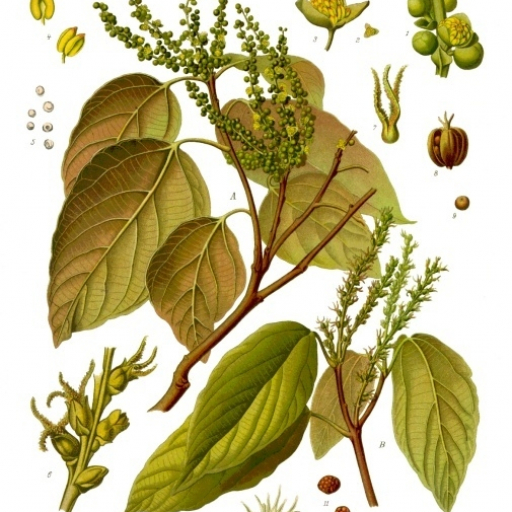
Plant Overview
Known as the "Kamala Tree," this evergreen is a stunning staple of tropical landscapes and ancient dye-making traditions. Its most famous feature is the vibrant, brick-red powder found on its fruit, which has been used for centuries to dye silk and wool a brilliant, fiery orange. In some regions, it is affectionately called the "Monkey Face Tree" because monkeys are known to rub the red fruit on their faces, giving them a colorful, masked appearance!
🔍 How to Identify
- 🍃 Under-Leaf Secret: While the top of the leaves is a deep green, the undersides are covered in tiny, rusty-red glandular scales that give the foliage a slightly bronze shimmer in the wind.
- 🔴 The "Kamala" Fruit: Look for small, three-lobed capsules (about the size of a cherry) that are completely encased in a thick, velvety layer of red powder.
- 🌳 Growth Habit: It typically grows as a small to medium tree with a crooked trunk and a dense, spreading canopy, making it an excellent shade provider in tropical climates.
🏡 In Your Garden
- 🦋 Biodiversity Booster: This tree is a powerhouse for local ecology. It serves as a primary host plant for several butterfly species, including the Common Sailer, turning your garden into a literal nursery for pollinators.
- 🌦️ Hardy Nature: Once established, the Kamala tree is remarkably resilient. It prefers well-draining soil and can handle periods of drought, but it truly thrives when it receives consistent moisture and plenty of tropical sun.
⚠️ Safety & Toxicity
- 🧪 Potent Purgative: While the red powder has a long history in traditional medicine for treating parasites, it is a very powerful laxative. No part of this plant should be ingested without professional medical supervision.
- 🐾 Pet Caution: The red glandular hairs on the fruit can cause significant gastrointestinal distress if swallowed by dogs or cats. It is best to plant this tree in areas where pets won't be tempted to "sample" the fallen fruit.
✨ Fun Fact
🎨 Self-Setting Dye: Most natural dyes require a "mordant" (like salt or alum) to make the color stick to fabric, but Kamala dye is unique. It can dye silk and wool a vivid flame-orange all by itself, a property that made it one of the most prized trade goods in ancient botanical history.

Detailed Care Instructions
To grow a Mallotus Philippensis plant, also known as the Kamala tree, you need to follow these steps:
- Climate and soil requirements: Mallotus Philippensis is native to tropical and subtropical regions. It prefers a warm climate, with temperatures ranging from 20-30°C (68-86°F). The plant thrives in well-draining soil with a pH level of around 6-7.
- Selecting and preparing seeds: Obtain seeds from a reliable source or collect them from a mature Kamala tree. Soak the seeds in lukewarm water for 24 hours before planting to soften the hard outer shell and aid in germination.
- Planting: Fill a pot with well-draining, nutrient-rich potting soil. Place the seeds 1-2 cm deep in the soil and cover them gently. Water the pot thoroughly after planting.
- Light and water requirements: Mallotus Philippensis requires indirect sunlight for about 6-8 hours per day. Place the pot in a location where it receives bright but filtered sunlight. Water the plant when the top inch of soil feels dry. Avoid overwatering, as it can cause root rot.
- Fertilization: Apply a balanced fertilizer once a month during the growing season (spring and summer) to promote healthy growth. Follow the instructions on the fertilizer packaging for proper application.
- Pruning: Pruning is not necessary for Mallotus Philippensis, but you can trim the plant to maintain its desired shape and size. Remove any dead or damaged branches to encourage new growth.
- Pests and diseases: Mallotus Philippensis is generally resistant to common pests and diseases. However, it's essential to monitor the plant for any signs of infestation or diseases such as powdery mildew or leaf spot. Treat any issues promptly using appropriate organic or chemical remedies.
- Transplanting: If you choose to grow the Mallotus Philippensis plant in a larger pot or in the ground, wait until it matured to transplant. Gently remove the plant from its current container and place it in the new, prepared location. Ensure the new soil has suitable drainage and follow the watering recommendations mentioned earlier.
Remember to be patient, as Mallotus Philippensis can take up to a few months to germinate and a couple of years to reach maturity. Provide proper care, and you'll see the plant thriving and growing into a beautiful Kamala tree.

Place in a bright room that is sun drenched almost all day. Or directly in a south-facing window.

To water this plant, it is important to ensure that the soil is completely dry before watering. The amount of water needed will vary depending on the size of the plant and the environmental conditions, so it is recommended to check the soil moisture regularly. It is best to water the plant deeply, allowing the water to soak into the soil and reach the roots. Avoid getting water on the leaves or stem as this can increase the risk of disease. Additionally, using room temperature water is ideal.
To fertilize this plant, use a balanced fertilizer with equal parts nitrogen, phosphorus, and potassium. Apply the fertilizer in the early spring or late fall when the plant is actively growing. Mix the fertilizer with water according to the package instructions and apply it to the soil around the base of the plant. Do not apply too much fertilizer, as it can burn the roots and damage the plant. It is better to apply a light amount of fertilizer regularly than to apply a heavy dose all at once.
The ideal soil for Mallotus Philippensis should be a well-draining soil mix that is rich in organic matter. It should have a pH level ranging from slightly acidic to slightly alkaline, ideally between 6.0 to 7.5. The soil should be able to hold moisture but not be waterlogged as this can lead to root rot. A mixture of sand, perlite, and compost can be added to the soil mix to improve drainage and provide nutrients. The plant prefers moist but well-drained soil, so it is important to water the plant regularly but not excessively. It is also important to avoid over-fertilizing the plant as this can lead to excessive growth and reduced flower production.
To propagate this plant, you will need to start by collecting cuttings from healthy, established plants. Choose a stem that is at least 4 inches long and has several leaves. Cut the stem just below a node using a clean, sharp knife. Remove any leaves from the bottom half of the stem.
Dip the cut end of the stem into rooting hormone powder and gently tap off any excess. Place the stem into a well-draining potting mix, such as a mix of peat moss and perlite. Water the cutting until the soil is moist but not soaking wet.
Cover the pot with a plastic bag or clear plastic wrap to create a humid environment. Place the pot in a warm, well-lit location out of direct sunlight. Check the cutting regularly and mist it with water if the soil begins to dry out. After a few weeks, you should see roots forming on the stem.
Once the cutting has a good root system, you can remove the plastic covering and transplant it into a larger container or to the garden. Be sure to keep the soil moist but not waterlogged for the first few weeks after transplanting. With proper care, your new Mallotus Philippensis plant should continue to grow and thrive.








