Plant Overview
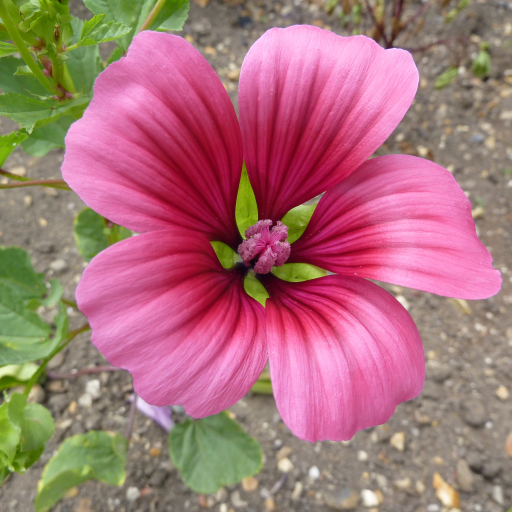
Often called the "Mallow-wort" or "Spanish Mallow," Malope trifida is a Mediterranean treasure that brings an explosion of satin-textured color to summer borders. Unlike its more common hollyhock cousins, its blooms feature a striking, translucent green "star" at the center, looking almost like a hand-painted masterpiece. It is a quintessential cottage garden plant that offers a high-impact visual reward for very little effort.
🔍 How to Identify
- 🌸 Satiny Blooms: Large, trumpet-shaped flowers in shades of magenta, rose, or white. The petals have a distinct silken sheen and are etched with deep-colored veins that draw the eye toward the center.
- 🍃 Lobed Foliage: The bright green leaves are typically divided into three distinct, pointed lobes (hence the name trifida), with a slightly serrated or "toothed" edge.
- 🏗️ Upright Habit: It grows as a sturdy, branching annual that can reach up to three feet in height, providing a lush, leafy structure even before the flowers emerge.
🏡 In Your Garden
- 🚫 The "No-Move" Rule: This plant develops a sensitive taproot very quickly. It hates being transplanted, so it’s best to sow seeds directly into the garden soil rather than starting them in small pots.
- ☀️ Sturdy in the Sun: To prevent the stems from becoming "leggy" or flopping over, give it the brightest spot in the garden. In full sun, the stems grow thick and woody enough to support the heavy weight of the blooms without staking.
- 🦋 Pollinator Buffet: The deep nectar wells at the base of the flower are specifically shaped to attract long-tongued bees and butterflies, making it a fantastic addition to any biodiversity-focused space.
⚠️ Safety & Toxicity
- ✅ Generally Safe: Malope trifida is not known to be toxic to humans, cats, or dogs.
- 🧤 Mild Irritation: Like many members of the Mallow family, the stems are covered in very fine, soft hairs. While not dangerous, handling the plant for long periods might cause a slight "itchy" sensation for those with particularly sensitive skin.
✨ Fun Fact
The genus name Malope is derived from the Greek word malache, meaning "soft." This refers to the incredibly delicate, silk-like texture of the petals, which are so thin they can appear almost translucent when the sun shines through them from behind.

Detailed Care Instructions
To grow Malope Trifida, also known as the Annual Mallow, follow these steps:
- Climate: Malope Trifida prefers a sunny location and will grow well in USDA hardiness zones 4-9. Ensure that your region's climate is suitable for this plant.
- Soil preparation: Choose a well-draining soil with a pH level between 6.0 and 7.5. Prepare the soil by removing any weeds, rocks, or debris. Loosen the soil with a garden fork or tiller to a depth of about 8-10 inches.
- Planting: Sow the Malope Trifida seeds directly into the soil after the last frost of the season. The seeds can be planted individually or in groups, spacing them about 12 inches apart. Cover the seeds lightly with soil, no more than 1/4 inch deep.
- Watering: Keep the soil moist but not waterlogged. Water regularly, especially during dry spells, to ensure consistent moisture. Avoid overwatering, as it can lead to root rot.
- Fertilizer: Malope Trifida generally doesn't require much fertilizer. However, you can incorporate organic compost or a balanced slow-release fertilizer into the soil before planting to provide some nutrients.
- Mulching: Apply a layer of organic mulch around the base of the plants to help retain soil moisture, suppress weeds, and moderate soil temperature.
- Staking: If your location is prone to strong winds or if the plants grow tall and become top-heavy, consider staking them to prevent bending or breaking.
- Pruning: Malope Trifida doesn't usually require pruning. However, you can pinch off spent flowers to encourage continuous blooming and remove any dead or damaged foliage.
- Pests and diseases: Monitor the plants for common pests like aphids or spider mites. Treat infestations with organic insecticidal soap or neem oil. Malope Trifida is generally resistant to most diseases but keeping proper plant hygiene is always beneficial.
- Blooming and harvesting: The Malope Trifida plants will start flowering in summer. Enjoy their vibrant blooms and allow some flowers to complete their life cycle, as they will produce seeds for next year's planting. If desired, you can also cut and use the flowers for floral arrangements.
By following these steps, you should successfully grow Malope Trifida in your garden and enjoy its beautiful flowers throughout the growing season.

Place in a bright room that is sun drenched almost all day. Or directly in a south-facing window.

Malope Trifida is a plant that requires frequent watering, especially during the summer months when it is actively growing. When watering the plant, it's important to make sure that the soil is completely moistened, but not waterlogged.
To water the plant, lightly sprinkle water over the soil surface until it is just moist. Avoid splashing water on the foliage or flowers as this can lead to disease development.
The frequency of watering will depend on factors such as the climate and humidity levels in your area and the type of soil the Malope Trifida is planted in. As a general rule, it's better to water the plant more frequently in small amounts rather than one heavy watering.
During periods of drought or extreme heat, the plant may require daily watering, while in cooler weather it may only need to be watered once or twice a week.
To check if the Malope Trifida needs watering, insert your finger into the soil to a depth of about an inch. If the soil feels dry, it's time to water. If it feels damp, wait a few more days before watering again.
In summary, water the Malope Trifida plant evenly and frequently, without allowing the soil to become waterlogged or excessively dry.
To fertilize this plant, begin by selecting a slow-release fertilizer that is balanced with nitrogen, phosphorus, and potassium. During the growing season, apply the fertilizer every two to four weeks following the manufacturer's recommended dosage. To prevent overfertilizing, water the plant thoroughly before and after applying the fertilizer. During the dormant season, reduce fertilization to once every four to six weeks. Be careful not to get the fertilizer on the plant's leaves or flowers, as this can cause damage.
Malope Trifida plants require a well-draining soil that is rich in nutrients. The soil should be slightly acidic with a pH level between 6.0 and 7.0. A sandy loam or loamy soil is ideal, and it should be amended with organic matter such as compost or manure.
When planting Malope Trifida, ensure that the soil is free of any weeds or debris that may hinder plant growth. Also, avoid planting in heavy clay soils as they can retain too much water and cause root rot.
It is recommended to add a slow-release fertilizer to the soil before planting. During the growing season, additional fertilizer may be applied every 6 to 8 weeks to promote vigorous growth and blooming.
When watering, ensure that the soil is moist but not waterlogged. Overwatering can cause root rot and other fungal diseases. Regularly check for any signs of pests or diseases, which can be treated with the appropriate insecticides or fungicides.
To propagate this plant, the best time is in early spring or late fall. Take seedlings from the mature plants, or sow seeds directly in the soil. The seeds should be planted at a depth of around 1/4 inch and spaced about 12 inches apart. After sowing, water the seeds and keep the soil moist. Germination should occur within two weeks. Once the seedlings have established, transplant them into their permanent location. This plant prefers well-drained soil and full sun exposure.
Common pests of the mallow-wort include Spider mites, aphids, thrips. Make a habit of checking your mallow-wort frequently for pests so that any infestations can be caught and managed early.








