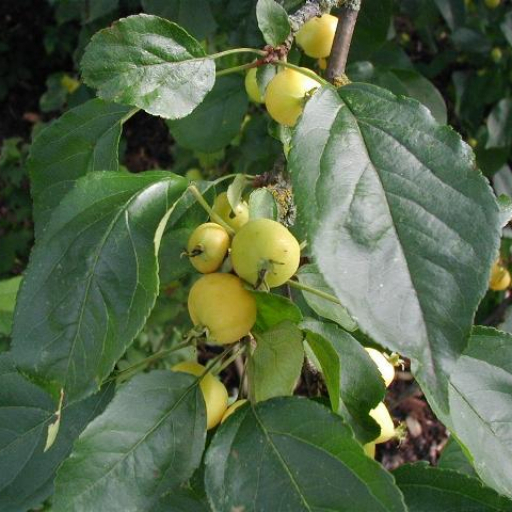
Plant Overview
Known as the Siberian Crabapple, this tree is the ultimate cold-weather survivor of the rose family. Hailing from the frigid landscapes of Siberia and East Asia, it has earned a reputation for being nearly indestructible, even in sub-zero temperatures. In the spring, it transforms into a fragrant "snowdrift" of white blossoms, while its tiny, jewel-like fruits provide a vital winter feast for local songbirds.
🔍 How to Identify
- 🌸 The Blossoms: Masses of fragrant, five-petaled flowers that are typically pure white, though some varieties may show a hint of pale pink in the bud.
- 🍃 The Foliage: Elegant, oval-shaped leaves with finely "toothed" edges. They have a glossy sheen and lack the fuzzy underside common to many other apple species.
- 🍒 The Fruit: Unlike supermarket apples, these are tiny "pomes" roughly the size of a pea or a cherry. They hang on long, thin stalks and turn a brilliant red or yellow in the autumn.
🏡 In Your Garden
- 🌬️ Cold Hardiness: This is one of the hardiest trees in the world. It is the perfect choice for high-altitude gardens or northern climates where other ornamental trees might succumb to the frost.
- 🐝 The Great Pollinator: Because it produces a massive amount of pollen over a long period, orchardists often plant a single Siberian Crabapple among their commercial apple trees to ensure a better harvest for the entire grove.
- ✂️ Pruning Nuance: It has a naturally rounded, spreading canopy. To keep it healthy, focus on "thinning" the inner branches to allow air to circulate, which prevents the fungal issues that occasionally plague the Malus genus.
⚠️ Safety & Toxicity
- 🐾 Status: Generally safe for humans, but use caution with pets.
- 🍎 The Seeds: While the tart fruit is often used for jellies, the seeds contain cyanogenic glycosides (cyanide). While a few seeds won't harm a human, they can be toxic to dogs, cats, and horses if ingested in large quantities.
- 🧤 Garden Safety: The wood is very dense and can develop small, spur-like twigs that are sharp; wear gloves when pruning older specimens.
✨ Fun Fact
The Siberian Crabapple is often used as "biological insurance." Because its root system is so incredibly tough, scientists frequently graft more delicate, delicious dessert apple varieties onto Malus baccata roots to help them survive in harsh environments they would otherwise never endure!

Detailed Care Instructions
To grow a Malus baccata plant, also known as the Siberian crabapple, follow these steps:
- Choose the right location: Malus baccata prefers full sun to partial shade. Select a well-draining area in your garden that receives at least 6 hours of direct sunlight per day.
- Prepare the soil: The plant prefers slightly acidic to neutral soil with a pH of around 6.0 to 7.5. Amend the soil with organic matter, such as compost, to improve drainage and fertility.
- Planting: Dig a hole that is slightly wider and deeper than the root ball of the plant. Place the plant in the hole, ensuring that the top of the root ball is level with or slightly above the soil surface. Backfill the hole with soil and gently firm it around the root ball.
- Watering: Water the plant thoroughly after planting, and then water regularly to keep the soil consistently moist but not waterlogged. During dry periods, increase watering frequency.
- Mulching: Apply a layer of organic mulch, such as wood chips or straw, around the base of the plant to help conserve moisture, suppress weed growth, and regulate soil temperature.
- Pruning: During the dormant season, which is typically late winter or early spring, prune the plant to remove dead, damaged, or crossed branches. This will help maintain a healthy and attractive shape.
- Fertilizing: Feed the plant with a balanced slow-release fertilizer in early spring just as new growth begins. Follow the package instructions for application rates.
- Pest and disease control: Watch out for pests like aphids, caterpillars, or apple maggots, as well as diseases like apple scab. Monitor the plant regularly, and apply appropriate organic or chemical controls if necessary.
- Harvesting fruit: Malus baccata produces small crabapple-like fruit that is typically bright red or orange. Harvest them when they are fully ripe, usually in late summer or early fall. These fruits can be used for making jellies, jams, or decorative purposes.
- Winter care: In colder regions, provide winter protection by wrapping the trunk with burlap or using a tree guard to prevent frost damage.
Remember, the Malus baccata plant is a hardy and adaptable species, but it's always a good idea to research specific growing guidelines and recommendations based on your region's climate and soil conditions.

Place in a bright room that is sun drenched almost all day. Or directly in a south-facing window.

To water the Malus Baccata plant, you should check the soil moisture level regularly to ensure that it is consistently moist, but not waterlogged. You can test this by sticking your finger about an inch into the soil. If it feels dry, then it is time to water.
When you water, make sure to do so slowly and deeply, allowing the water to soak into the soil. Avoid getting water on the foliage as this can encourage fungal growth. In general, the Malus Baccata plant likes to be kept relatively moist, so you may need to water it more frequently during hot or dry weather.
You can also add a layer of mulch around the base of the plant to help retain moisture in the soil. This can also help to regulate soil temperature and suppress weed growth.
Overall, the key to watering the Malus Baccata plant is to be consistent and attentive to its moisture needs. With proper care, it should thrive and produce beautiful blooms and fruit.
To fertilize the Malus Baccata plant, use a balanced, slow-release fertilizer in the early spring before new growth begins. Apply the fertilizer around the base of the plant, and water thoroughly after application. Repeat this fertilization process once or twice during the growing season, depending on the plant's growth. Avoid fertilizing the plant too late in the season, as this may cause excessive growth that is susceptible to winter damage.
Malus baccata plant prefers a well-draining soil that is moderately fertile. The soil should be slightly acidic to neutral with a pH range of 6.0 to 7.0. A sandy loam or loamy soil is ideal for this plant, which provides good drainage, aeration, and moisture retention. The soil should be rich in organic matter, so you can amend the soil with compost or well-rotted manure to improve its fertility. Avoid using heavy clay soil that may retain excess moisture and cause root rot. In general, the soil should be moist but not waterlogged.
Propagation of this plant can be done through both sexual and asexual methods. In sexual propagation, the plant's flowers are pollinated by insects, and the resulting seeds are collected and sown. However, this method is unreliable as seeds may not come true to type, and some may be sterile.
A more reliable method of propagation is asexual propagation, which can be done through methods such as cuttings or grafting. Cuttings can be taken from the plant's stems during the active growing season, and rooted in a suitable rooting medium. Grafting involves joining a scion from the desired plant onto a compatible rootstock, which can help improve disease resistance and growth vigor.
When propagating using cuttings, it is important to choose healthy, disease-free stems, and to make clean, angled cuts to minimize damage to the stem. The cuttings should be dipped in a rooting hormone before being placed in a sterile medium, such as sand or peat moss, and kept moist until roots have formed. Once the roots have developed, the new plant can be transplanted into a suitable pot or planting location.
Propagation by grafting involves selecting a healthy rootstock, which should be of a similar size and growth habit to the scion. The two plants are then joined together using a special grafting technique, such as whip grafting or bark grafting, and the resulting plant is trained and cared for until it is established.








