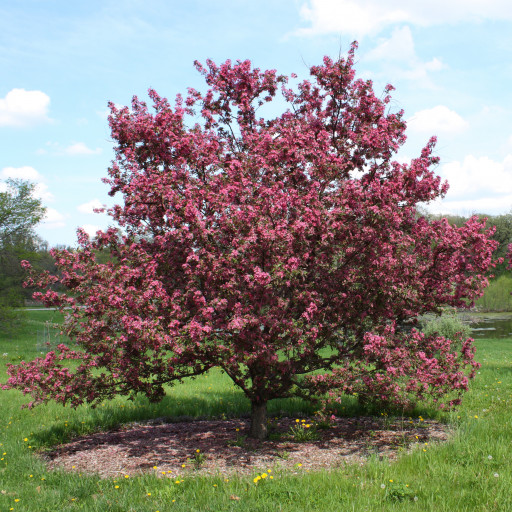
Plant Overview
Known as the "King of Fruit" and a staple of folklore from the Garden of Eden to Isaac Newton, the Malus genus encompasses thousands of apple varieties. Originally hailing from the mountains of Central Asia, these trees have traveled the globe, becoming a symbol of health, knowledge, and the comforts of home. Whether you are growing a "Granny Smith" or a "Honeycrisp," you are tending to a piece of living history.
🔍 How to Identify
- 🌸 The Blossom: Look for delicate, five-petaled flowers that range from snowy white to soft shell-pink, usually appearing in "clusters" during the late spring.
- 🍃 The Foliage: Leaves are generally oval, dark green, and have finely serrated (saw-like) edges with a slightly fuzzy, silver-green texture on the underside.
- 🌳 The Silhouette: Apple trees typically form a rounded, spreading canopy, often developing a rugged, twisting branch structure as the wood hardens over many years.
🏡 In Your Garden
- 🐝 The Social Aspect: Most Malus varieties are not self-fertile. This means they need a "buddy" (another apple tree or a crabapple nearby) to swap pollen via bees to actually produce fruit.
- ✂️ Airflow is Vital: These trees are prone to "Apple Scab" and "Powdery Mildew." Pruning the center of the tree to create an open shape—allowing light and wind to pass through—is the best way to keep them healthy without heavy chemicals.
- 🍎 Patience with Roots: Apple trees hate "wet feet." They require deep, well-draining soil because their roots are sensitive to rot if they sit in stagnant water for too long.
⚠️ Safety & Toxicity
- 🚫 Seed Warning: While the fruit flesh is a health superstar, the seeds contain amygdalin, which releases cyanide when crushed and digested. While a few seeds won't harm a human, they should never be eaten in bulk.
- 🐾 Pet Safety: The leaves, stems, and seeds are considered toxic to dogs, cats, and horses. If your pet grazes on the fallen leaves or chews on the wood, it can lead to dilated pupils or respiratory issues.
✨ Fun Fact
Every apple seed is a genetic roll of the dice! If you plant a seed from a "Gala" apple, the tree that grows will produce fruit that tastes nothing like a Gala. To get a specific type of apple, farmers must "graft" (physically attach) a branch of a known tree onto a new root system.

Detailed Care Instructions
| Lighting | Full Sun |
To grow a Malus plant, also known as a crabapple tree, follow these steps:
- Choose a suitable planting location: Malus plants prefer full sun or partial shade and well-draining soil.
- Obtain a healthy sapling: Purchase a young crabapple tree or start one from seeds or cuttings. Make sure the sapling is disease-free and well-rooted.
- Prepare the soil: Dig a hole that is at least twice as wide as the root ball of the sapling. Loosen the soil in the hole and mix in organic compost or well-rotted manure to improve drainage and enrich the soil.
- Plant the sapling: Place the sapling in the center of the hole, ensuring that the top of the root ball is level with or slightly above the ground. Fill the hole with soil, gently firming it around the roots.
- Water thoroughly: After planting, water the Malus plant deeply to settle the soil and ensure good root-to-soil contact.
- Mulch the area: Apply a layer of organic mulch, such as wood chips or shredded bark, around the base of the tree. This helps conserve moisture, suppress weeds, and maintain a stable soil temperature.
- Prune and shape the tree: Crabapple trees benefit from regular pruning to remove dead or diseased branches, improve air circulation, and maintain a desired shape. Pruning is typically done in late winter or early spring before new growth begins.
- Fertilize as needed: If the soil lacks essential nutrients, you may need to fertilize your Malus plant. Use a balanced, slow-release fertilizer specifically formulated for trees, following the manufacturer's instructions.
- Water and care for the tree: Keep the soil around the tree evenly moist, especially during hot and dry periods. Regularly check for pests such as aphids or apple scab and treat accordingly. Remove any fallen leaves or debris to reduce the risk of diseases.
- Enjoy the blooms and fruit: Malus plants produce colorful flowers in spring and small fruit in late summer or fall. Some varieties are primarily ornamental, while others have edible fruit that can be made into jellies or preserves.
Remember to consult local gardening resources or a professional for specific advice and recommendations based on your location and climate.

Place in a bright room that is sun drenched almost all day. Or directly in a south-facing window.

To water this plant, focus on ensuring that the soil is consistently moist, but not over-watered. A good way to do this is to feel the top inch of soil- if it feels dry, it’s time to water. When watering, pour slowly and evenly around the base of the plant, being sure not to get water on the leaves. Ensure that soil has proper drainage, as this type of plant doesn’t do well in standing water. During periods of hot weather or lack of rainfall, the plant may require more frequent watering.
For the proper fertilization of this plant, follow these instructions:
- Fertilize during the early spring before new growth.
- Use a balanced fertilizer with a 10-10-10 or 20-20-20 NPK ratio.
- Apply the fertilizer around the base of the plant according to package directions.
- Water the plant immediately after fertilizing to help the nutrients penetrate the root zone.
- Avoid over-fertilizing, which can cause excessive growth and weak branches.
- Monitor the plant throughout the growing season and adjust fertilization as needed based on its growth and performance.
- Stop fertilizing in late summer to allow the plant to prepare for winter dormancy.
When planting a Malus plant, it is important to use well-draining soil that is rich in nutrients. The ideal soil pH for a Malus plant is slightly acidic to neutral, with a range of 6.0 to 7.0. The soil should also be free of any contaminants or toxins, as these can harm the plant's growth and development.
To ensure optimal growth, it is recommended to use a soil mix that is specifically formulated for fruit trees. This type of soil typically contains a blend of organic matter, such as compost, peat moss, and aged bark, as well as sand or perlite to improve drainage.
It is important to avoid using soil that is heavy or clay-based, as this can cause water to pool around the roots and lead to root rot or other diseases. Additionally, using soil that is too sandy can cause water to drain too quickly, leaving the plant's roots dry and the plant dehydrated.
Finally, it is important to ensure that the soil is properly prepared before planting by breaking up any clumps and removing any rocks or other debris. This will help to ensure that the roots have plenty of room to grow and access the nutrients and water they need for healthy growth.
Propagation of this plant can be done through several methods including seeds, cuttings, suckers, and grafting. To propagate using seeds, collect mature fruit from the plant and remove the seeds. Clean the seeds thoroughly and soak them in water for at least 24 hours to improve germination rates. Plant them in well-draining soil and keep the soil damp until the seedlings emerge.
Propagation using cuttings is done by selecting healthy, semi-hardwood cuttings from the plant and rooting them in soil or water. Remove the leaves from the lower part of the cutting and dip it in rooting hormone before planting in moist soil. Keep the soil moist and in a warm place until the cutting roots.
Propagation using suckers involves removing the new shoots that grow from the base of the plant and planting them in soil. Cut off the suckers as close to the base of the plant as possible and remove the leaves from the bottom of the stem. Plant it in well-draining soil and keep it moist until roots establish.
Grafting is a more complicated technique and involves joining a scion from the desired plant onto the rootstock of another Malus plant. This method allows for the propagation of a specific variety of Malus, as the scion will produce the same fruit as the parent plant. It requires specific tools and techniques, and is best done by experienced propagators.







