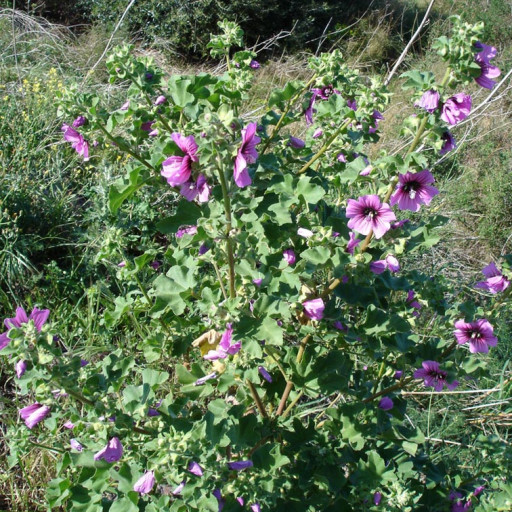
Plant Overview
Known as the Tree Mallow, Malva arborea is the majestic, salt-hardy giant of the coastline. Often found leaning over rugged sea cliffs or brightening seaside cottages, it stands tall with a woody elegance that belies its soft, velvet-like texture. It is a favorite for gardeners looking to add vertical drama and a Mediterranean feel to wind-swept landscapes.
🔍 How to Identify
- 🌿 Velvety Foliage: The leaves are large, palm-shaped, and covered in fine, soft hairs that give them a distinct grayish-green, felt-like texture.
- 🌸 Hibiscus-Like Blooms: It produces striking five-petaled flowers that are usually a deep lilac or magenta, featuring dark, wine-colored veins radiating from the center.
- 🌳 Woody Stature: Unlike its smaller mallow cousins, this variety grows into a tall, shrubby form with a thick, woody base that can reach heights of up to 10 feet.
🏡 In Your Garden
- 🌊 Coastal Specialist: This plant is legendary for its tolerance to salt spray and high winds, making it one of the few ornamental giants that can thrive right at the ocean's edge.
- ☀️ Sun Seeker: It thrives in full sun and requires very well-drained soil. Because it has a deep taproot, it hates being moved once established, so choose its "forever home" carefully.
- 🦋 Pollinator Magnet: The open, nectar-rich flowers are an absolute buffet for bees and butterflies, providing a long-lasting food source throughout the summer.
⚠️ Safety & Toxicity
- ✅ Generally Safe: Malva arborea is considered non-toxic to humans, dogs, and cats. In fact, many members of the Mallow family have a long history of being used as forage.
- 🌱 Nitrate Note: While not poisonous, if grown in soil that is overly saturated with chemical fertilizers, the plant can accumulate nitrates in its leaves, which can be irritating if consumed in large quantities by livestock.
✨ Fun Fact
In the past, the large, soft leaves of the Tree Mallow were sometimes used by coastal communities as a natural "bandage" for minor wounds or even as a rustic substitute for toilet paper due to their incredible softness!

Detailed Care Instructions
Here are some steps to help you grow Malva arborea plant:
- Choose the right location: Malva arborea prefers full sun, so choose a spot with at least 6-8 hours of direct sunlight per day. It can tolerate a wide range of soil types but prefers well-draining soil.
- Prepare the soil: If the soil is heavy or clayey, amend it with organic matter like compost or aged manure to improve drainage and fertility. Work the organic matter into the soil to a depth of about 6-8 inches.
- Planting: Dig a hole slightly wider and deeper than the plant's root ball. Place the plant in the hole, making sure the top of the root ball is level with or slightly above the soil surface. Gently backfill the hole with soil, firming it around the roots.
- Watering: Water the plant thoroughly after planting to settle the soil and ensure good contact between the roots and surrounding soil. Keep the soil evenly moist but not waterlogged. Allow the top inch of soil to dry out before watering again.
- Mulching: Apply a layer of organic mulch around the plant to conserve moisture, suppress weeds, and regulate soil temperature. Keep the mulch a few inches away from the plant's stem to prevent stem rot.
- Pruning: Regularly prune Malva arborea to maintain its shape and promote bushier growth. You can do this by removing spent flowers, cutting back leggy stems, or trimming to encourage lateral branching.
- Fertilization: Apply a balanced slow-release fertilizer once or twice a year, following the manufacturer's instructions. Alternatively, you can use a liquid fertilizer diluted to half the recommended strength every 4-6 weeks during the growing season.
- Pest and disease control: Malva arborea is generally not prone to severe pest or disease problems. However, keep an eye out for common issues like aphids, snails, and powdery mildew. Use organic pest control methods or consult a local garden center for suitable treatments if needed.
- Propagation: Malva arborea can be propagated from seeds or stem cuttings. Collect mature seeds in late summer or early fall and sow them directly in the soil. You can also take tip cuttings in spring or early summer and root them in well-draining soil.
- Winter care: Depending on your climate, Malva arborea may be perennial or annual. In colder regions, it may die back in winter. If it is a perennial in your area, provide a layer of mulch around the base of the plant to protect it from freezing temperatures.
Remember to research your specific climate and growing conditions to ensure the best results for growing Malva arborea in your area.

Place in a bright room that is sun drenched almost all day. Or directly in a south-facing window.

To water this plant, you should first check the soil's moisture level by sticking your finger about 1 inch into the soil. If it feels dry, it is time to water. When watering, be sure to pour water directly onto the soil and avoid getting water on the leaves, as this can encourage disease. Water until the soil is evenly moist, but not waterlogged. Allow the top inch of soil to dry out before watering again, as over-watering can lead to root rot. The frequency of watering may vary depending on environmental conditions such as temperature and humidity levels.
To properly fertilize the Malva Arborea plant, follow these instructions:
- Choose a balanced fertilizer with a ratio of equal nitrogen, phosphorus, and potassium (NPK). For example, a 10-10-10 or 20-20-20 fertilizer.
- Dilute the fertilizer according to the package instructions. Typically, you'll mix a specific amount of fertilizer with water in a watering can or sprayer.
- Apply the diluted fertilizer to the soil around the base of the Malva Arborea plant. Avoid getting fertilizer on the leaves, as it can cause damage.
- Water the plant thoroughly after applying the fertilizer to help the nutrients penetrate the soil and reach the roots.
- Repeat the fertilizer application every 4-6 weeks during the growing season, which is typically from spring to early fall.
- Monitor the plant's response to the fertilizer. If you notice signs of over-fertilization, such as burned or discolored leaves, reduce the amount of fertilizer or lengthen the interval between applications.
- It's essential to follow the specific instructions on the fertilizer packaging for the best results, as different brands and products may have slightly different application rates and frequencies.
The Malva Arborea plant prefers slightly acidic soil with a pH between 5.5 and 6.5. The soil should also be well-draining, as the plant doesn't like to sit in water. A mixture of sand, loam, and organic matter such as compost or peat moss can help achieve this balance. The plant also benefits from a nutrient-rich soil, so adding a slow-release fertilizer or organic amendments such as bone meal or fish emulsion can help promote healthy growth.
The propagation of Malva Arborea can be achieved through various methods:
- Seeds: Obtain mature seeds from a healthy Malva Arborea plant. To increase germination success, scarify the seed coat by rubbing it gently with sandpaper or by nicking it with a sharp knife. Soak the seeds in warm water overnight before sowing. Fill a seed tray or pots with well-draining soil mix and sow the seeds at a depth of approximately 1/4 inch. Keep the soil consistently moist and place the tray or pots in a warm, bright location. Germination may take around 10-14 days. Once the seedlings are large enough to handle, transplant them into individual pots.
- Stem cuttings: Choose a healthy, non-flowering stem from a Malva Arborea plant. Make a clean, diagonal cut just below a node (the point where a leaf emerges). Remove the leaves from the lower half of the cutting, leaving a few at the top. Dip the cut end in rooting hormone powder to encourage root development and plant it in a well-draining soil mix or a mix of perlite and peat moss. Place the cutting in a warm, bright location, and mist it regularly to maintain humidity. Rooting may occur within 4-6 weeks. Once roots are established, transplant the cutting into a larger pot or directly into the garden.
- Division: This method works well for older, established Malva Arborea plants. Carefully dig up the plant, trying to preserve as much of the root system as possible. Gently separate the plant into smaller sections, ensuring that each section has roots and shoots. Replant the divided sections into prepared soil, ensuring they have enough space to grow. Keep the newly divided plants well-watered and provide shade initially to reduce stress.
Regardless of the propagation method chosen, it is essential to provide the newly propagated plants with adequate water, sunlight, and protection from extreme temperatures. Regular monitoring is crucial, and any signs of distress or disease should be addressed promptly.
Common pests of the tree mallow include Spider mites, aphids, thrips. Make a habit of checking your tree mallow frequently for pests so that any infestations can be caught and managed early.








