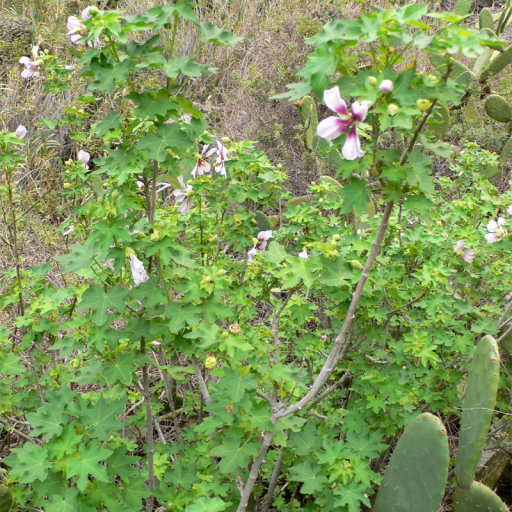
Plant Overview
Known as the Canary Mallow or "Malva de Costa," this shrubby perennial is a hardy gem native to the sun-drenched cliffs of the Canary Islands. It brings a touch of the wild Atlantic coastline to home gardens with its delicate, hibiscus-like blossoms and soft, velvety foliage. It is a favorite for those seeking a "set it and forget it" plant that provides year-round visual interest in warmer climates.
🔍 How to Identify
- 🌸 Veined Petals: The flowers are typically a soft lilac or pale pink, featuring five distinct petals etched with striking deep-purple veins that radiate outward from the center.
- 🍃 Velvety Foliage: The leaves are heart-shaped or slightly lobed, covered in fine, downy hairs that give the plant a dusty, silvery-green appearance and a soft texture.
- 🌿 Woody Base: Unlike smaller annual mallows, this species develops a semi-woody base (subshrub) and can reach heights of up to 4 or 5 feet, creating a sturdy, upright presence.
🏡 In Your Garden
- 🏝️ Coastal Specialist: Having evolved on rocky island cliffs, this plant is exceptionally tolerant of salty sea breezes and wind, making it an ideal choice for coastal landscapes where other plants might struggle.
- ☀️ Drainage is Key: While it is drought-tolerant once established, its biggest weakness is "wet feet." It requires very gritty or sandy soil to thrive; if kept in heavy, water-logged clay, the roots may rot quickly.
⚠️ Safety & Toxicity
- ✅ Low Risk: Malva canariensis is generally considered non-toxic to humans, cats, and dogs, making it a safe choice for family-friendly gardens.
- 🧤 Mild Irritation: Some gardeners find the tiny "fuzz" or hairs on the leaves can cause very mild skin itching or mechanical irritation during heavy pruning, so gloves are recommended for sensitive skin.
✨ Fun Fact
✨ The Malva family has a sweet history—the original "Marshmallow" treats were once made using the sap from the roots of a close relative of this plant, the Althaea officinalis!

Detailed Care Instructions
To grow Malva Canariensis plant, also known as Spanish Lavatera, you can follow these steps:
- Climate: Malva Canariensis thrives in warm climates and is known to be drought-tolerant. Ensure that your climate is suitable for the plant's growth.
- Soil: The plant prefers well-drained soil, although it can tolerate a range of soil types. Ensure that the soil is fertile and loose to promote healthy growth.
- Location: Choose a sunny area for planting where the plant will receive at least 6-8 hours of direct sunlight each day.
- Planting: Dig a hole slightly larger than the root ball. Place the plant in the hole, ensuring that the crown (the junction between the stems and the roots) is at ground level. Backfill the hole with soil and gently firm it around the plant. Water thoroughly after planting.
- Watering: Initially, water the plant regularly to establish its roots. Once it is established, reduce watering to once a week or when the soil feels dry to the touch. Avoid overwatering as it can lead to root rot.
- Fertilization: Apply a balanced slow-release fertilizer during the growing season or use a liquid fertilizer every 4-6 weeks. This will provide essential nutrients to support healthy growth.
- Pruning: Prune the plant to maintain its shape and encourage bushier growth. Remove dead or diseased branches and cut back any leggy growth. Pruning should be done in early spring before new growth emerges.
- Mulching: Apply a layer of organic mulch, such as wood chips or compost, around the base of the plant. This will help retain moisture, suppress weeds, and improve soil fertility.
- Pests and Diseases: Malva Canariensis is generally resistant to pests and diseases. However, keep an eye out for common garden pests like aphids and caterpillars. If infestations occur, apply organic pest control methods or seek professional advice.
- Propagation: You can propagate Malva Canariensis through seeds or stem cuttings. Collect mature seeds in late summer or early fall and sow them in a well-prepared seedbed. Alternatively, take stem cuttings in spring or summer and root them in well-draining soil.
By following these guidelines, you should be able to successfully grow Malva Canariensis plant and enjoy its beautiful flowers. Remember to provide proper care and maintenance throughout the growing season.
To water this plant, you should first check the moisture level of the soil by sticking your finger into the soil. If it feels dry to the touch, then it is time to water the plant. Make sure to use room temperature water and water it at the base of the plant to avoid getting water on the leaves, which can lead to fungal diseases. Water the plant thoroughly, until the soil is visibly moist all the way through. Do not overwater the plant, as this can lead to root rot. It is best to water this plant on a regular schedule, such as once per week, rather than in sporadic bursts.
To fertilize this plant, select a fertilizer that is high in potassium, phosphorus, and nitrogen. During the growing season, feed the plant monthly with a balanced fertilizer, starting in early spring. In late fall, stop all fertilization until the following spring. When applying the fertilizer, be sure to follow the instructions on the label carefully, taking care not to over-fertilize which can harm the plant.
Malva Canariensis plant prefers to grow in well-drained soils that are slightly acidic to neutral. It is recommended to use a soil mix that contains a combination of organic materials such as compost, peat moss, and sand, which helps retain moisture without being waterlogged. The soil should be loose and light, allowing good air circulation around the roots. Avoid using heavy clay soils that tend to compact easily, which can lead to poor drainage and root rot. Adding organic fertilizers such as bone meal or fish emulsion can provide essential nutrients to the plant. Proper soil preparation is essential for healthy growth and prolific blooming of the Malva Canariensis plant.
Malva Canariensis is a plant that can be propagated through either seeds or cuttings. If propagating through seeds, it is necessary to harvest the seeds, sow them in moist soil, and keep them in a warm and well-lit environment until the seedlings emerge. If propagating through cuttings, it is necessary to cut a section of the stem from the parent plant, remove the leaves from the lower part of the stem, and then dip the end of the stem in rooting hormone. The stem can then be planted in moist soil and kept in a warm and well-lit environment until roots start to form. Once the plant has rooted, it can be transplanted to a new location.








