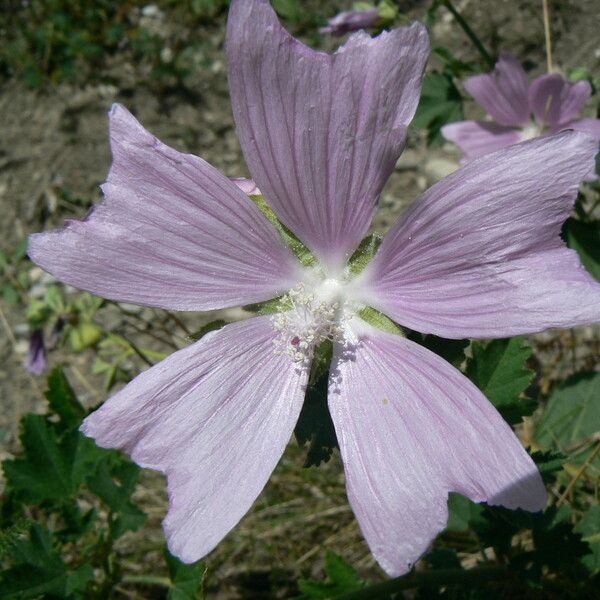
Plant Overview
Often called the Long-flowered Mallow, this elegant perennial is a standout member of the Malvaceae family. With its silky, papery petals and tall, swaying stems, it feels like a wilder, more carefree cousin of the classic garden Hollyhock. It is beloved by cottage gardeners for its ability to bridge the gap between "wildflower" and "ornamental."
🔍 How to Identify
- 🌸 The Bloom: Features five-petaled flowers, typically in shades of soft lilac, pink, or white. The petals are notably longer and more slender than common mallows, often displaying delicate, darker veins.
- 🍃 The Foliage: Leaves are usually grayish-green, lobed, and covered in fine, soft hairs that give them a velvety texture.
- 🗼 Growth Habit: It grows in an upright, bushy fashion, often reaching several feet in height, with flowers clustered toward the tips of the branches.
🏡 In Your Garden
- ☀️ The Sun Worshiper: This plant is a true sun-lover. It thrives in bright, open spots and is surprisingly drought-tolerant once its root system is established. It’s perfect for those "difficult" sunny corners of the yard.
- 🦋 Pollinator Buffet: The nectar-rich flowers are high-priority stops for bees and butterflies. Because the flowers bloom sequentially over several weeks, it provides a reliable, long-term food source for your local ecosystem.
- 🌱 Taproot Warning: Like many in the mallow family, it develops a deep taproot. This makes it incredibly hardy, but it also means it "hates" being moved. Choose its home carefully, as transplanting an adult plant often leads to failure.
⚠️ Safety & Toxicity
- ✅ Non-Toxic: Malva longiflora is generally considered non-toxic to humans, cats, and dogs.
- 🧤 Skin Sensitivity: While not poisonous, the tiny hairs on the stems and leaves can be slightly abrasive. If you have sensitive skin, you might experience a mild "itchy" sensation after pruning, so gloves are a good idea.
✨ Fun Fact
✨ The "Cheese" Connection: After the flowers fade, the plant produces circular seed pods that look exactly like tiny green wheels of cheese. Because of this, children in many cultures have historically called mallow plants "Button-weeds" or "Cheese-cakes."

Detailed Care Instructions








