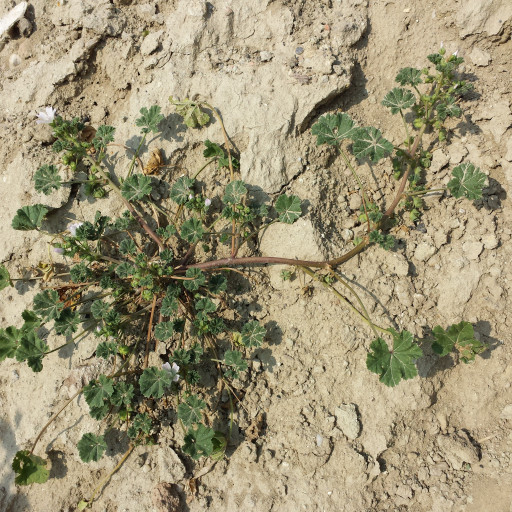
Plant Overview
Commonly called "Buttonweed" or "Cheeses," Malva neglecta is a charming, low-growing herb that often finds its way into garden cracks and sidewalk edges. Though many gardeners dismiss it as a common weed, it is a resilient relative of the Hibiscus and Hollyhock. Its whimsical nicknames come from its unique seed pods, which look like tiny, segmented wheels of green cheese.
🔍 How to Identify
- 🍃 Lace-Edged Leaves: The leaves are circular or heart-shaped with five to seven shallow lobes and "crenate" (rounded) teeth along the edges, giving them a ruffled, doily-like appearance.
- 🌸 Delicate Blooms: It produces small, five-petaled flowers that range from white to pale lavender with distinct violet veins running toward the center.
- 🧀 The "Cheese" Wheel: Look closely at the center of the plant for the fruit—a flattened, circular pod divided into 10–15 segments that resemble a miniature wheel of gourmet cheese.
🏡 In Your Garden
- 🌱 The Deep Taproot: This plant is famous for its "anchor" root. It develops a thick, woody taproot very quickly, which allows it to survive extreme droughts but makes it very difficult to pull out by hand once established.
- 🌿 Soil Indicator: Malva neglecta loves nitrogen-rich, disturbed soil. If it’s thriving in your yard, it’s a sign that your soil is nutrient-dense, though perhaps a bit compacted.
⚠️ Safety & Toxicity
- ✅ Generally Safe: Common Mallow is non-toxic to humans and has been used historically as both a survival food and a medicinal herb.
- 🐾 Pet Safety: It is considered non-toxic to dogs, cats, and horses. However, if the plant is growing in soil heavily treated with chemical fertilizers or near high-pollution roadsides, it can accumulate nitrates, which may cause mild stomach upset if ingested in large quantities.
✨ Fun Fact
🍬 The Ancestor of Candy: The Mallow family is the original source of the marshmallow! While the "True Marshmallow" (Althaea officinalis) was the primary ingredient for ancient Egyptian treats, Malva neglecta contains the same sticky "mucilage" in its roots and stems that gave early candies their chewy texture.

Detailed Care Instructions
| Color | White To Light Pink |
| Soil Ph | Acid, Neutral And Alkaline |
| Invasive | Weed |
| Toxicity | Toxic |
| Soil Type | Well-Drained Sandy And Loamy Soil |
| Bloom Time | Summer To Fall |
| Plant Type | Perennial |
| Mature Size | 2 Ft. Tall |
| Native Area | Western Mediterranean |
| Sun Exposure | Full Sun |
| Hardiness Zones | 4-8 |
To grow a Malva Neglecta plant, also known as Common Mallow, you can follow these steps:
- Select a suitable location: Malva Neglecta prefers full sun but can tolerate partial shade. Choose a location with well-draining soil.
- Prepare the soil: The soil should be rich in organic matter and have good drainage. You can amend the soil by adding compost or well-rotted manure before planting.
- Sow the seeds: Malva Neglecta can be grown from seeds. Sow the seeds directly into the soil in early spring or fall. Make sure to space the seeds about 8 to 12 inches apart.
- Water regularly: Keep the soil evenly moist but not waterlogged. Water the plants regularly, especially during dry periods, but avoid overwatering.
- Mulch the plants: Apply a layer of organic mulch around the plants to help conserve moisture, suppress weed growth, and regulate soil temperature.
- Provide support (optional): If you want to encourage the plant to grow vertically, you can provide support such as stakes or trellises. Common Mallow can reach a height of 2 to 4 feet.
- Trim if needed: If the plant becomes leggy or starts to look untidy, you can trim it back to promote bushier growth.
- Monitor for pests and diseases: Common pests that may affect Malva Neglecta include aphids, spider mites, and whiteflies. Monitor the plants regularly and take appropriate measures if any issues arise. It is important to ensure good air circulation around the plants to prevent diseases.
- Harvest the flowers and seeds: The flowers of Malva Neglecta are edible and can be harvested for culinary purposes. Additionally, the plant produces seeds that you can collect for future propagation.
By following these steps, you should be able to successfully grow Malva Neglecta plants in your garden or outdoor space.

Place in a bright room that is sun drenched almost all day. Or directly in a south-facing window.

To water the plant, first check if the soil is dry or moist by inserting a finger into the soil up to the first knuckle. If the soil feels dry, it's time to water. Use a watering can or hose to water the plant at the base, being careful not to wet the foliage. Water until the soil feels moist but not saturated. During hot weather or prolonged dry spells, the plant may require more frequent watering. It's important not to overwater the plant, as this can lead to root rot and other problems.
To fertilize this plant, apply an all-purpose fertilizer to the soil around the base of the plant in early spring before new growth appears. During the growing season, you can also apply a water-soluble fertilizer every two to three weeks. Be sure to follow the manufacturer's instructions for application rates and frequency. Avoid over-fertilizing, as this can cause the plant to become leggy and produce fewer flowers.
The ideal soil for Malva Neglecta is a well-draining, loamy soil with a neutral to slightly alkaline pH. The soil should also be rich in nutrients and organic matter to support the plant's growth and development. It is recommended to mix in some compost or well-rotted manure into the soil before planting to improve its fertility. The plant can tolerate some drier soils, but it prefers a consistently moist soil that is not waterlogged. Avoid using heavy clay soils that retain too much moisture, as this can lead to root rot and other issues. Overall, the soil should be able to provide good drainage, moisture retention, and nutrient availability for the Malva Neglecta plant to thrive.
One way to propagate this plant is through the use of stem cuttings. Select a healthy stem and cut it at a 45-degree angle, making sure it is at least 4 inches long. Remove the leaves from the lower half of the stem. Dip the cut end of the stem into rooting hormone powder. Plant the cutting in a well-draining soil mix, covering the cut end with soil. Water the cutting and keep it in a warm, bright location but out of direct sunlight. Check the soil regularly to make sure it stays moist, but not waterlogged. After a few weeks, new growth should appear on the cutting, indicating that roots have developed. Once established, the new plant can be repotted into its permanent container or planted in the ground.
Common pests of the common mallow include Spider mites, aphids, thrips. Make a habit of checking your common mallow frequently for pests so that any infestations can be caught and managed early.








