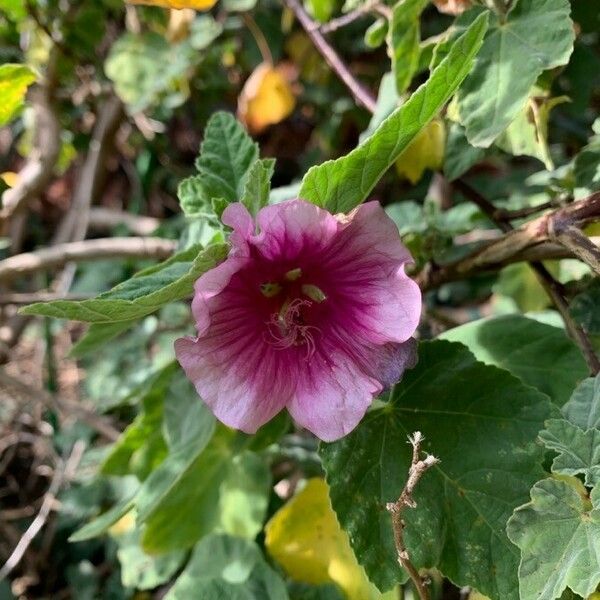
Plant Overview
The Tree Mallow is a Mediterranean marvel that brings a touch of wild, romantic elegance to any sunny corner. Often called the "Provence Mallow," it is beloved by gardeners for its ability to transform from a small seedling into a towering, flower-laden shrub in just a single season. It bridges the gap between a delicate wildflower and a sturdy garden shrub.
🔍 How to Identify
- 🌸 Flower Power: It produces large, five-petaled blooms in shades of soft pink to lilac. Each petal often features delicate darker veins that act as "nectar guides" for visiting insects.
- 🍃 Velvety Foliage: The gray-green leaves are soft to the touch due to a fine layer of downy hairs. They are usually lobed, resembling a rounded maple leaf.
- 🌳 Growth Habit: This is a semi-evergreen shrub that develops a woody base. It is a rapid grower, easily reaching heights of 6 feet (2 meters) within a year or two.
🏡 In Your Garden
- ☀️ Sun Seeker: This plant is a true child of the sun. It thrives in bright, open spots and can become "leggy" or floppy if it doesn't get at least six hours of direct light a day.
- 🌱 Short but Sweet: Gardeners should treat it as a "perennial with a deadline." It grows so fast that it often exhausts itself after 3 to 5 years. It is wise to take cuttings every few years to ensure a new generation is ready to take its place.
- 💧 Winter Drainage: While it is incredibly drought-tolerant once established, it despises "wet feet" during the winter. Planting it in well-draining or even slightly rocky soil is key to helping it survive a cold, damp dormant season.
⚠️ Safety & Toxicity
- ✅ Safe Profile: Malva olbia is generally considered non-toxic to humans, dogs, and cats. It belongs to the same family as the common garden Hollyhock.
- 🧤 Skin Sensitivity: While not poisonous, the fine, "stellate" hairs on the leaves can occasionally cause very mild skin irritation for those with highly sensitive skin. Wearing gloves while heavy pruning is recommended.
✨ Fun Fact
🐝 Pollinator Refuel: This plant is legendary among beekeepers. Because it produces an abundance of nectar over an exceptionally long blooming period—from mid-summer all the way to the first frost—it acts as a vital "refueling station" for bees and butterflies.

Detailed Care Instructions
To grow Malva Olbia (also known as Hollyhock Mallow), follow these steps:
- Optimal Climate: Malva Olbia grows well in full sun to partial shade, in a climate with mild winters and warm summers. It prefers temperatures between 60-75°F (15-24°C).
- Soil Preparation: Ensure the soil is well-draining, fertile, and slightly acidic with a pH level around 6.0-7.0. You can add organic matter, such as compost or well-rotted manure, to improve soil quality.
- Planting: Sow the seeds directly into the garden bed in late spring or early summer when the soil has warmed up. Alternatively, you can start the seeds indoors 6-8 weeks before the last frost date.
a. For outdoor planting: Prepare the soil by removing any weeds and loosening it with a garden fork or tiller. Plant the seeds about 1/4 inch deep and space them 12-18 inches apart. Water gently after planting.
b. For indoor planting: Fill seedling trays or pots with a seed-starting mix. Sow the seeds on the surface of the soil and lightly press them in. Keep the trays/pots in a warm location (around 68-75°F or 20-24°C) and maintain consistent moisture levels.
- Watering: Keep the soil evenly moist, but not waterlogged. Avoid letting the soil dry out completely, as it can harm the seeds or seedlings. Water at the base of the plant, avoiding wetting the foliage to prevent diseases.
- Fertilizer: Feed the Malva Olbia with a balanced organic fertilizer once a month during the growing season to promote healthy growth. Follow the instructions on the specific fertilizer product for application rates.
- Pruning: In late winter or early spring, before new growth starts, cut back the old stems to encourage new growth and maintain a tidy plant. Deadhead spent flowers throughout the growing season to prolong blooming.
- Pests and Diseases: Monitor the plant for pests like aphids or whiteflies. If detected, you can use organic insecticidal soap or neem oil to control them. Proper plant spacing and good air circulation can help prevent diseases.
- Support: Since Malva Olbia can reach heights of 4-6 feet (1.2-1.8 meters), it's recommended to provide support for the stems using stakes or trellises to protect them from wind and prevent flopping.
- Mulching: Apply a layer of organic mulch around the base of the plant to help retain moisture, suppress weeds, and regulate soil temperature.
By following these steps, you can enjoy the beautiful blooms of Malva Olbia in your garden.

Place in a bright room that is sun drenched almost all day. Or directly in a south-facing window.

To properly water this plant, it is important to first ensure that the soil is well-draining and has good air circulation. Water should be given when the top inch of soil feels dry to the touch, but not so much that the soil becomes waterlogged. Use a watering can or hose with a gentle spray nozzle to water the soil around the base of the plant, avoiding the leaves and stems. Allow the water to soak in and repeat as necessary until the soil is slightly moist but not saturated. It is important not to let the soil completely dry out or become waterlogged, as this can stress the plant and lead to wilting or leaf drop. Regular watering is essential for healthy growth and blooming.
For best results, fertilize your plant with a balanced fertilizer every two weeks during the growing season. Use a slow-release fertilizer in the soil or mix a liquid fertilizer into water before application. Be sure to follow the package instructions for the amount of fertilizer to be applied per plant, and avoid applying fertilizer to dry soil or foliage to prevent burning the roots or leaves.
The Malva Olbia plant prefers a well-draining soil that is rich in organic matter. A soil pH level between 6.0 and 7.5 is ideal for it to grow and thrive. It requires a soil that retains moisture well but does not become waterlogged. A mix of loam and sandy soil with some compost is a good choice. It is important to avoid using heavy clay soils or soils that are too acidic or alkaline, as they can negatively impact the growth of the plant. Before planting, ensure the soil is well-prepared by removing any weeds or debris, then add organic matter to help improve its quality.
Malva Olbia is a herbaceous perennial plant that belongs to the Malvaceae family. It has a long taproot and produces spreading stems that are upright and branching. The plant has distinctive leaves that are deeply lobed and heart-shaped, with velvety texture on top and bottom. Its flowers are usually pink or purple, with five petals that are arranged in a cup-like shape. The plant blooms in the summer months and can grow up to 3 feet tall.
Propagation of Malva Olbia can be achieved through different means, including seed propagation, division, stem cuttings, and layering.
Seed Propagation:
To propagate Malva Olbia from seed, you need to collect mature seeds from your existing plant once the seed pods dry up and turn brown. Sow the seeds directly into well-draining soil, covering them with a thin layer of soil. Water the seeds regularly and keep them in a sunny spot. The seeds usually germinate in 2 to 3 weeks.
Division:
To divide Malva Olbia plant, use a sharp, sterile knife to cut the plant into small pieces, with each section having at least two sets of leaves and a small section of roots. Plant each section into a well-draining soil and water it regularly. Keep the divisions in a shaded spot until they establish new roots.
Stem Cuttings:
Collect stem cuttings of 3-4 inches in length and remove their lower leaves. Plant the cuttings in a well-draining soil, and make sure to keep them moist. You can speed up the rooting process by dipping the base of the cutting in rooting hormone powder before planting it. Keep the cuttings in a shaded spot until they develop roots.
Layering:
For layering, you need to bend a low-growing stem of the Malva Olbia plant until it comes in contact with the soil. Choose a healthy and mature stem that is still flexible enough to be bent easily. Bury the bent section of stem 1-2 inches deep into the soil, making sure that the area where the stem meets the soil is exposed. Water the area regularly until new roots emerge from the stem. Once the roots are established, sever the new plant from the parent plant and transplant it to a new location.
In conclusion, propagating Malva Olbia plant can be done through a variety of methods; seed propagation, division, stem cuttings, and layering. Each method has its own advantages and disadvantages, and the success of propagation depends on proper techniques and optimal growing conditions.








