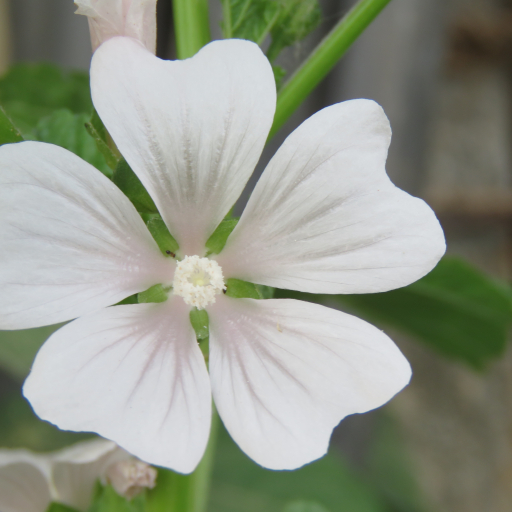
Plant Overview
Often called the "Small Mallow" or "Little Mallow," Malva pusilla is a humble traveler that has spread from Eurasia across much of the globe. You might recognize it by its folk name, "Buttonweed," because of its unique, round seed pods that look like tiny wheels of green cheese or antique buttons. While many modern gardeners dismiss it as a mere weed, it has a long history as a survival food and a soothing herbal remedy.
🔍 How to Identify
- 🍃 The Foliage: Round or kidney-shaped leaves with shallow, scalloped lobes and crinkled, saw-toothed edges that look a bit like a ruffled collar.
- 🌸 The Bloom: Very small, inconspicuous flowers with five notched petals, ranging in color from paper-white to a very pale lilac.
- 🥨 The "Cheese": Distinctive circular fruits (schizocarps) that look like miniature sliced wheels of cheese tucked away at the base of the leaf stalks.
🏡 In Your Garden
- ⛏️ The Taproot Trap: This plant develops a surprisingly deep, woody taproot very quickly. If you want to remove it from your garden beds, do so while it is a tiny seedling; once established, the root becomes a stubborn anchor that is difficult to pull by hand.
- 🌱 Disturbed Ground Lover: It thrives in "waste places"—cracks in the sidewalk, compacted driveway edges, or forgotten garden corners. It is a pioneer species, often the first to colonize bare, poor-quality soil where other plants struggle.
⚠️ Safety & Toxicity
- ✅ Status: Generally non-toxic and historically edible.
- 🧪 Nitrate Caution: While the plant itself is safe, mallows are known "nitrate accumulators." If the plant is growing in soil heavily treated with chemical fertilizers, the leaves can store high levels of nitrates, which may be harmful if consumed in large quantities by humans or livestock.
- 🐾 Pet Safety: It is considered non-toxic to cats, dogs, and horses, though its high fiber content might cause minor tummy upset if a pet decides to mow down a large patch.
✨ Fun Fact
Malva pusilla is a close relative of the Marsh Mallow (Althaea officinalis). Long before the days of processed bags of white fluff, the gummy, mucilaginous sap from mallow roots was whipped with honey or sugar to create the original medicinal lozenges that eventually became the modern marshmallow treat!

Detailed Care Instructions
To grow Malva Pusilla (also known as Musk Mallow) plants, follow these steps:
- Choose the right location: Malva Pusilla plants prefer full sun but can tolerate partial shade. Ensure the location has well-draining soil.
- Prepare the soil: Add organic matter such as compost or well-rotted manure to the soil to improve its fertility and drainage.
- Sow the seeds: Plant the seeds directly on the soil surface, as they require light to germinate. Space the seeds about 6-12 inches apart.
- Lightly cover the seeds: Scatter a thin layer of soil or compost over the seeds, just enough to cover them lightly. Do not bury them deeply.
- Water regularly: Keep the soil consistently moist until the seeds germinate. Avoid overwatering, as it can cause rotting.
- Thin the seedlings: Once the seedlings are about 2-3 inches tall, thin them out to provide adequate space for growth. Remove the weaker seedlings, leaving the healthiest ones.
- Maintain adequate moisture: Water the plants regularly to ensure the soil remains evenly moist, but not waterlogged.
- Mulch the soil: Apply a layer of organic mulch around the base of the plants to help retain moisture, suppress weeds, and regulate soil temperature.
- Provide support (optional): If you expect the plants to grow tall, you may provide light support, such as stakes or cages, to prevent them from bending or breaking.
- Control pests and diseases: Keep an eye out for common garden pests, such as aphids or slugs, and control them using organic or chemical methods if necessary. Monitor for signs of diseases like powdery mildew and treat appropriately.
- Regularly harvest or deadhead: Harvest the flowers regularly to encourage new blooms and prevent the plants from going to seed. Deadhead or remove spent flowers to keep the plant tidy.
Overall, Malva Pusilla is a relatively low-maintenance plant that can thrive in various growing conditions. With proper care, it should grow and bloom abundantly.

Place in a bright room that is sun drenched almost all day. Or directly in a south-facing window.

1. Determine the planting location: Malva Pusilla prefers well-drained soil that is moist but not waterlogged. The plant should be placed in an area that receives partial sun or shade.
2. Watering frequency: Water Malva Pusilla deeply once a week during the growing season (spring and summer). During cooler months (fall and winter), water less frequently.
3. Soil moisture level: Check the soil moisture level regularly by inserting your finger into the soil up to the first knuckle. Water the plant when the top inch of soil feels dry.
4. Watering technique: Slowly apply water directly to the soil, making sure to avoid getting the foliage wet. Overhead watering can promote disease and encourage pests.
5. Water amount: Water the plant until the soil is evenly moist, but not waterlogged. Excess water can cause root rot and other problems.
6. Mulching: Apply a layer of mulch around the base of the plant to retain moisture and prevent weeds from growing.
7. Consider the weather conditions: Hot and dry weather may require increase watering frequency, while cool and rainy weather may require less watering.
8. Monitor plant health: Overwatering or underwatering can cause the plant to wilt or yellow. Adjust watering as needed based on the plant’s health.
To fertilize this plant, use an all-purpose fertilizer with a balanced ratio of nitrogen, phosphorus, and potassium. Dilute the fertilizer according to the instructions on the packaging and apply it to the soil around the base of the plant. Be careful not to over-fertilize, as this can damage the plant. Fertilize once every 2-4 weeks during the growing season, typically from early spring to late summer.
The ideal soil for Malva pusilla plant is a well-draining and fertile soil that is rich in organic matter. It should have a pH range of 6.0 to 7.0. The soil should be moist but not waterlogged, as overwatering can lead to root rot. It is best to use a soil mix that contains a combination of perlite, compost, and peat moss. Additionally, adding sand to the soil can improve drainage. The plant prefers full sun exposure and can tolerate partial shade. Regular fertilization with a balanced, water-soluble fertilizer can also help the plant to grow and thrive.
One way to propagate this plant is through stem cuttings. Select a healthy stem with several sets of leaves, and cut it at an angle so that the bottom is about 4-6 inches long. Remove the lower leaves, leaving just a few at the top. Dip the bottom of the cutting into rooting hormone powder, and then place it in a pot filled with well-draining soil. Water it and keep it in a warm, bright location with indirect sunlight. Mist the cutting with water occasionally to keep it from drying out. In a few weeks, roots should start to form, and you can transplant it to a larger pot or to your garden. Alternatively, seeds can also be planted in a seedbed or pot and grown in a similar manner.








