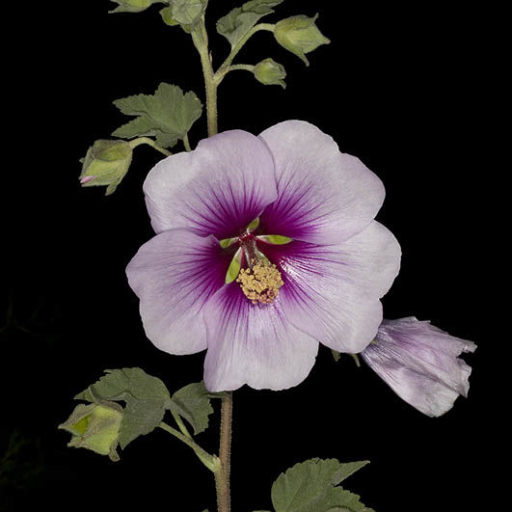
Plant Overview
Commonly known as the Tree Mallow or Mediterranean Mallow, Malva subovata is a sun-loving coastal beauty that brings a touch of the seaside to any landscape. Once classified under the genus Lavatera, this robust shrub is famous for its velvety soft foliage and delicate, hibiscus-like blooms. In folklore, mallows have long been associated with protection and softness, often planted near cottage doors to welcome good spirits.
🔍 How to Identify
- 🌸 The Flowers: Large, five-petaled blooms ranging from pale lilac to deep pink, usually featuring darker magenta veins that act as "nectar guides" for pollinators.
- 🍃 The Foliage: The leaves are "sub-ovate" (almost egg-shaped), often with 3 to 5 shallow lobes. They feel remarkably soft to the touch due to a dense coating of fine, star-shaped hairs.
- 🌳 Growth Habit: Unlike its smaller creeping cousins, this species develops a woody base and can grow into a substantial, rounded shrub reaching up to 2 meters in height.
🏡 In Your Garden
- 🌊 Coastal Warrior: This plant is evolutionarily built for the seaside. Its hairy leaves help it retain moisture and resist salt spray, making it a perfect choice for windy, coastal gardens where other plants might wither.
- ✂️ Pruning Nuance: Because it grows so quickly, it can become "leggy" or top-heavy. To keep it from splitting under its own weight, it benefits from a hard prune in early spring to encourage a bushier, stronger frame.
- ☀️ Drainage is Key: While it is highly drought-tolerant once established, it has a sensitive root system that will rot quickly in heavy, waterlogged clay. It prefers "lean" soil—too much fertilizer will actually result in more leaves and fewer flowers.
⚠️ Safety & Toxicity
- ✅ Status: Non-toxic and generally safe.
- 🐾 Pet & Child Friendly: Malva subovata is not known to be poisonous to cats, dogs, or humans. In many cultures, members of the Malva family are actually used in traditional herbal teas.
- 🐜 Pest Note: While safe for humans, it is a magnet for "Mallow Rust" (fungus). While not dangerous to you, keep an eye out for orange spots on the undersides of leaves to keep the plant healthy.
✨ Fun Fact
The fruits of this plant are often called "little cheeses" because they are shaped like tiny, segmented wheels of cheese. In historical times, children in the Mediterranean countryside would forage these "cheeses" as a nutty, green snack!

Detailed Care Instructions
| Humidity | Normal |
| Lighting | Part Sun |
| Difficulty | Easy |
| Hibernation | Cold Period |
| Hardiness Zones | 9A - 11 |
To grow Malva subovata (or the Chinese Mallow plant), follow these steps:
- Location: Choose a spot that receives full sunlight or partial shade. The plant can tolerate a range of soil conditions, including loamy or sandy soil.
- Planting: Start by preparing the soil. Loosen it and remove any weeds or debris. Dig a hole twice the size of the root ball of the plant. Place the plant in the hole, making sure the top of the root ball is level with the soil surface. Backfill the hole with soil, gently firming it around the plant.
- Watering: Water the plant thoroughly after planting. Keep the soil evenly moist but not soaked. Water deeply whenever the top inch of soil feels dry.
- Mulching: Apply a layer of organic mulch around the plant to conserve moisture, suppress weed growth, and regulate soil temperature.
- Fertilizing: Feed the plant with a balanced, water-soluble fertilizer once a month during the growing season. Follow the instructions on the fertilizer package for application rates.
- Pruning: To encourage bushiness, pinch back the growing tips regularly. This will also promote more abundant flowering. Remove dead or damaged branches as needed.
- Staking: If your area experiences strong winds or heavy rainfall, it might be necessary to stake the plant to provide support and prevent it from toppling over.
- Pests and diseases: Malva subovata is generally resistant to pests and diseases. However, keep an eye out for aphids, snails, or slugs. If necessary, use organic pest control methods to manage these issues.
- Propagation: You can propagate Malva subovata through seeds or cuttings. Collect ripe seed pods and sow them in a well-draining potting mix. Alternatively, take stem cuttings, place them in a rooting hormone, and plant them in a well-draining growing medium.
- Winter care: In colder climates, Malva subovata may die back in winter. Mulch around the base of the plant to protect its roots from freezing temperatures. If necessary, you can also bring potted plants indoors during the winter months.
By providing proper care and following these steps, you can successfully grow Malva subovata and enjoy its attractive flowers.

Place in a bright room that is sun drenched almost all day. Or directly in a south-facing window.

To water this plant, wait until the top inch of soil is dry before watering. Use a watering can or hose with a gentle flow to avoid disturbing the roots. Water the soil around the plant, avoiding the leaves as much as possible. Allow excess water to drain away and avoid over-watering, as this can lead to root rot. Keep the soil consistently moist but not waterlogged. In times of extreme heat or drought, increase the frequency of watering.
For best results, fertilize this plant during its growing season, which typically occurs in the spring and summer months. Use a balanced fertilizer with equal parts nitrogen, phosphorous, and potassium. Apply the fertilizer to the soil at the base of the plant, taking care not to get any on the leaves or stem. Water the plant thoroughly after fertilizing to help the nutrients soak into the soil. Avoid over-fertilizing, as this can cause damage to the plant and reduce its overall health.
Malva subovata is a perennial plant that belongs to the Malvaceae family. It prefers well-drained soils that are medium to fine textured with a neutral to alkaline pH level. Good soil structure is important for the plant's root development and water retention, so a sandy loam to loamy soil is preferred.
The soil should be fertile and rich in organic matter, which can be achieved by adding compost, manure, or a slow-release fertilizer before planting. However, avoid using heavy doses of nitrogen-rich fertilizers as they can promote vegetative growth at the expense of flowering. Additionally, ensure that the plant has adequate drainage to prevent waterlogged soils, as this can lead to root rot and other soil-borne diseases.
It is important to regularly check the soil moisture content and water the plant when the topsoil feels dry to the touch. Mulching can also help retain soil moisture and suppress weed growth. Furthermore, to maintain healthy soil, avoid using chemical pesticides and herbicides, as they can harm soil microorganisms and beneficial insects.
To propagate this plant, take stem cuttings from a healthy, mature plant using clean, sharp scissors. Cut a section of stem about 4-6 inches long, making sure to include at least 2-3 nodes. Remove the lower leaves from the stem and any flower buds or blooms. Dip the cut end into rooting hormone powder and insert it into a pot filled with well-draining soil. Keep the soil damp but not overly wet and place the pot in a warm, bright location but out of direct sunlight. The cutting should root within a few weeks, and once it has developed a healthy root system, it can be transplanted into a larger pot or into the garden.
Common pests of the tree mallow include Spider mites, aphids, thrips. Make a habit of checking your tree mallow frequently for pests so that any infestations can be caught and managed early.








