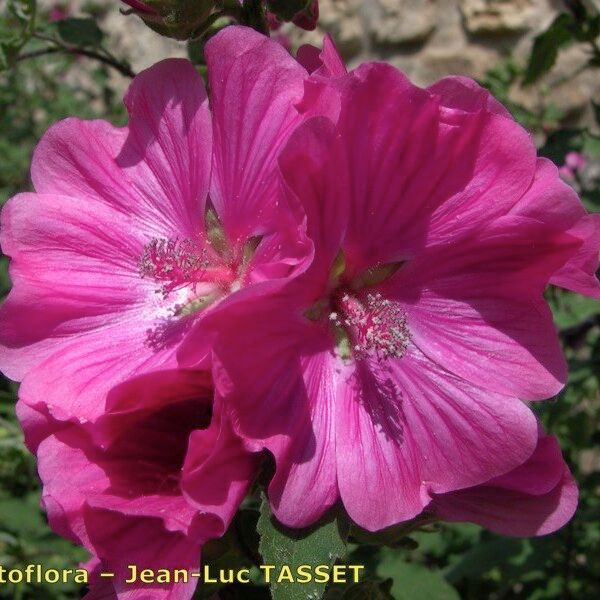
Plant Overview
Often called the "Tree Mallow," Malva × clementii (formerly known as Lavatera) is the garden's ultimate overachiever, capable of growing from a small seedling to a towering floral pillar in a single season. This hybrid is beloved for its Mediterranean charm and its ability to act as a "living screen" for fences or bare walls. It is the plant version of a summer romance: intense, beautiful, and incredibly fast-moving.
🔍 How to Identify
- 🌸 The Bloom: Large, trumpet-shaped flowers usually in shades of lilac, candy-pink, or white. They feature distinct "honey guides"—darker veins that radiate from the center to show pollinators the way.
- 🍃 The Foliage: Soft, maple-like leaves with a grayish-green tint. They have a velvety, felt-like texture due to fine hairs covering the surface.
- 🏗️ The Habit: A sprawling, semi-woody sub-shrub that can reach up to 6–8 feet tall, giving it a majestic, tree-like appearance compared to its low-growing mallow cousins.
🏡 In Your Garden
- 🌞 Sun Worshiper: This plant craves the brightest spot in your yard. Without full sun, it tends to get "leggy" and may collapse under the weight of its own blossoms.
- ✂️ Pruning Nuance: Because it grows so rapidly, it can become "woody" and brittle. It benefits from a hard pruning in early spring to encourage fresh, flexible growth that can withstand summer winds.
- 🏜️ Tough Love: It actually prefers "lean" soil. If you give it too much rich fertilizer, you will get a giant bush of leaves but very few of those iconic flowers. It is remarkably drought-tolerant once its roots are established.
⚠️ Safety & Toxicity
- ✅ General Safety: Malva × clementii is generally considered non-toxic to humans, cats, and dogs, making it a safe choice for family gardens.
- 🧤 Skin Sensitivity: While not poisonous, the fine, fuzzy hairs on the stems and leaves can be a mild mechanical irritant. If you have sensitive skin, you might feel a bit itchy after a heavy pruning session, so gloves are recommended.
✨ Fun Fact
- 🦋 The Butterfly Motel: This plant is a primary nectar source for the Painted Lady butterfly. Interestingly, certain species of "Mallow Bees" are known to use the large, cupped flowers as a cozy sleeping bag, curling up inside the petals once the sun goes down.

Detailed Care Instructions
To grow a Malva X Clementii plant, follow these steps:
- Choose a suitable location: Malva X Clementii plants require full sun to partial shade. Select a spot in your garden or outdoor space that receives at least 6 hours of direct sunlight daily.
- Prepare the soil: Malva X Clementii plants prefer well-draining soil. Amend your soil with organic matter, such as compost, to improve drainage and fertility. Loosen the soil to a depth of 10-12 inches.
- Planting: Dig a hole in the prepared soil that is wide and deep enough to accommodate the Malva X Clementii plant's root ball. Place the plant in the hole, ensuring that the top of the root ball is level with the soil surface. Backfill the hole with soil, gently firming it around the plant.
- Watering: Water the newly planted Malva X Clementii thoroughly, ensuring that the soil is moist but not waterlogged. For the first few weeks, provide regular watering to help establish the plant. Afterward, water deeply and infrequently, allowing the top inch of soil to dry out between waterings.
- Mulching: Apply a layer of organic mulch around the base of the plant to help retain moisture, suppress weeds, and regulate soil temperature.
- Pruning: Regularly deadhead spent flowers to encourage continuous blooming. Cut back any leggy or overgrown stems to promote bushiness. Prune the plant in late winter or early spring to remove any dead or damaged growth.
- Fertilizing: Apply a balanced, slow-release fertilizer during the spring to promote healthy growth and flowering. Follow the package instructions for the recommended dosage.
- Pests and diseases: Keep an eye out for common pests like aphids or spider mites. If necessary, treat the infested plant with an appropriate insecticide or use organic methods like spraying water or introducing beneficial insects. Avoid overwatering to prevent root rot or fungal diseases.
- Winter care: In colder climates, apply a layer of mulch around the base of the plant in late fall to protect it from freezing temperatures. Cut back the plant to the ground in late winter or early spring to rejuvenate it for the coming season.
By following these steps and providing proper care, you can successfully grow a Malva X Clementii plant in your garden.
To properly water this plant, you will want to water at soil level and avoid getting water on the leaves. One method is to wait until the top inch of soil is dry before watering, but be careful not to let the soil completely dry out. When watering, use a watering can or hose with a gentle stream to avoid disturbing the soil. It's important not to overwater this plant, as it prefers well-draining soil and excess water can lead to root rot.
To fertilize the Malva X Clementii plant, apply a balanced, slow-release fertilizer in the early spring or late fall. Use a fertilizer with equal amounts of nitrogen, phosphorus, and potassium. Follow the instructions on the fertilizer package for dosage and application method. Water the plant well before and after fertilizing. Do not fertilize during periods of drought or extreme heat.
The ideal soil for this plant is a well-draining soil mixture that is rich in organic matter. It should have a slightly acidic to neutral pH level, ideally between 6.0 to 7.0. The plant prefers a soil that is moist but not waterlogged, and it does not tolerate soil that is too dry or too compacted. A soil that is too heavy or dense may cause root rot, so it is important to ensure that the soil is airy enough to allow for proper drainage. The plant can also benefit from the addition of fertilizers or compost to provide the necessary nutrients for healthy growth. Overall, the soil should be of good quality and able to support the plant’s root system, while ensuring adequate water, nutrients, and oxygen circulation.
To propagate this plant, you will need to take stem cuttings from a healthy and mature parent plant. Make sure the stem you select is at least 4 inches long and has several leaves attached. Using a sharp and sterilized knife, make a clean cut just below a leaf node.
Remove the lower leaves from the stem, leaving only a few leaves at the top. Dip the cut end in rooting hormone powder to encourage faster root growth. Place the stem cutting in a pot filled with moist and well-draining soil, making sure the cut end is buried at least an inch deep.
Cover the pot with a clear plastic bag or a plastic wrap to keep the humidity levels high. Place the pot in a warm and bright location, but not in direct sunlight. Keep the soil moist but not too wet, and mist the leaves regularly.
After about 4-6 weeks, the stem cutting should start developing roots and new leaves. Once the roots are well established and the plant looks healthy, you can transplant it into a larger pot or outdoors in a sunny and protected area.
It's important to note that this plant is not frost-tolerant and needs to be brought indoors during the winter months in colder climates.








