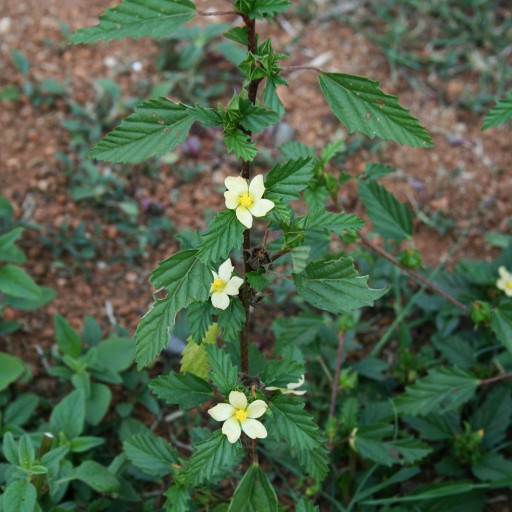
Plant Overview
Often called the Three-lobed False Mallow or Broom Weed, this resilient little traveler is a master of survival. Though many gardeners treat it as a common weed, it carries a certain rustic charm with its buttery-yellow blossoms that wait for the midday sun to fully open. Originally from the Americas, it has hitched rides across the globe, turning dry, neglected patches of soil into a display of hardy, miniature hibiscus-like flowers.
🔍 How to Identify
- 🍃 The Leaves: Look for ovate, bright green leaves with distinct "toothed" or serrated edges. They often feature three subtle lobes and have a slightly rough, hairy texture.
- 🌼 The Flowers: Small, five-petaled blooms in a soft creamy yellow or pale apricot. They usually grow solitary or in small clusters right where the leaf meets the stem.
- ⚙️ The Fruit: One of its most distinctive features is the "schizocarp"—a small, circular fruit that looks like a tiny spiked wheel or a sliced-up button.
🏡 In Your Garden
- 🌱 Tough Roots: This plant develops a surprisingly deep and stubborn taproot. This makes it incredibly drought-tolerant, but it also means it hates being transplanted; once it chooses a spot, it’s there to stay.
- ☀️ The Clock Plant: It is sometimes called a "clock plant" because the flowers are highly sensitive to light, usually opening around midday and closing by late afternoon. If your garden is looking a bit "sleepy" in the morning, this plant is just waiting for its cue.
⚠️ Safety & Toxicity
- ✅ Status: Generally non-toxic and safe for curious pets and children.
- 🐕 Details: While not poisonous, the plant is covered in tiny, stiff hairs and the seed pods have small "horns" or awns. These can occasionally cause mild mechanical irritation to the skin or get caught in the fur of long-haired pets.
✨ Fun Fact
In various tropical regions, the stems of the False Mallow are so tough and fibrous that they are bundled together and dried to create sturdy, handmade sweeping brooms—hence its popular nickname, Broom Weed!

Detailed Care Instructions
To grow Malvastrum coromandelianum, also known as Indian mallow or Malvastrum coromandelianum, you can follow these steps:
- Choose a suitable location: Select a spot that receives full to partial sunlight. The plant prefers warm temperatures and well-draining soil.
- Prepare the soil: Ensure that the soil is loose, fertile, and well-draining. Ideally, amend it with organic matter like compost or well-rotted manure before planting.
- Planting: Sow the seeds directly into the prepared soil in spring or early summer. Alternatively, you can start the seeds indoors 6-8 weeks before the last frost date and transplant them once all risks of frost have passed. Place the seeds about 1/4 inch deep and 12-18 inches apart. Water the area thoroughly after planting.
- Watering: Keep the soil consistently moist but not waterlogged until the seeds germinate. Once the plants become established, they are more drought-tolerant. Water them deeply when the top inch of soil feels dry.
- Fertilization: Apply a balanced, slow-release fertilizer once every two to three months during the growing season to promote healthy growth and blooming.
- Pruning: Throughout the growing season, pinch off the tips of the plant to encourage bushier growth. Deadheading spent flowers will also promote continuous blooming.
- Pests and diseases: Malvastrum coromandelianum is generally resistant to pests and diseases. However, keep an eye out for common garden pests like aphids or spider mites. Use organic insecticides or natural pest control methods if necessary.
- Winter care: In cold climates, Malvastrum coromandelianum may not survive the winter. Consider treating it as an annual or grow it in pots and bring it indoors when temperatures drop.
By following these steps, you should be able to grow Malvastrum coromandelianum successfully.

Place in a bright room that is sun drenched almost all day. Or directly in a south-facing window.

To water this plant, first ensure that the soil is completely dry before watering. Then, take a watering can and slowly water the base of the plant until the soil is moist but not overly saturated. Be sure to avoid getting water on the leaves or flowers, as this can cause damage or promote fungal growth. Watering once a week in the morning or evening is usually sufficient, but adjust based on the plant's specific needs and the weather conditions. It's important to not overwater, as this can lead to root rot and other issues.
To fertilize this plant, you should use a balanced fertilizer with equal amounts of nitrogen, phosphorus, and potassium. Apply the fertilizer every two to three months during the growing season, and make sure to water the plant thoroughly after fertilizing. Avoid applying fertilizer to dry soil, as this may damage the roots. Additionally, if you notice any yellowing of the leaves or stunted growth, reduce or eliminate fertilization until the plant recovers.
The ideal soil for Malvastrum Coromandelianum plant should be well-draining and loamy, with a pH range of 5.5 to 7.5. The soil should be rich in organic matter and nutrients, as this plant requires adequate nourishment for healthy growth. It is important to avoid using any type of soil that is too heavy or compacted, as it can lead to poor drainage and root rot. Additionally, the soil should be kept moist, but not waterlogged, and allowed to dry out slightly between watering sessions. It is recommended to add a layer of mulch on top of the soil to help retain moisture and suppress weed growth.
To propagate this plant, you can collect its seeds from the mature flowers and sow them in a well-draining soil mix in a warm and sunny spot. Alternatively, you can take stem cuttings from healthy plants in the spring or summer, remove the lower leaves, and dip the cut end in rooting hormone powder before planting it in moist soil. Keep the soil evenly moist and provide some shelter from direct sunlight until the cuttings develop roots and new growth. Remember to label and care for your new plants until they are established.








