Plant Overview
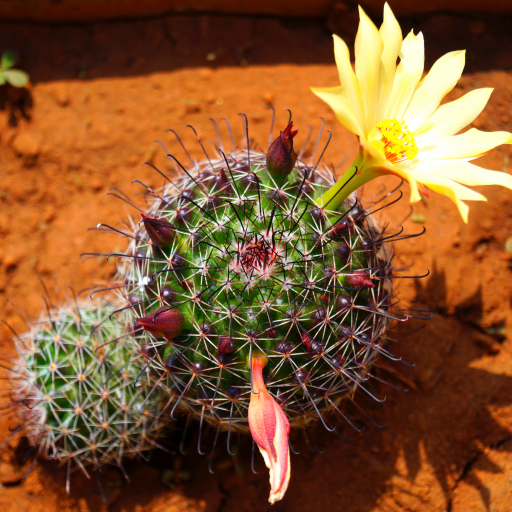
Often called the "rebel" of the Mammillaria family, Mammillaria beneckei stands out with its fierce appearance and surprisingly oversized blooms. Native to the tropical deciduous forests of Western Mexico, this cactus breaks the mold by producing large, brilliant yellow flowers instead of the tiny pink rings typical of its cousins. Collectors love it for its wild, "untamed" look and its dramatic, dark hooked spines.
🔍 How to Identify
- 🪝 The "Fishing" Spines: Look for dark, brownish-black central spines that are sharply hooked at the tip. These act like tiny anchors, catching onto anything that brushes past.
- 🌼 Golden Funnels: Unlike most Mammillarias, this species produces large, funnel-shaped yellow flowers that can reach up to 2 inches wide, appearing near the top of the plant.
- 🟢 Warty Tubercles: The body is dark green and divided into prominent, conical bumps (tubercles) rather than ribs. It tends to form low-growing clusters or "mats" over time.
🏡 In Your Garden
- ☀️ Heat Lover: Because it hails from warmer regions of Mexico, this cactus is much more sensitive to cold than its high-altitude relatives. It prefers to stay cozy and should never be exposed to frost.
- 💧 The "Wet Feet" Warning: This species is particularly prone to root rot. Use a very "gritty" soil mix (lots of pumice or perlite) to ensure water passes through almost instantly, mimicking the rocky slopes where it naturally grows.
- 🥣 Shallow Roots: It has a somewhat delicate root system. If you need to repot it, do so during the peak of summer when the plant is most active and can recover quickly from the move.
⚠️ Safety & Toxicity
- 🌵 Physical Hazard: While not chemically toxic or poisonous to humans or pets, the hooked spines are a significant physical danger.
- 🧤 The "Velcro" Effect: These hooks do not just prick; they latch on. They can easily snag a pet’s fur or a child’s clothing, making it difficult to detangle without damaging the plant or the skin. Always keep this cactus on a high shelf out of reach.
✨ Fun Fact
For many years, botanists were so confused by this plant's large yellow flowers and unique seeds that they placed it in its very own genus called Oehmea. It was only recently "invited back" into the Mammillaria family after DNA testing proved its heritage!

Detailed Care Instructions
To grow a Mammillaria Beneckei plant, follow these steps:
- Select a suitable location: Choose a spot that receives ample sunlight, preferably a south-facing window or a well-lit area outdoors.
- Soil: Use a well-draining cactus/succulent potting mix. You can also create your own mix by combining equal parts of regular potting soil, sand, and perlite or pumice.
- Pot selection: Select a shallow, wide pot with drainage holes to prevent waterlogging. Terracotta pots are ideal as they help in wicking away excess moisture.
- Planting: Gently remove the Mammillaria Beneckei plant from its current container and brush off any excess soil from its roots. Place the plant in the new pot, ensuring its roots are spread out evenly. Add the potting mix around the plant, avoiding excessive compaction.
- Watering: Allow the soil to dry out completely before watering. Then, thoroughly drench the soil until excess water drains out from the bottom. Avoid overwatering, as it can lead to root rot. During winter, reduce watering frequency.
- Light: Mammillaria Beneckei requires bright, indirect sunlight. If growing the plant outdoors, gradually acclimate it to direct sunlight to prevent sunburn.
- Temperature and humidity: This plant prefers temperatures around 70-80°F (21-27°C) during the growing season. During winter, it can tolerate cooler temperatures that range between 50-60°F (10-15°C). Mammillaria Beneckei plants appreciate low humidity levels.
- Fertilization: Use a balanced, diluted cactus fertilizer during the growing season. Apply it according to the package instructions, typically once a month.
- Propagation: Mammillaria Beneckei can be propagated through offsets, seeds, or grafting. Offsets can be carefully separated from the mother plant and planted in a separate container.
- Maintenance: Remove any dead or yellowing parts of the plant by gently tugging them off. Regularly inspect the plant for pests such as mealybugs or spider mites. If detected, treat the plant with appropriate pesticides.
Remember that each plant's growth and care may slightly vary, so it's essential to monitor your Mammillaria Beneckei plant's individual needs and make adjustments accordingly.

Place in a bright room that is sun drenched almost all day. Or directly in a south-facing window.

To water this type of plant, you should first ensure that the soil is completely dry before watering. Once the soil is dry, slowly pour water onto the surface of the soil and allow it to be absorbed. It is important not to water too much as excess water can lead to root rot. Ensure that the pot has drainage holes to avoid water accumulation in the bottom of the pot. Finally, avoid getting any water on the leaves or body of the plant as this can cause damage or rot.
To fertilize this particular plant, use a balanced fertilizer with equal amounts of nitrogen, phosphorus, and potassium. Mix the fertilizer with water at half the recommended strength and apply it once a month during the growing season, which is typically spring and summer. Care should be taken not to over-fertilize as it may cause damage to the plant.
When it comes to the ideal soil for the plant, it is best to use a well-draining mix with good drainage capabilities. The soil should be able to retain some moisture, but not be too waterlogged, as this can lead to root rot. A mixture of coarse sand, perlite, and peat moss can be used in equal parts to create a suitable soil composition. Alternatively, a cactus or succulent potting mix can also be used. It is important to ensure that the soil is not too compacted or too heavy, as this can prevent the proper growth of the plant’s roots. Additionally, adding some crushed limestone or oyster shells to the soil can help to maintain a healthy pH balance and provide the necessary nutrients for the plant’s growth.
Mammillaria Beneckei can be propagated through various methods such as the use of offsets, stem cuttings, and seeds. To propagate through offsets, wait until the plant produces new growth that is separate from the mother plant. Carefully remove the offsets from the mother plant, making sure to keep the roots intact. Pot the offsets in well-draining soil and refrain from watering for a week or two to allow the roots to establish.
To propagate through stem cuttings, cut a healthy stem, remove the lower spines and place it in a dry, cool place for a couple of days to promote callus formation. Once the callus has formed, plant the stem cutting in a well-draining soil mix and water sparingly. Avoid direct sunlight for a few weeks until the stem cutting begins to root.
Propagation through seeds involves collecting mature seeds from the plant and sowing them in a well-draining soil mix. Keep the soil consistently moist and in a warm, brightly lit location. Germination may take several weeks, but once the seedlings have emerged, transplant them into individual pots and care for them as you would adult plants.








